
Last updated November 2, 2026
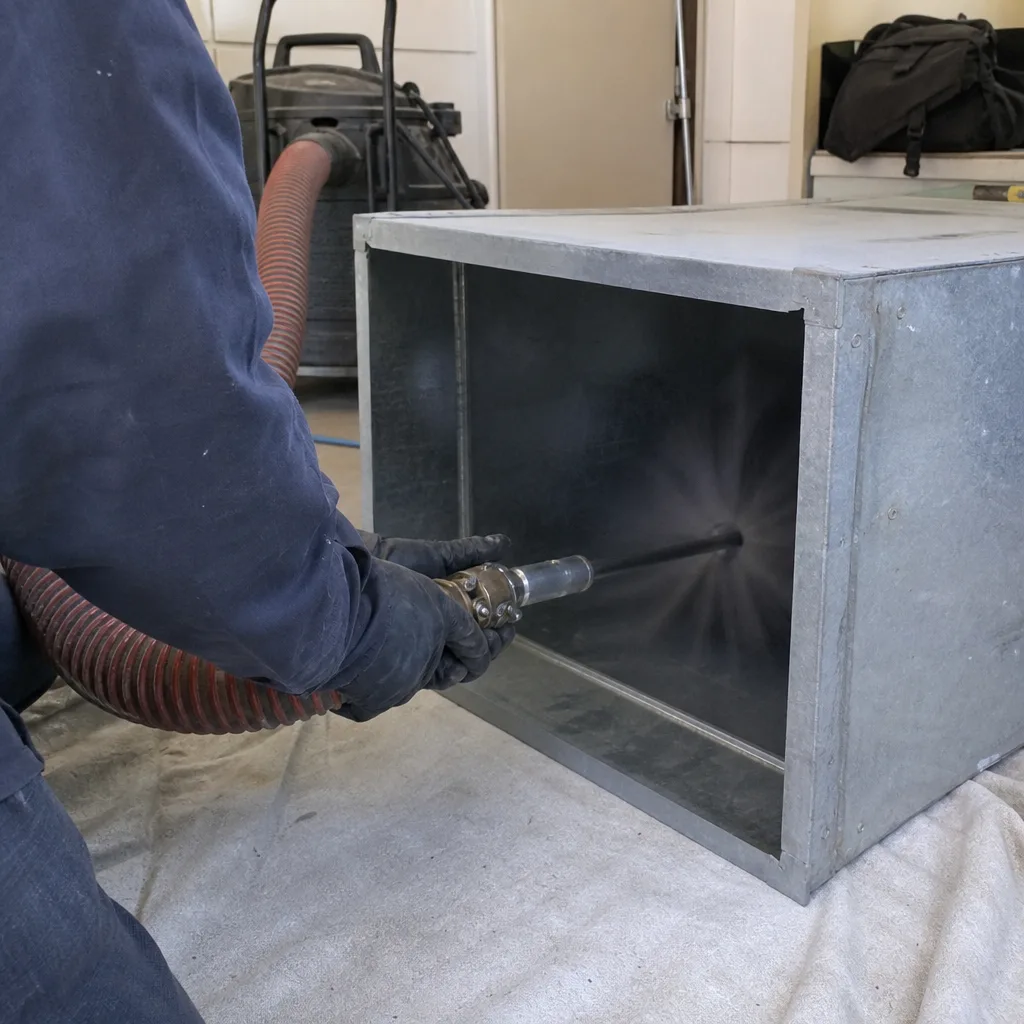
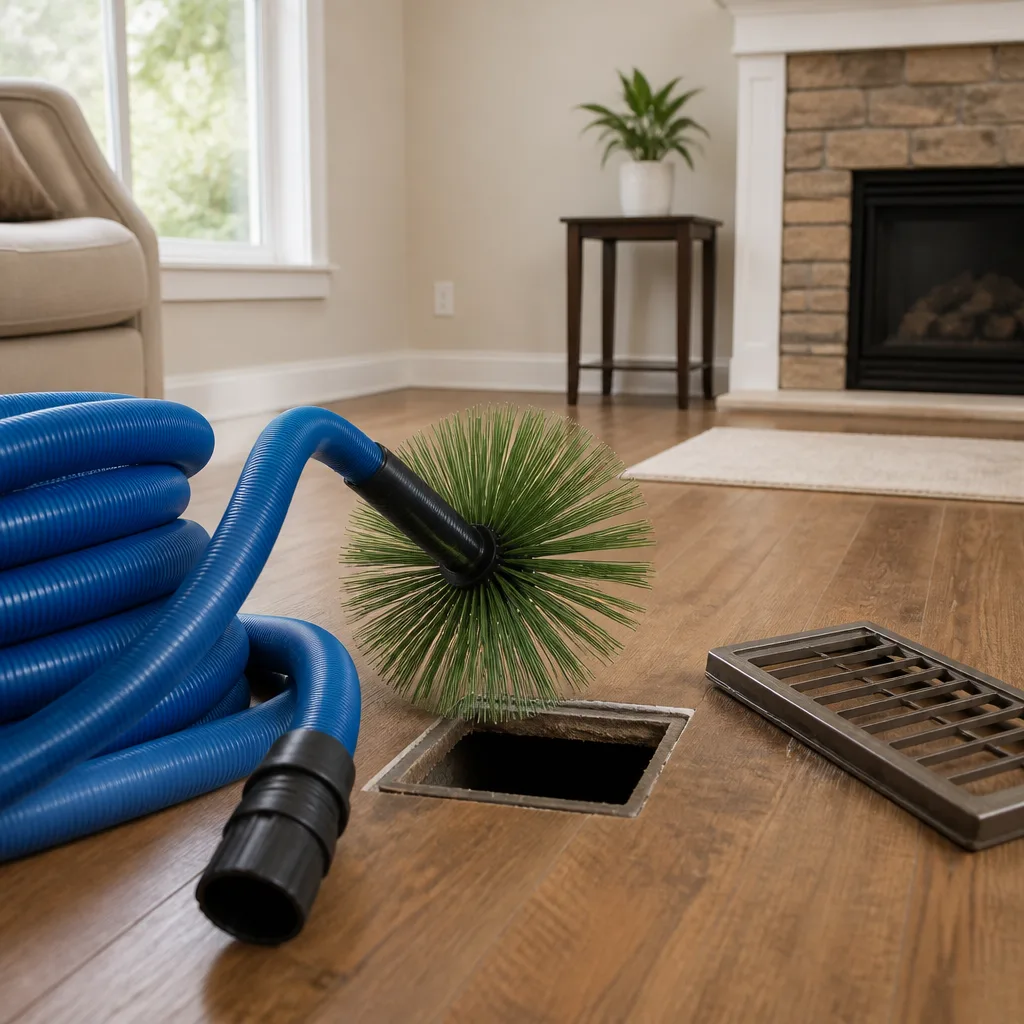 Whole-home duct cleaning
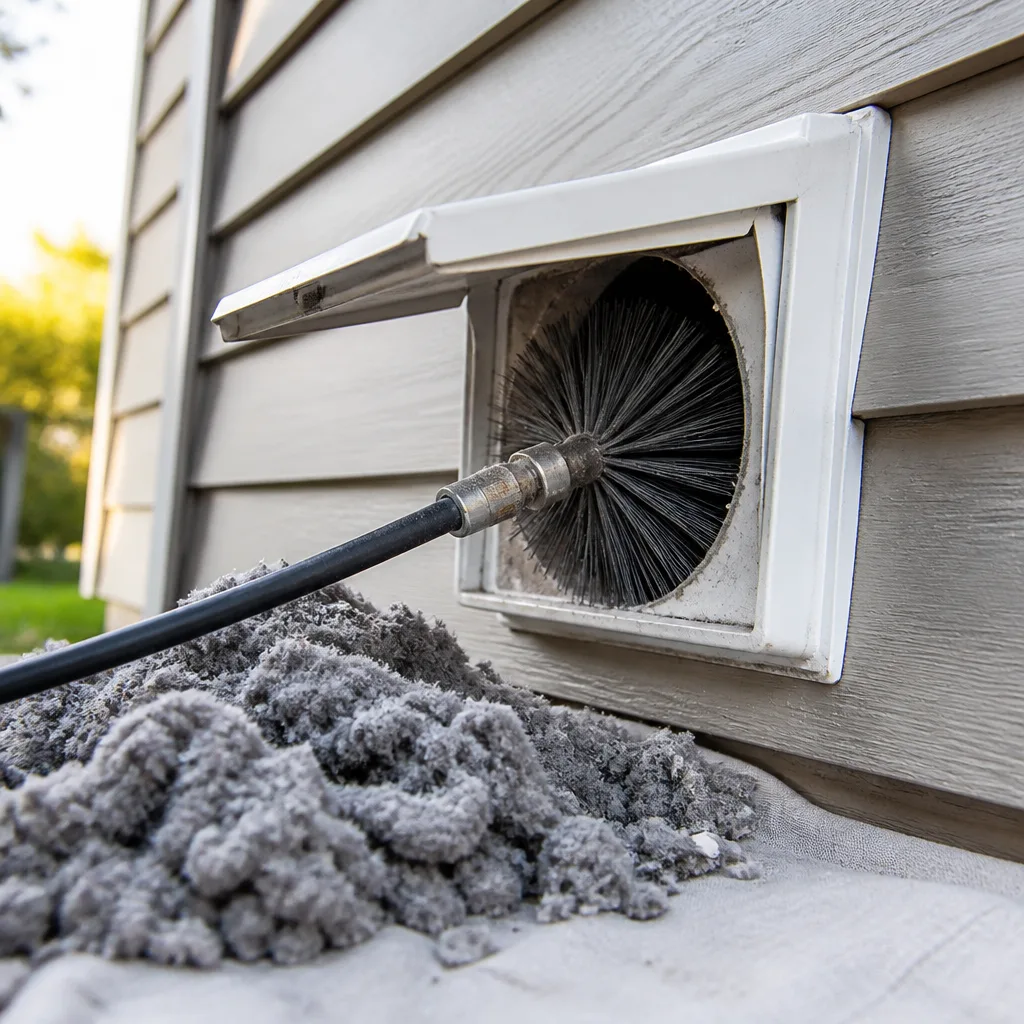 Dryer vent cleaning
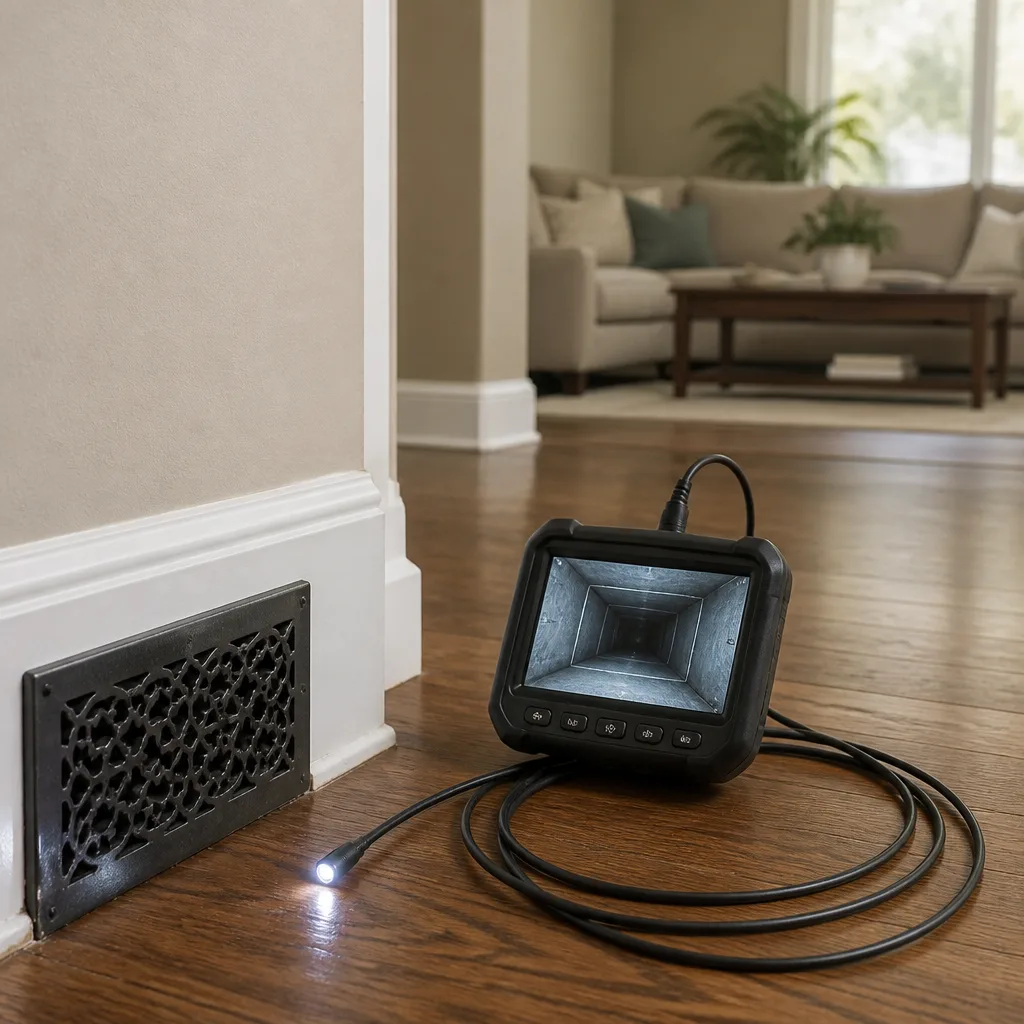 Camera inspection
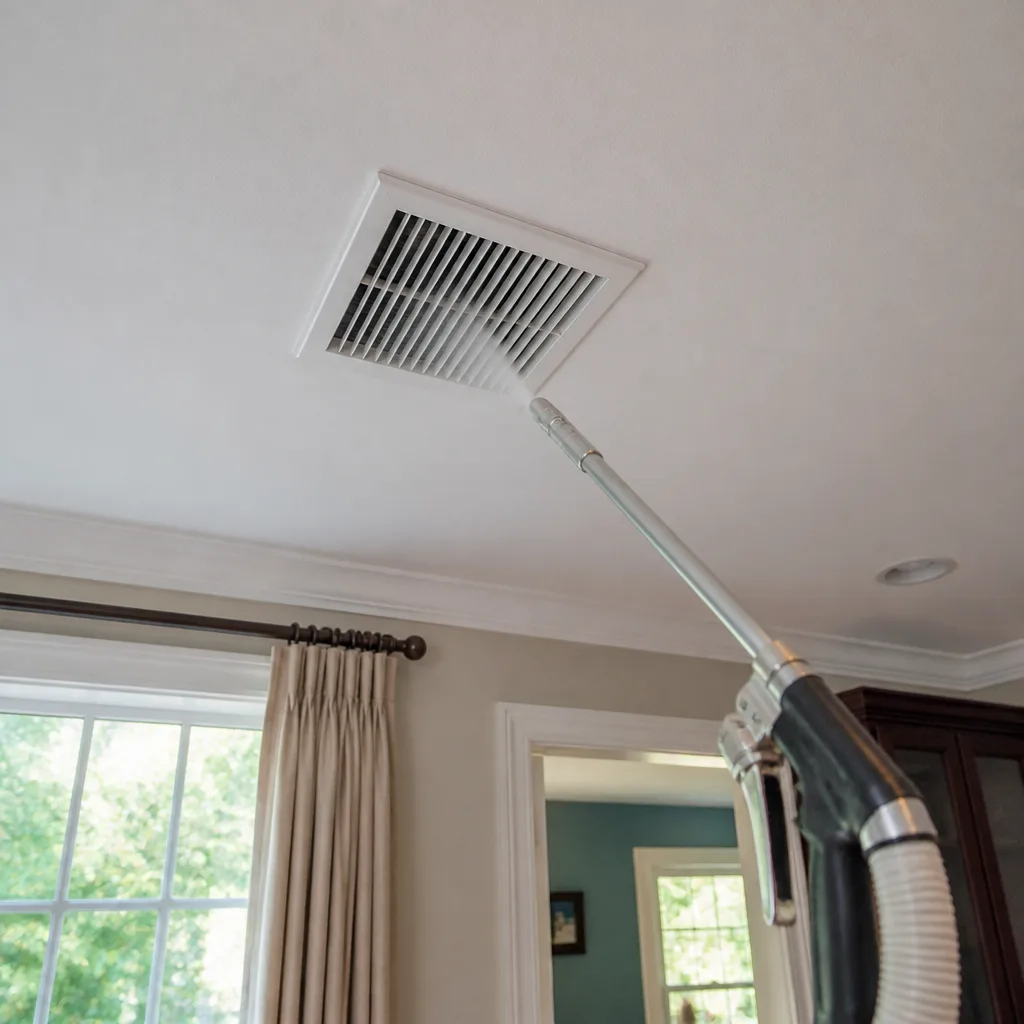 Sanitizing & deodorizing
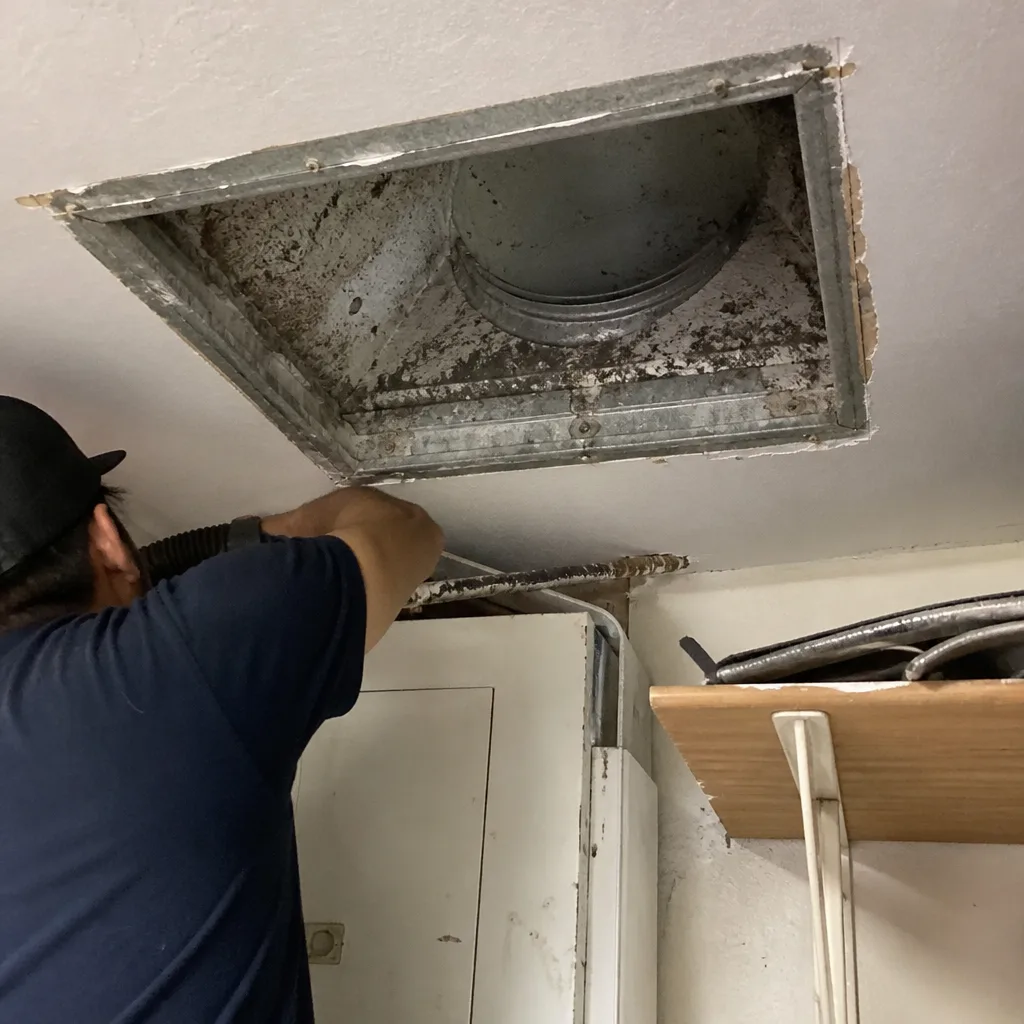
Whole-system duct and dryer vent check with before-and-after photos - you see exactly what came out of your vents
That "$99 whole-house special" is a bait ad - the real number appears once they are in your hallway, or the "clean" is a shop-vac at the register. We photograph the inside of your ducts before and after instead.
Air Duct Cleaning Emergency Preparedness Guide for Union City Homes
After the October 2017 and 2018 fire seasons, Bay Area HVAC contractors reported a fivefold increase in duct cleaning calls. Many were legitimate. Many were not. People were calling out of anxiety, not because their systems actually needed work. That pattern repeats after every wildfire smoke event, flood, and major renovation in Union City. This guide and our Air Duct Cleaning Maintenance Checklist for Union City Homeowners give you a documented protocol so you respond to facts, not fear, and you don’t pay for work your ducts don’t need.
Styles & brands we work with
- Whole-home duct cleaning
- Dryer vent cleaning
- Camera inspection
- Sanitizing & deodorizing
Quick Answer
Air duct cleaning emergency preparedness in Union City means three things: knowing what actually contaminates a duct system (wildfire smoke, floodwater, construction dust), documenting your baseline duct condition before an emergency happens, and having a written protocol for when to clean, when to test, and when to replace. The goal is responding to real contamination with the right scope of work – something our Air Duct Cleaning services are designed to deliver – not paying for panic-driven cleaning that doesn’t address the actual problem.
Table of Contents
- What Wildfire Smoke Actually Does to Ductwork
- Post-Flood Protocol for Under-Floor Duct Runs
- Documenting Your Baseline Before an Emergency
- What an Emergency Duct Cleaning Must Include
- Building an Emergency Contact Protocol
- Post-Renovation Contamination: The Overlooked Emergency
- Common Mistakes to Avoid
- When to Call a Professional
- Frequently Asked Questions
- The Bottom Line
What Wildfire Smoke Actually Does to Ductwork
Wildfire smoke is not one substance. It’s a shifting mixture of fine particulate matter (PM2.5), volatile organic compounds, and in structure fires, the residue of burned synthetics, paints, and insulation. What matters for your ducts is whether your HVAC system was running during the smoke event, for how long, and at what AQI levels.
The threshold most indoor air quality professionals use is this: if outdoor AQI exceeded 150 for more than 24 hours and your system was cycling, you likely pulled smoke particulate into the return side of the system. That particulate settles in the return ductwork first, then the supply side if the filter was loaded or low-MERV. A standard fiberglass filter catches very little fine smoke. A MERV 11 or higher filter catches more, but it also loads faster and restricts airflow if not changed during the event.
In Union City, where summer and fall winds carry smoke from fires in the East Bay hills, Napa, Sonoma, and sometimes the Sierra foothills, smoke events are recurring. Homes near the western edge of Union City, closer to the Bay, get the same smoke but often less ash settling than homes up against the eastern hills. What we’ve seen in the field is that systems with dirty return ducts before the fire season hold far more smoke residue than systems that were cleaned within the previous two or three years. Smoke sticks to existing dust.
What Smoke Residue Means for the System
Smoke particulate is acidic. It degrades filter media, coats blower motor windings, and leaves an odor that recirculates every time the system runs. The smell is the obvious problem. The less obvious one is that smoke residue is hygroscopic; it attracts moisture, which creates conditions where microbial growth can start on the duct liner or at the coil. That’s why post-smoke duct cleaning is not about the ducts alone. The coil, blower, and filter housing all need attention if the system ran during heavy smoke.
Post-Flood Protocol for Under-Floor Duct Runs
Flooding affects ductwork differently depending on where the ducts run. In Union City, many homes built in the 1960s and 1970s have under-floor duct runs in crawl spaces. When those crawl spaces flood, the ducts sit in or near standing water. That’s a different problem from attic ductwork that gets wet from a roof leak.
Here’s the protocol we recommend for under-floor duct runs after flooding:
- Determine the water source and depth. Clean groundwater intrusion is different from sewage backup or surface runoff carrying lawn chemicals. If the water was deeper than the bottom of the duct, the duct insulation and liner are saturated. If the water never reached the ducts but the crawl space humidity stayed above 70% for more than a week, the ducts may still have absorbed enough moisture to support mold on interior dust.
- Do not run the system until you’ve inspected. Running a blower through wet or damp ducts spreads spores through the entire house. Shut it down at the thermostat and the breaker if you suspect water reached the ducts.
- Get a visual inspection with a camera. A proper duct camera inspection shows whether water actually entered the ducts, whether liner is saturated, and whether standing water remains in low points. This costs less than a full cleaning and tells you whether cleaning is even the right call.
- Decide between cleaning and replacement. If the ducts got wet but the liner is intact and the water was clean, cleaning with an antimicrobial treatment may be enough. If the liner is saturated, delaminated, or the ducts are internally insulated fiberglass that got wet, replacement is almost always the correct answer. Internal fiberglass duct liner that has been wet cannot be effectively cleaned. It holds moisture and organic material in a way that cleaning will not fix.
- Address the crawl space itself. Cleaning ducts in a crawl space that is still damp is wasted money. The moisture problem has to be fixed first; drainage, vapor barrier, dehumidification, or all three.
What Microbial Testing Actually Shows
Microbial testing after a flood tells you what’s growing, but it does not tell you whether it’s a health hazard. Air sampling for mold spores gives a snapshot that varies by hour and by room. Surface sampling from duct interiors shows what’s on the surface, not what’s in the liner. Testing is useful as a comparison tool; before cleaning versus after cleaning, or indoor air versus outdoor air. It is not a standalone decision tool. A duct that shows visible mold growth or has been saturated with floodwater should be cleaned or replaced on that evidence alone, with testing used to verify the result after the work is done.
Documenting Your Baseline Before an Emergency
Here’s the problem most Union City homeowners run into after a smoke event or flood: they have no idea what their ducts looked like before. A contractor tells them the system is contaminated and they have no way to evaluate that claim. The fix is simple, but almost nobody does it.
Document your baseline duct condition now, before anything happens. The process takes about 20 minutes and requires a phone camera and a notebook.
- Take photos of every visible return grille and supply register. Remove each grille and photograph the inside of the duct opening with the flash on. Date the photos.
- Photograph the filter area. Pull the filter and photograph both sides. Note the filter type, MERV rating, and how long it’s been installed.
- Inspect the return plenum if accessible. Many Union City homes have a return plenum in a closet or garage. If you can open it safely, photograph the interior.
- Note any visible problems. Disconnected sections, crushed flex duct, visible mold staining, dust accumulation deeper than a light coating, or rodent droppings. Write these down with dates and locations.
- Keep a simple maintenance log. When you change filters, when you clean registers, when you have the system serviced, and what was found. This log is your evidence if a contractor claims a pre-existing condition is new, or a new condition is pre-existing.
This baseline does something else too. When an emergency does happen, you’ll know what “normal” looked like for your system. If a post-smoke inspection shows a level of residue that doesn’t match your photos, you can ask harder questions. If a post-flood contractor tells you mold was already present, you can check that against your own records. That’s the difference between responding to facts and paying for an upsell pitch.
What an Emergency Duct Cleaning Must Include
An emergency duct cleaning is not a heavier version of a routine cleaning. It has a different scope, and if your contractor doesn’t understand that, you’ve hired the wrong contractor.
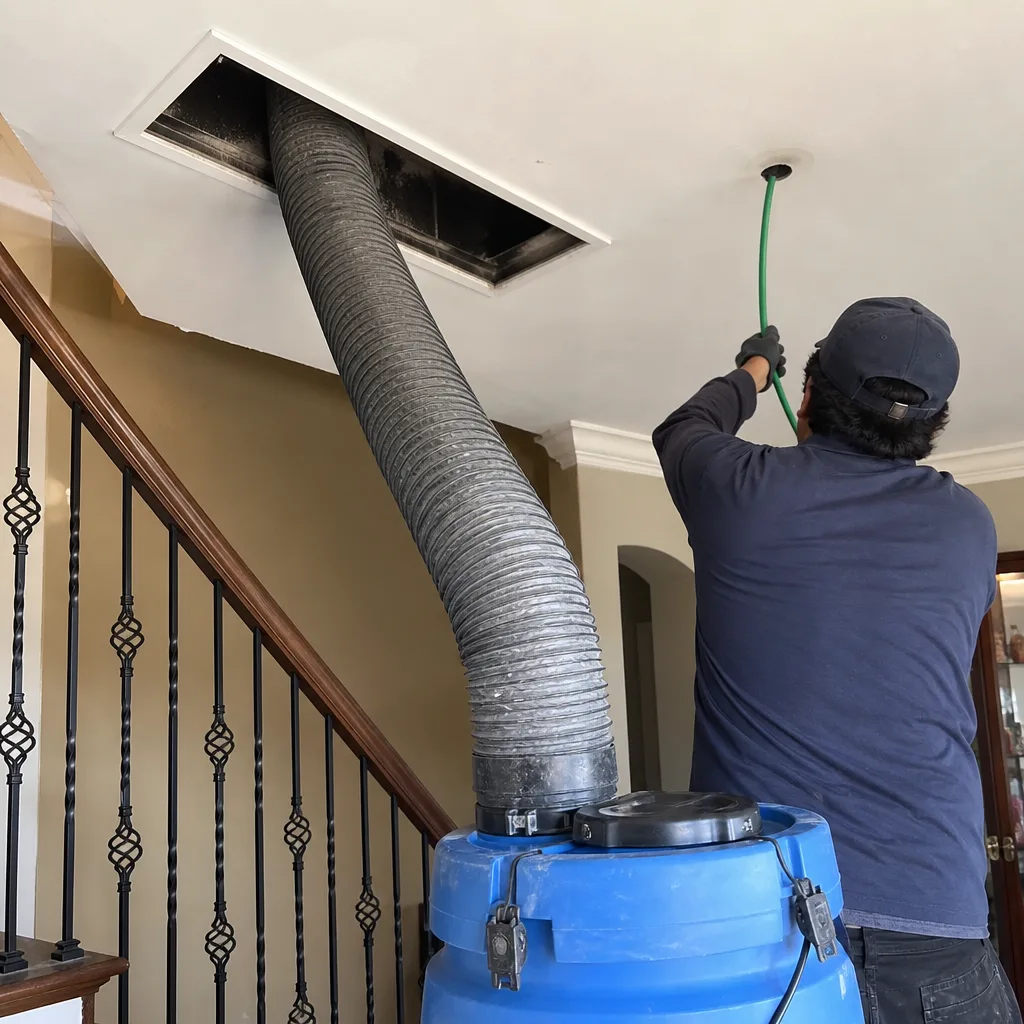
A routine Air Duct Cleaning in Union City removes accumulated dust, debris, and allergens using negative pressure and agitation. An emergency cleaning after smoke, flood, or renovation includes those steps plus additional work that routine cleaning skips.
Non-Negotiable Components of an Emergency Cleaning
- Pathogen testing before and after. The before test establishes what you’re dealing with. The after test verifies the cleaning worked. Without both, you’re taking the contractor’s word for it.
- HEPA post-cleaning verification. A particle counter reading at the supply registers after cleaning confirms that particulate levels dropped to acceptable ranges. Professional-grade systems like the Rotobrush and Nikro equipment we operate include HEPA filtration that makes this verification meaningful.
- Filter upgrade discussion. If your system ran through a smoke event with a MERV 8 filter, the filter itself becomes part of the problem. Emergency cleaning should include a recommendation for the right MERV rating for your system’s blower capacity and your household’s air quality needs.
- Coil and blower inspection. Smoke and flood residue settles on the evaporator coil and blower wheel. If those components are not addressed, the clean ducts will be recolonized by residue from the equipment itself within weeks.
- Written documentation. Photos before, photos after, lab results if testing was done, and a written scope of what was cleaned, what was found, and what was recommended. If a contractor won’t provide this, walk away.
What Emergency Cleaning Should NOT Include
Beware of sealants sprayed inside ducts as a response to smoke or microbial issues. Antimicrobial treatments have a legitimate role in flood remediation, but sealing or encapsulating smoke-contaminated ducts without proper cleaning first traps the residue against the metal or liner. If a contractor pushes duct sealing as the answer to smoke or mold, get a second opinion and review Air Duct Cleaning Permits, Codes & Inspections in CA: What You Need to Know. The same applies to ozone treatments. Ozone can mask odor temporarily but does not remove particulate. It can also create its own indoor air quality problems.
Building an Emergency Contact Protocol
When an emergency happens, you will be under pressure. You’ll be making calls while dealing with insurance adjusters, cleanup crews, and maybe a house you can’t live in. That’s exactly when you make bad decisions about duct work. The fix is to build your contact protocol now, not during the emergency.
What to Have on File
- Your HVAC system’s basic specs. Make, model, approximate age, filter size, MERV rating, and whether the system has zoning. This information lets a contractor give you a more accurate initial assessment over the phone.
- Your baseline photos and maintenance log. Referenced above. These are your evidence base.
- A shortlist of qualified duct service providers. You want someone who does duct work as their primary service, not a generalist who adds duct cleaning to a water damage restoration invoice. Check their equipment. If they can’t name their duct cleaning system, that’s a red flag. Professional equipment from manufacturers like Rotobrush and Nikro is a strong signal that the contractor does this work seriously rather than as an add-on.
- Your insurance policy details. Some policies cover duct cleaning after covered events. Know your deductible and whether duct work is explicitly included or excluded.
Questions to Ask When Calling Under Pressure
- “What equipment do you use for duct cleaning?” Listen for specific system names. A contractor who says “industrial-strength vacuums” without naming equipment is probably not a duct specialist.
- “What exactly does your emergency cleaning include?” Compare their answer to the list above. Missing pathogen testing, HEPA verification, or coil and blower work means the scope is incomplete.
- “Do you provide before and after documentation?” If the answer is not an immediate yes, keep calling.
- “Will I receive a written scope before work starts?” This is the highest-leverage question you can ask. A written scope protects you from scope creep and bait-and-switch pricing.
What to Refuse Until You Have a Written Scope
Do not authorize any work, pay any deposit, or schedule any crew until you have a written scope of work that specifies what will be cleaned, what testing will be done, what the expected outcome is, and what the total price is. A contractor who pressures you to book immediately without a written scope is not working in your interest. The same contractor will be harder to hold accountable after the work is done.
Post-Renovation Contamination: The Overlooked Emergency
Wildfire and flood get the headlines, but renovation dust causes more duct contamination in Union City than both combined. Every kitchen remodel, bathroom gut, flooring replacement, and room addition produces fine dust that finds its way into the return side of the HVAC system, especially if the system was running during construction to keep the crew comfortable.
The specific problems we see after renovations:
- Drywall dust through the entire system. Fine gypsum and joint compound dust loads the filter quickly, then bypasses it once the filter restricts airflow. It coats the blower, coil, and supply ducts.
- Hardwood floor sanding dust. The fine fraction of floor finish dust is small enough to stay suspended and get pulled into the returns. It’s abrasive and sticky; it bonds to fan blades and coil fins.
- Demolition debris in return openings. If return grilles were not sealed during demo, larger debris can enter the ducts; chunks of plaster, insulation scraps, and worse.
- Paint and finish overspray pulled into returns. Spray painting with the system running pulls VOCs and overspray into the ductwork. The odor lingers and the overspray deposits on surfaces.
The Post-Renovation Protocol
After any renovation project that produced significant dust, do this before moving back into full occupancy:
- Replace the filter with a fresh one of appropriate MERV rating. Do this even if the renovator already replaced it. Filters loaded during construction are exhausted.
- Visually inspect the return side. Remove return grilles and photograph what you see. Compare against your baseline photos from before the renovation.
- Clean registers and grilles thoroughly. Surface dust on registers is a sign of what’s inside.
- Call a duct specialist if the visual inspection shows visible dust accumulation inside the ducts. This is not a job for the renovation crew’s shop vac. Proper duct cleaning requires negative pressure systems designed for the task, not consumer-grade equipment. And if the inspection finds damage from the renovation; a crushed duct, a disconnected section, a register that no longer seats properly; that’s where Air Duct Repair in Union City work becomes part of the same job, which saves you from coordinating a second contractor.
Dryer Vent Emergencies: The Fire Risk Hidden in Plain Sight
Dryer vent cleaning is usually a maintenance service, but it becomes an emergency under specific conditions. Lint buildup is the leading cause of dryer fires in residential buildings, and the transition from “needs cleaning” to “fire hazard” happens faster than most homeowners expect.
Signs Your Dryer Vent Is in Emergency Territory
- Clothes take two or more cycles to dry. This means airflow is significantly restricted. The dryer is overheating, and the lint inside the vent is one hot ember away from ignition.
- The dryer or the laundry room is unusually hot during operation. Heat that should be exiting through the vent is trapped in the appliance and the room.
- You smell burning or smoldering during or after a cycle. Shut the dryer down immediately. Do not run another load. This is a call-now situation.
- The vent hood outside does not open when the dryer runs. This signals a blockage or a failed damper. Lint is accumulating somewhere in the run.
- It has been more than one year since the last Dryer Vent Cleaning in Union City. For many Union City homes with long vent runs from interior laundry rooms, annual cleaning is a minimum, not a maximum.
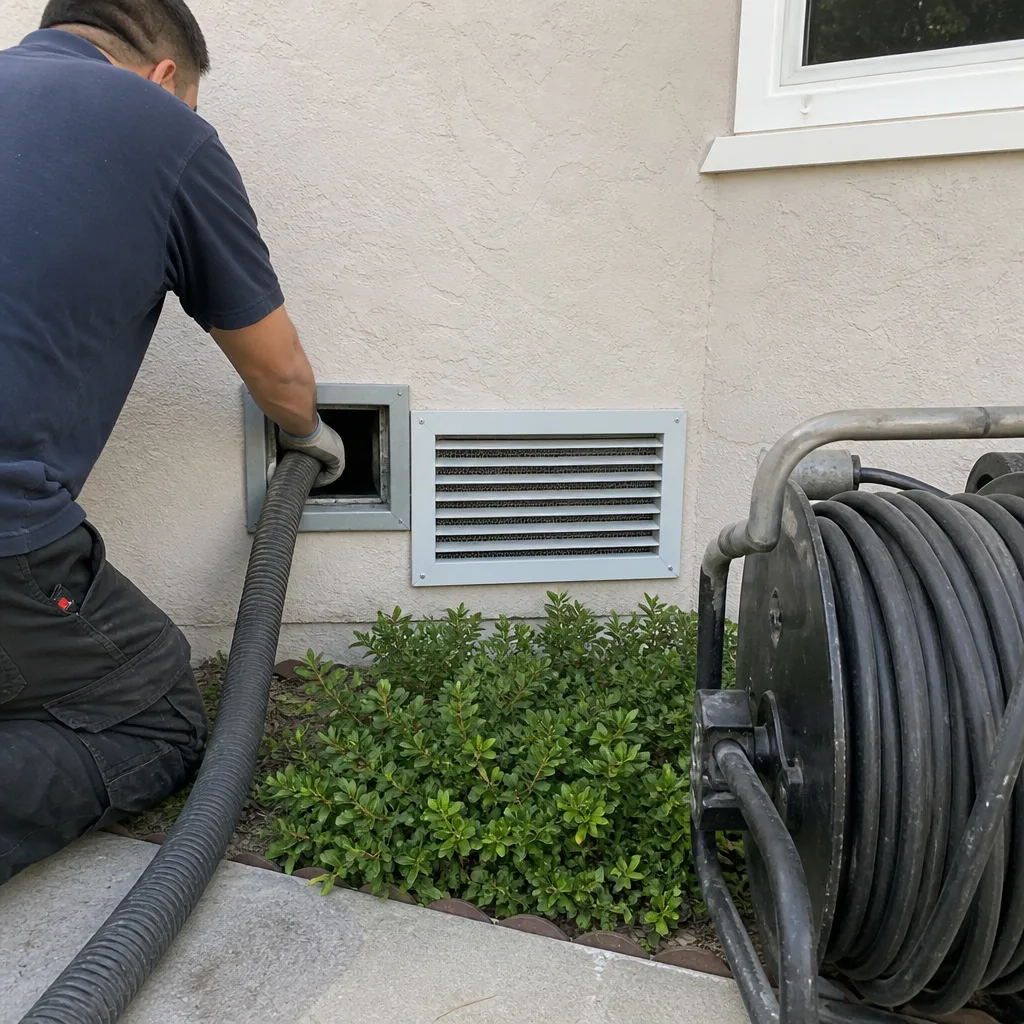
Dryer vent work is not a DIY job with a leaf blower. A proper cleaning uses powered brushing and high-CFM negative air to pull lint out of the entire run. Partial cleaning leaves the restriction that causes the fire. This is a safety service, not a convenience service, and it’s one of the three core services we provide because the fire risk is real and the margin for error is zero.
Beyond Cleaning: Air Quality Systems That Belong in a Preparedness Plan
Emergency preparedness for your ducts includes deciding what equipment will protect your indoor air during the next event. Cleaning is reactive. Filtration and control systems are proactive.
We work with trusted air quality brands like Aprilaire and Abatement Technologies because these companies build equipment designed for whole-system air quality, not just single-room relief. In the context of wildfire smoke and renovation dust, the relevant categories are:
Whole-Home Media Filtration
A media filter cabinet installed at the air handler accepts a MERV 13 or higher filter without the airflow restriction that would choke a standard 1-inch filter slot. During smoke season, a MERV 13 media filter captures the fine particulate that standard filters miss. The cabinet also means the filter is more likely to be changed when it should be, because it’s visibly accessible.
Portable HEPA Filtration
For homes where the HVAC system is older or the duct design makes whole-home filtration impractical, portable HEPA units from companies like Abatement Technologies provide room-level particulate control. During a smoke event, a properly sized HEPA unit in the primary bedroom and one in the main living space materially reduces the indoor PM2.5 load. These are not substitutes for duct cleaning after a major event, but they reduce what enters the ducts in the first place.
Humidity Control
Union City’s marine-influenced climate keeps indoor humidity in a range that’s generally comfortable, but under-floor duct runs in older homes can see elevated crawl space humidity after winter rains. A whole-home dehumidifier or crawl space encapsulation addresses the conditions that turn duct dust into a microbial problem. This is preventive work that makes emergencies less likely.
Common Mistakes to Avoid
- Running the HVAC system during a heavy smoke event without changing the filter afterward. Even if you run the system because you have no alternative, the filter that was in place during the event is now loaded with smoke particulate. Replace it immediately after the air clears, and schedule a duct inspection if the event was prolonged.
- Assuming floodwater didn’t reach the ducts because the crawl space “dried out.” Water that evaporates still leaves behind whatever it carried; silt, organics, and spores. Dried-out crawl spaces in Union City homes with under-floor ducts need camera inspection, not assumptions.
- Paying for a routine $99 duct cleaning after a major event. Emergency duct cleaning is more expensive than routine cleaning because the scope is larger. A contractor offering a routine price for emergency work is either not doing the work or planning to upsell you after the fact.
- Using ozone generators as a substitute for cleaning. Ozone does not remove particulate. It masks odor temporarily and introduces its own respiratory irritant. Do not accept ozone treatment as a response to smoke or flood contamination.
- Skipping the written scope because you’re in a hurry. The contractor will not suffer from the delay. You will suffer if the scope is inflated after the fact or the work is not done as promised. Written scope first, always.
- Treating dryer vent cleaning as optional. The vents do not care whether you consider them a priority. Lint buildup is a physical process that continues regardless. Ignoring it doesn’t reduce the fire risk; it accumulates the risk month after month.
- Hiring a generalist for specialized duct work. A restoration company, a handyman, or a general contractor is not a duct specialist. The equipment and expertise are different. For post-event work, hire a company whose primary service is duct cleaning and repair.
When to Call a Professional
Call a professional duct service when any of these applies: your system ran during a wildfire smoke event with AQI over 150 for more than a day, you can see visible dust or staining inside return openings, your crawl space flooded to the level of under-floor ducts, you completed a major renovation without sealing returns, your dryer takes more than one cycle to dry clothes, or you smell burning from the laundry area. If you have no baseline documentation and an event has occurred, a professional camera inspection is the fastest way to establish actual conditions. Duct Cleaning Union City offers free estimates in Union City; call (877) 824-3121 to schedule an inspection or ask about the scope of work described in this guide.
Frequently Asked Questions
Emergency air duct cleaning in Union City typically costs $450 to $900 for a standard single-system home, depending on the number of supply runs, the extent of contamination, and whether testing and coil cleaning are included. A routine cleaning on the same system might be $300 to $500. The difference reflects the additional work: pathogen testing, HEPA verification, and coil and blower service. For an exact quote based on your system, call (877) 824-3121; estimates are free and the written scope you receive will specify what’s covered.
Your ducts likely need cleaning after wildfire smoke if your system ran during the event, the outdoor AQI exceeded 150 for more than 24 hours, and your filter was lower than MERV 11. Visual inspection of the return side will often show a gray or brown film on surfaces that were previously clean. Compare against your baseline photos if you have them. If you don’t see residue, don’t smell smoke when the system runs, and your filter was high-MERV and changed after the event, cleaning may not be necessary. A camera inspection gives a definitive answer.
Flood-damaged ducts can be cleaned only if the duct material is non-porous metal, the water was clean, and the liner or insulation was not saturated. If the ducts are internally insulated fiberglass, if the liner is delaminated, or if the water was contaminated with sewage or chemicals, replacement is almost always correct. Insulated ducts that got wet trap moisture and organics in a way that cleaning cannot remediate. A camera inspection determines which category your system falls into. If replacement is needed, the Air Duct Repair in Union City service handles it without requiring a second contractor.
Routine duct cleaning removes accumulated dust and debris using negative pressure and agitation. Emergency duct cleaning adds pathogen testing before and after, HEPA post-cleaning verification, coil and blower inspection and cleaning, and written documentation of findings. The cost is higher because the scope is broader. A routine cleaning after a smoke or flood event is incomplete work; the contaminant load requires a different protocol to verify the system is actually clean.
Ducts should be cleaned every 3 to 5 years in Union City under normal conditions, more frequently if the home has pets that shed heavily, occupants with allergies or respiratory conditions, or recent renovation activity. Homes near the eastern hills that experience more direct smoke exposure during fire season may benefit from cleaning every 2 to 3 years. Annual dryer vent cleaning is a separate service with its own schedule; the lint load from a Union City household’s laundry typically requires cleaning every 12 months minimum.
Refuse any contractor who will not provide a written scope before work starts, who cannot name their duct cleaning equipment, who pushes ozone treatment or duct sealing as a response to smoke or mold, or who quotes a routine-cleaning price for emergency work. Refuse any work that does not include before and after documentation. Refuse any contractor who pressures you to book immediately without allowing time for a written estimate. The only legitimate urgency in emergency duct work is the need to do the job correctly, not quickly.
The Bottom Line
Air duct emergencies in Union City are not rare events. Wildfire smoke, winter flooding, and renovation dust hit local homes on a predictable cycle. The homes that respond well are the ones that prepared before the event: documented baseline conditions, maintained a filter and cleaning schedule, built a contact protocol with qualified duct specialists, and consulted more guides & resources on preventive maintenance. The homes that respond poorly pay for anxiety instead of actual work. Your ducts either need cleaning based on evidence or they don’t. The difference is documentation, inspection, and a written scope.
Written by the team at Duct Cleaning Union City home, serving Union City since 2015.
See the difference
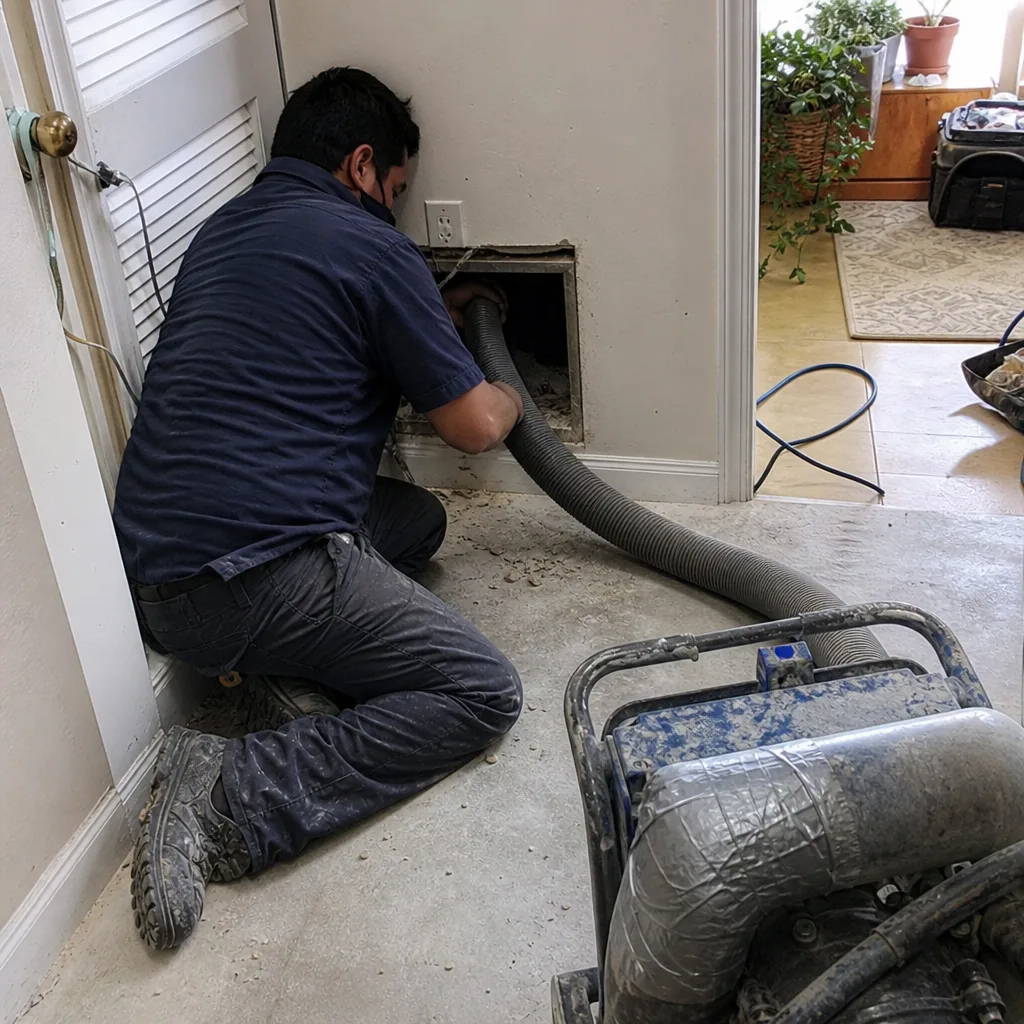 Before
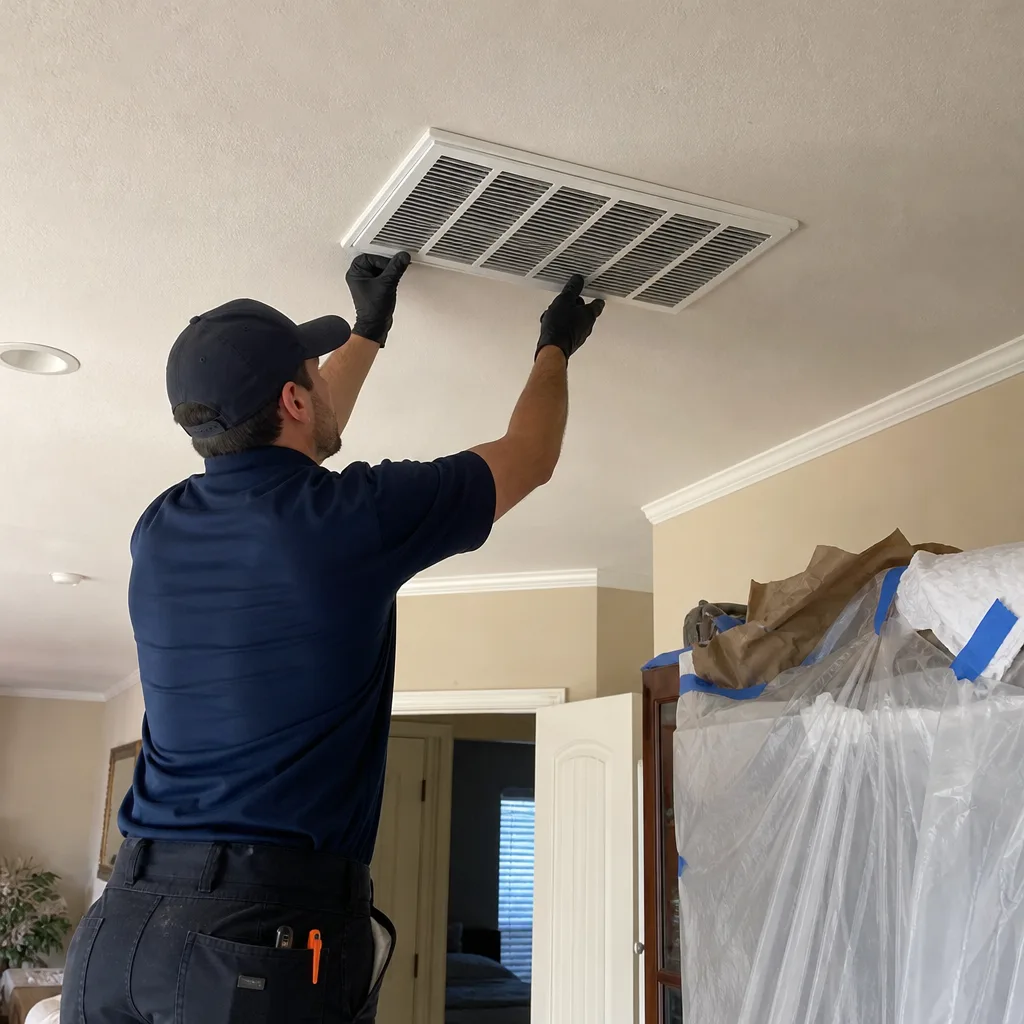 After
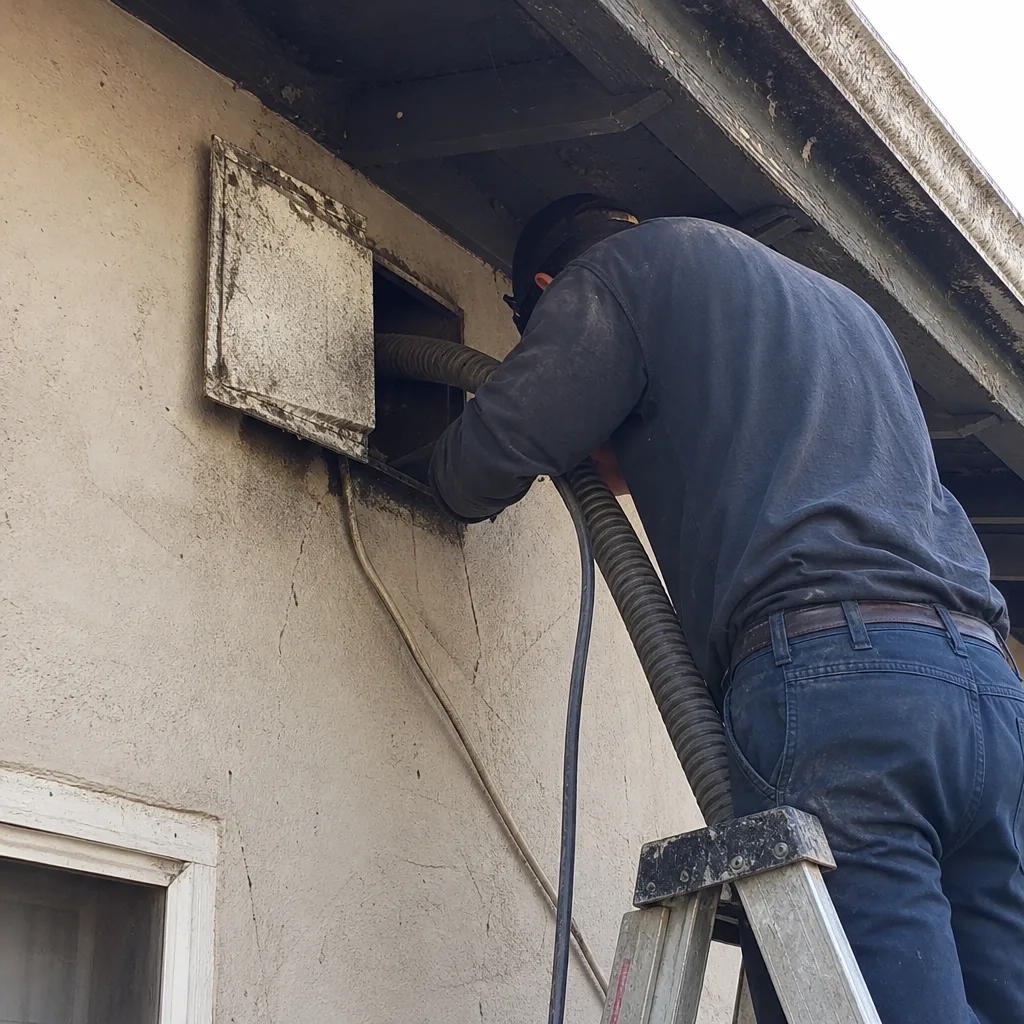 Before
 After
 Before
 After