
Last updated November 2, 2026
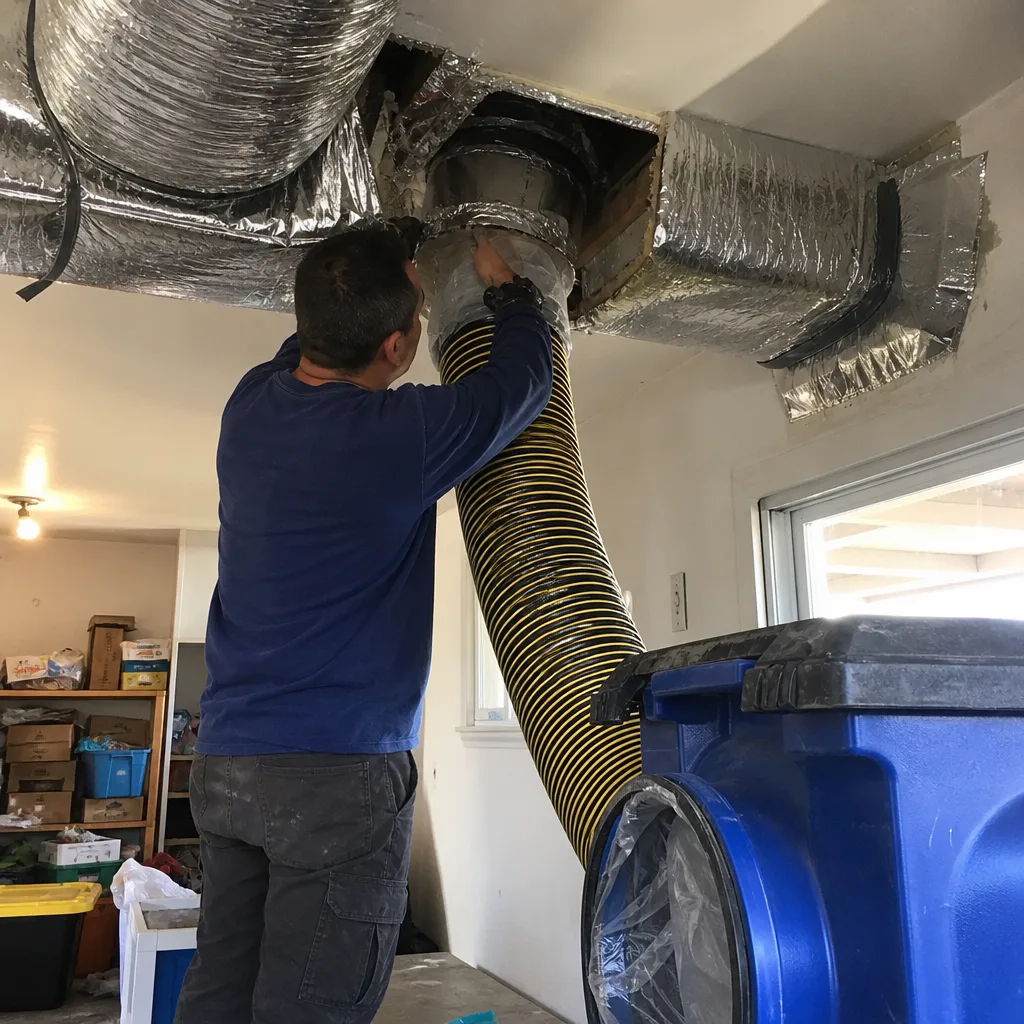
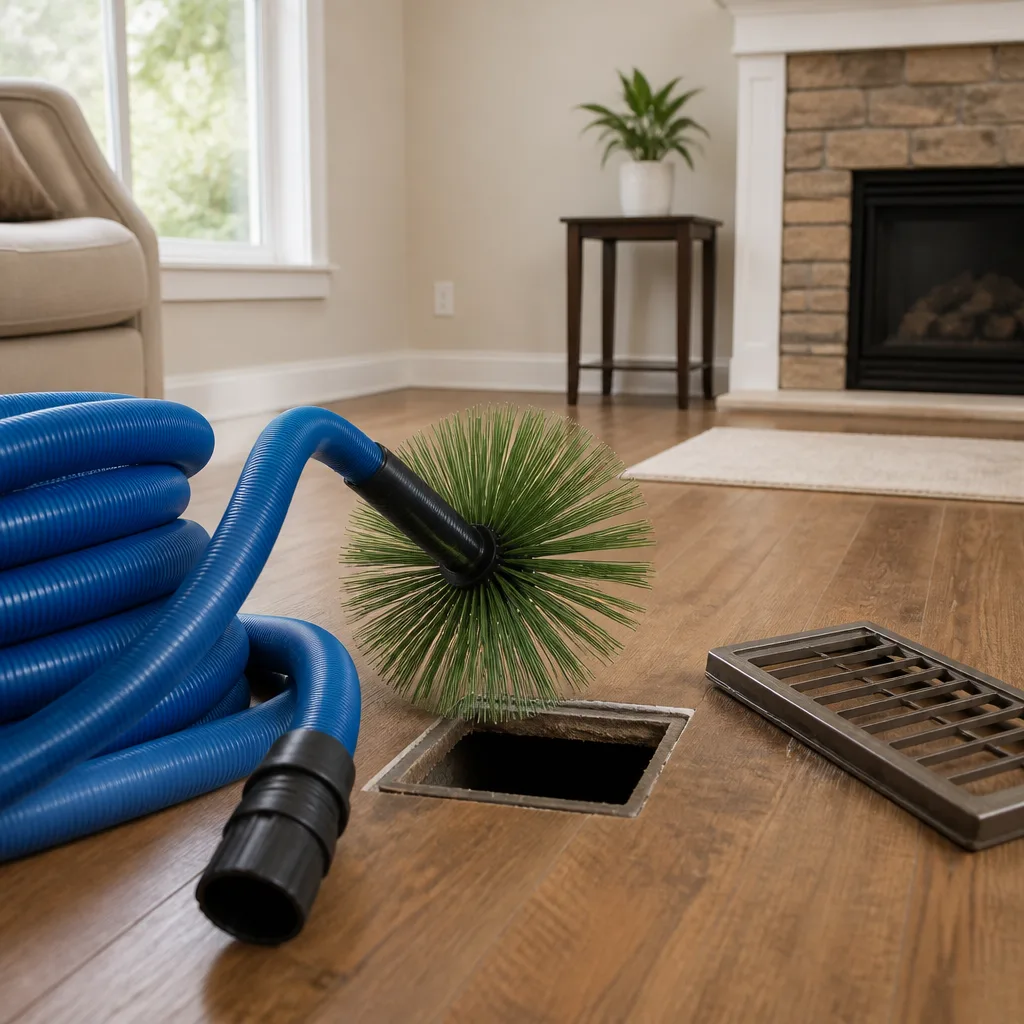 Whole-home duct cleaning
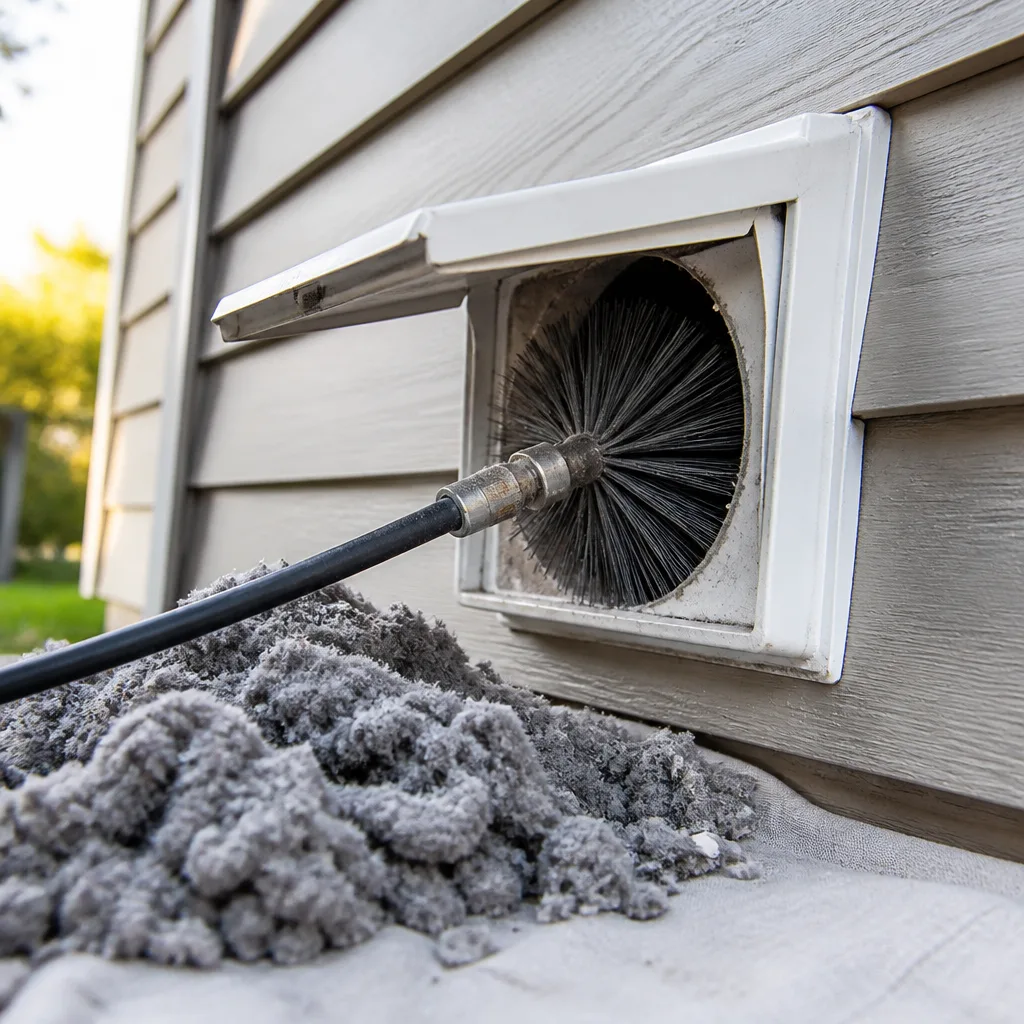 Dryer vent cleaning
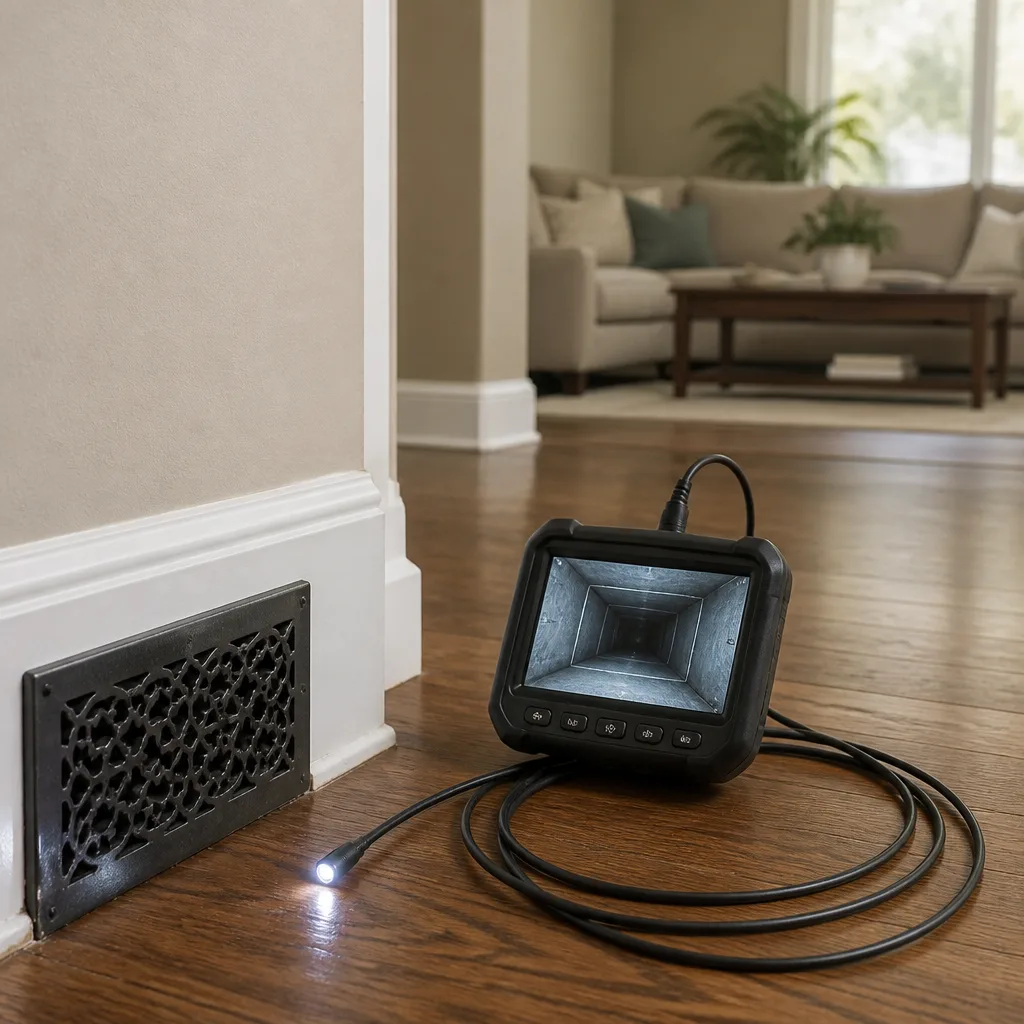 Camera inspection
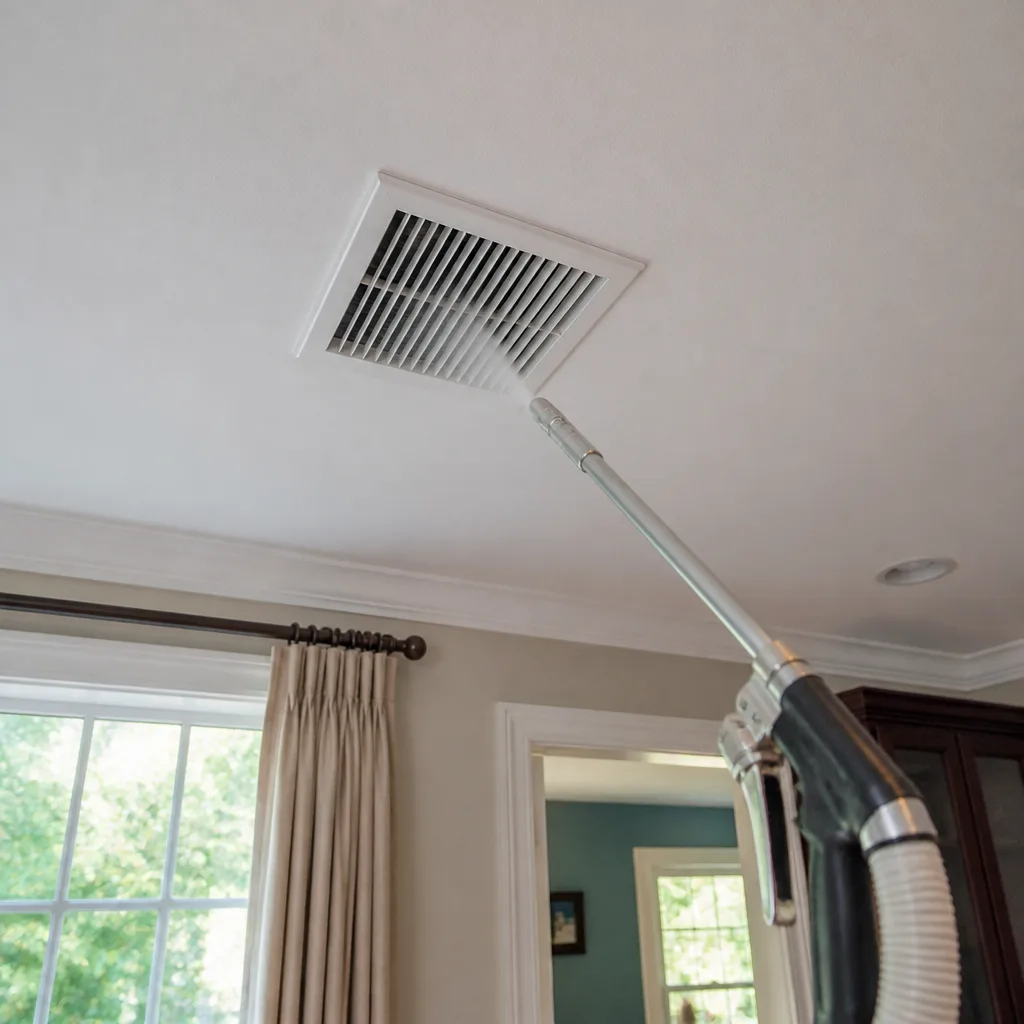 Sanitizing & deodorizing
Whole-system duct and dryer vent check with before-and-after photos - you see exactly what came out of your vents
That "$99 whole-house special" is a bait ad - the real number appears once they are in your hallway, or the "clean" is a shop-vac at the register. We photograph the inside of your ducts before and after instead.
Air Duct Cleaning Troubleshooting: Common Problems and How to Fix Them
A homeowner who gets their ducts cleaned for a musty smell and still smells it two weeks later didn’t waste money on cleaning. They wasted money on the wrong diagnosis. In Union City, where homes range from 1960s ranch-style builds near Alvarado to newer developments off Decoto Road, duct systems age differently, leak differently, and fail differently than homeowners expect. This guide maps the symptoms you’re noticing (the smell, the dust, the cold spare bedroom) to the actual root causes, so you can either fix a small problem yourself or know exactly what to ask a contractor before anyone opens an access panel.
Styles & brands we work with
- Whole-home duct cleaning
- Dryer vent cleaning
- Camera inspection
- Sanitizing & deodorizing
Quick Answer
Most air duct problems fall into three categories: contamination (what cleaning fixes), leakage (what only duct repair fixes), and equipment failure (what HVAC service fixes). Cleaning resolves dust, debris, and many odor issues, but a musty smell that returns within weeks usually points to a mold reservoir in the drain pan or coil, and uneven room temperatures usually point to leaking or disconnected duct runs, not dirty ducts. Knowing the difference before you hire anyone saves you from paying for the wrong service.
Table of Contents
- Symptom-to-Cause Mapping: What Cleaning Fixes vs. What It Can’t
- Why Odors Return After Cleaning (and Where They Actually Live)
- Duct Leakage vs. Contamination: Why Leaky Ducts Make Cleaning Less Effective
- The Diagnostic Steps a Technician Should Take Before Starting Work
- How to Tell If a Cleaning Was Incomplete (and How to Push Back)
- What You Can Safely Do Yourself vs. What Needs Professional Equipment
- When the Problem Isn’t the Ducts at All: HVAC System Interactions
- Common Mistakes to Avoid
- When to Call a Professional
- Frequently Asked Questions
- The Bottom Line
Symptom-to-Cause Mapping: What Cleaning Fixes vs. What It Can’t
Duct cleaning removes what’s inside the ducts: accumulated dust, construction debris, pet hair, and the film that builds up on duct walls over years of conditioned air passing through. That’s a real service with real benefits, especially in Union City, where the dry summer months pull dust from the East Bay hills and the damp winter months give it something to stick to. But cleaning is not a cure-all. Here’s the mapping that matters:
- Dust on surfaces within days of cleaning: Usually a leaky return duct pulling attic or crawlspace air into the system. Cleaning won’t fix this. Air Duct Repair in Union City addresses it at the source.
- Musty odor that returns within 2-4 weeks: Not in the ducts. It’s in the evaporator coil, the drain pan, or the condensate line. Requires HVAC service, not duct cleaning.
- One room always 8-10 degrees off from the rest of the house: A disconnected or crushed branch run, or a damper stuck shut. Cleaning won’t restore airflow to that room.
- Visible mold growth on vent covers or inside accessible duct openings: This requires more than cleaning. The source of moisture feeding the mold has to be found and corrected, or it returns.
- Burning smell when the heat first kicks on in fall: Dust accumulation on the heat exchanger. This is the one case where cleaning genuinely resolves the odor, because the dust is inside the equipment and ductwork.
- Sudden spike in energy bills without a rate change: Often duct leakage. Conditioned air is leaving the system before it reaches the rooms. Cleaning does nothing for this.
We’ve seen Union City homeowners pay for three separate cleanings over five years for a smell that never went away, because nobody looked at the drain pan. That’s not a cleaning problem. That’s a diagnostic failure. The right technician identifies the cause before touching equipment.
Why Odors Return After Cleaning (and Where They Actually Live)
Odor is the most common reason people call for duct cleaning, and the most misunderstood symptom in the whole trade. Here’s the direct answer: if a smell originates inside the ductwork itself, a thorough cleaning removes it. If the smell originates anywhere else in the HVAC system, cleaning doesn’t touch it, and the odor returns on schedule.
The most common odor reservoirs in Union City homes, in order of how often we encounter them:
- The evaporator coil and drain pan: This sits above or beside your furnace, and it’s wet all summer. Dust, pet hair, and skin cells collect on the wet coil, and microbial growth follows. The smell blows through your ducts, but the source is at the coil. Cleaning the ducts without addressing the coil is like shampooing a carpet with a wet dog still sleeping on it.
- Dead rodents in branch runs: In older Union City neighborhoods with established trees and mature landscaping, rodents get into crawlspaces and attic duct runs more often than homeowners realize. A dead rodent in a branch line produces an odor that fades after a few weeks, but the carcass remains, and the smell returns with humidity cycles. Cleaning may remove it, or it may require physical access and removal.
- Condensate line blockages: A clogged condensate drain backs water up into the drain pan, where it stagnates. The smell is distinctly musty-sour, not dusty. Clearing the line is the fix. Cleaning the ducts is not.
- Return duct pulling crawlspace air: If the return side has a leak, it’s actively pulling in whatever the crawlspace smells like: damp earth, mildew, pest activity. The ducts themselves may be spotless. The smell keeps coming because the leak keeps pulling it in. This is a repair issue, and it’s why a proper Air Duct Cleaning in Union City inspection includes checking for exactly this before cleaning begins.
Here’s the diagnostic question that separates a professional from someone with a vacuum: “When do you smell it?” If the smell is strongest when the HVAC fan runs, the source is in the air stream, which could be ducts or equipment. If the smell is constant regardless of HVAC operation, it’s structural (drywall, flooring, crawlspace). If the smell only appears when the AC runs, it’s the coil. If it only appears when the heat runs, it’s the heat exchanger. The answer determines the service you actually need.
Duct Leakage vs. Contamination: Why Leaky Ducts Make Cleaning Less Effective
Duct leakage is the most under-diagnosed problem in residential HVAC, and it fundamentally changes what cleaning can accomplish. Here’s the direct answer: if your ducts leak, cleaning them helps, but the system re-contaminates itself because outside air keeps getting pulled in through the gaps.
In Union City, duct leakage is especially common in two housing types: homes built before 1990, where ductwork was often assembled with basic sheet metal screws and cloth tape that has long since failed, and homes with ductwork running through unconditioned attics, where thermal cycling works connections loose over decades. The temperature swings between Union City’s hot inland summer days and cool bay-influenced nights put constant expansion stress on those connections.
Signs your ducts are leaking, not just dirty:
- Rooms farthest from the furnace are weak, while rooms close to it blow strong.
- Your utility bill is consistently higher than neighbors in similar homes.
- You see dust streaks around vent covers shortly after cleaning.
- The house gets dusty faster than it should based on occupancy and pets.
- A smoke pencil or tissue held near duct connections shows air movement when the fan runs.
The interaction between leakage and cleaning matters. When the return side leaks (which is common in unconditioned spaces), the negative pressure pulls attic air, crawlspace air, or wall cavity air into the system. That air carries whatever contaminants those spaces contain. You could clean the ducts perfectly, and within weeks the same contaminant load is back, because the system keeps ingesting unfiltered air. This is why a competent cleaning starts with an inspection that checks for leakage, and why some jobs require sealing before cleaning makes sense. This is also where having a provider who handles both matters: Air Duct Repair in Union City means the leak gets fixed, then the cleaning happens once, properly.
The Diagnostic Steps a Technician Should Take Before Starting Work
A professional duct cleaning isn’t just a vacuum job. It begins with diagnosis, and the diagnostic process tells you everything about whether you’ve hired someone competent or someone with a truck-mounted marketing budget. Here’s what the technician should do before any cleaning equipment gets set up:
- Walk the system: Count the supply and return registers. Note their locations. Check for blocked or closed registers. Ask which rooms are uncomfortable and when. This takes ten minutes and reveals more than an hour of blind cleaning.
- Open the filter slot: Check filter condition, type, and fit. A dirty filter changes airflow and can cause coil freeze and condensate problems. A wrong-size filter lets unfiltered air bypass. Both are cheap fixes but critical diagnostics.
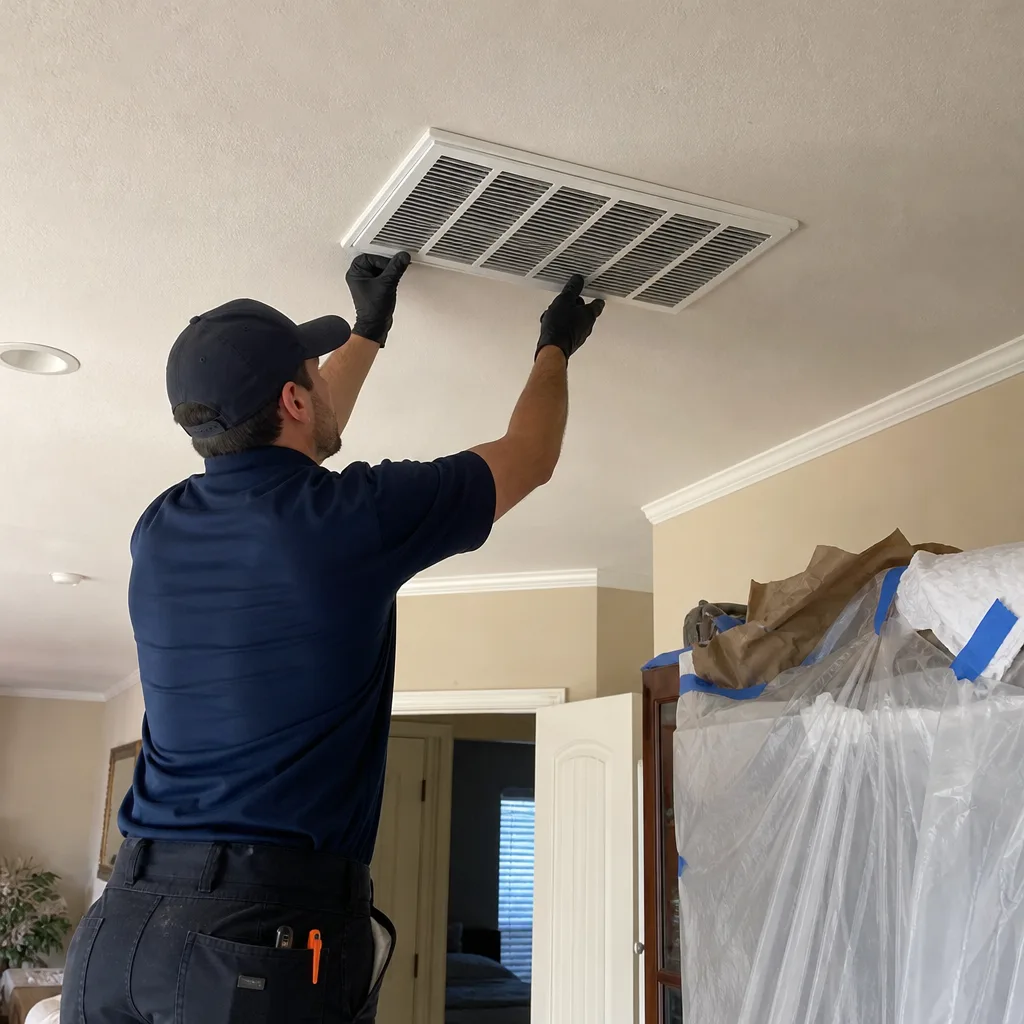
- Inspect accessible duct sections: In attics and crawlspaces where ductwork is visible, look for disconnected runs, crushed flex, sagging sections, and obvious gaps at connections. Photograph findings.
- Examine the return side specifically: Return ducts run under negative pressure and are the most common leak points. Look for gaps at the plenum, at the filter housing, and at any taped joints.
- Check the evaporator coil and drain pan: If accessible, visually inspect for microbial growth, standing water, or heavy dust loading. This determines whether the odor complaint is a duct problem or a coil problem.
- Run the system briefly: Listen for rattles (loose ducts, debris in the blower), feel register airflow (weak runs, blocked runs), and note any musty odors that strengthen with fan operation.
Red flags that signal you should stop the job and call someone else: the technician quotes a price per vent without inspecting anything. The technician says the job takes 45 minutes. The technician doesn’t ask about your specific complaints before setting up equipment. The technician has no answer when you ask how they’ll handle the return side. Any of these means you’re not getting diagnosis, you’re getting a sales script with a vacuum attached.
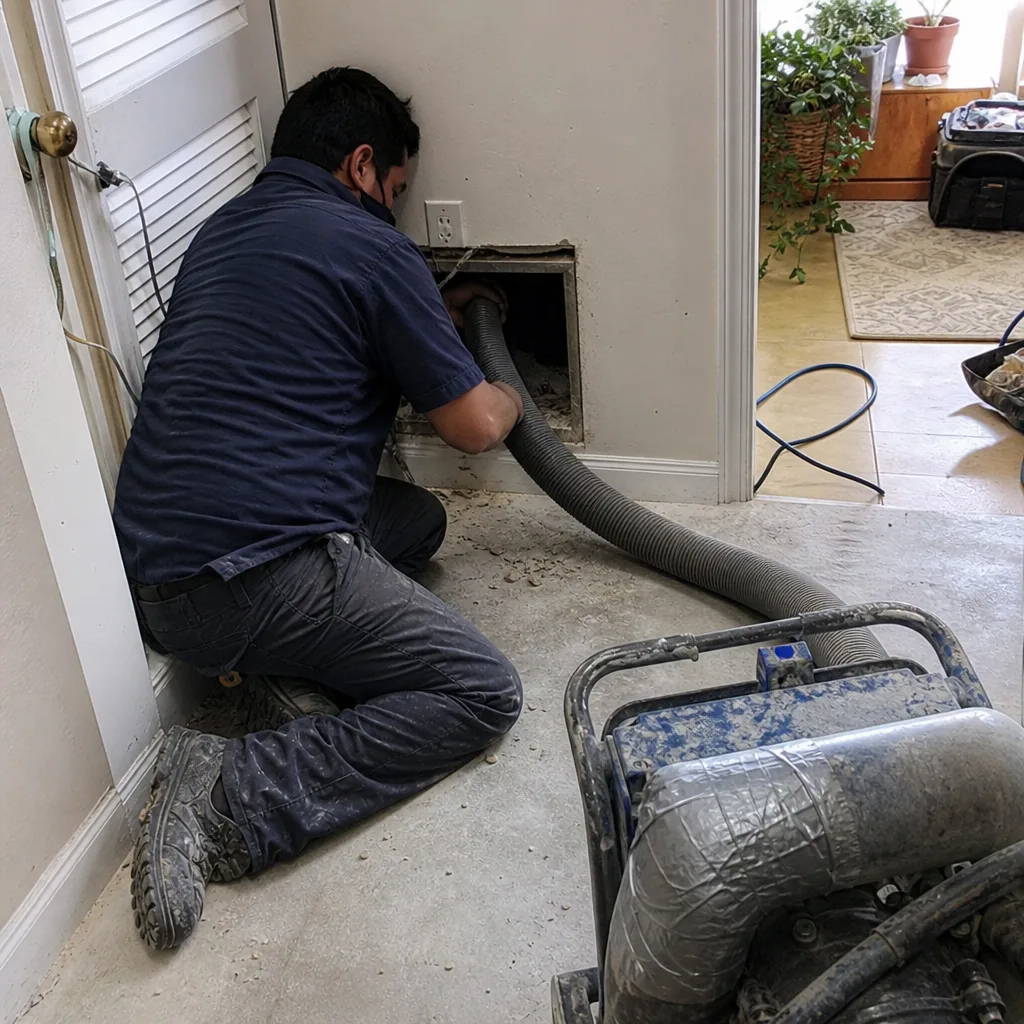
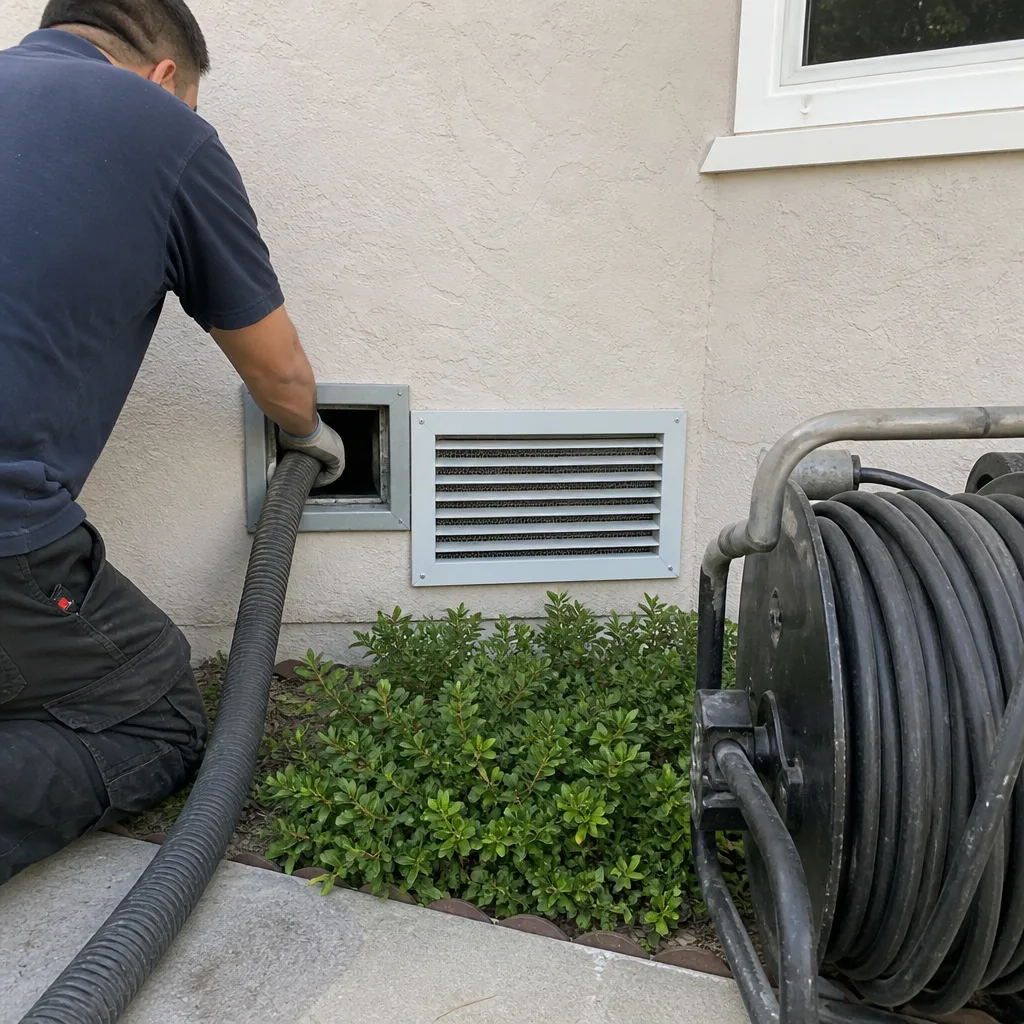
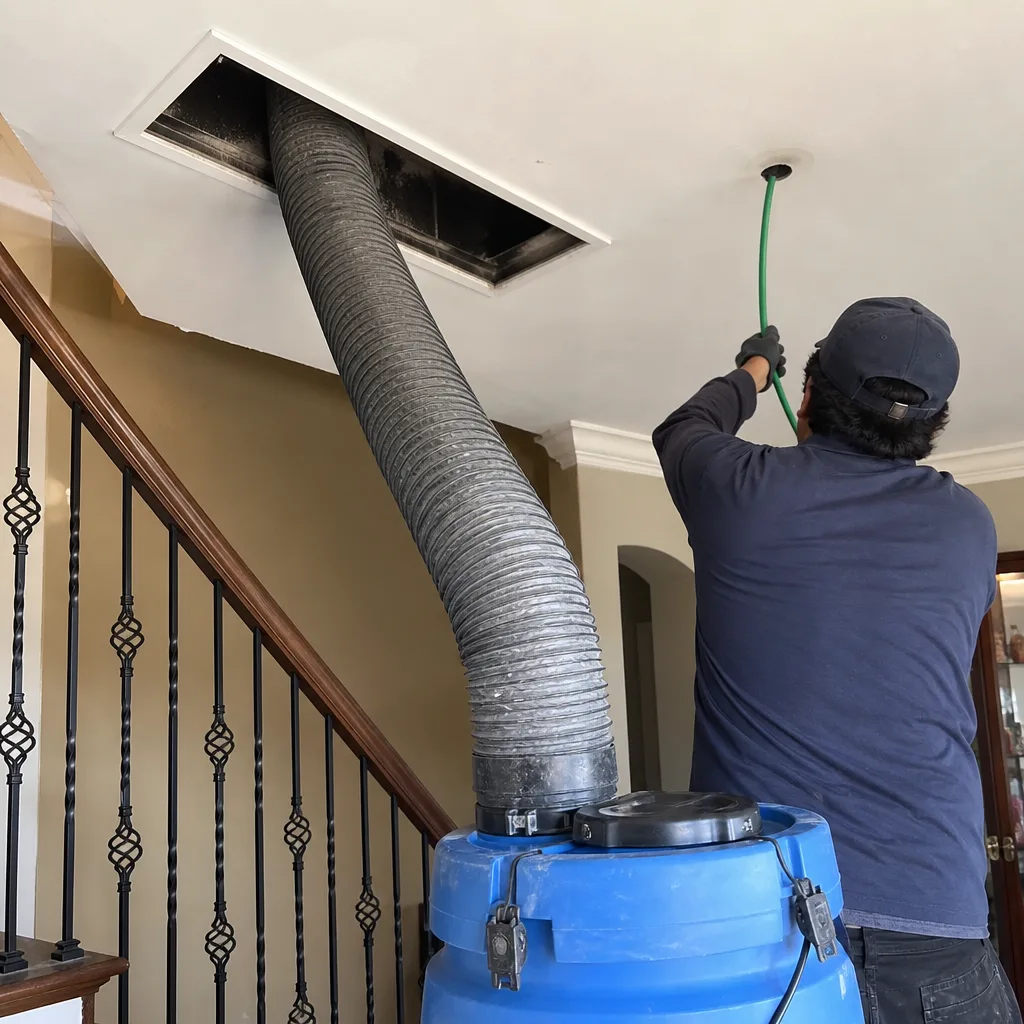
We run Rotobrush and Nikro systems on Duct Cleaning Union City home service calls, but the equipment matters less than the sequence. We inspect first, always. The equipment is how we fix what the inspection finds.
How to Tell If a Cleaning Was Incomplete (and How to Push Back)
Not all duct cleanings are created equal. The difference between a thorough cleaning and a surface pass-through is measurable, and homeowners can check it themselves. Here’s how to determine if the job was done properly, and what to say if it wasn’t.
The most reliable verification method is negative air pressure testing. A proper cleaning should put the duct system under negative pressure (using a commercial extraction unit like a Nikro or Rotobrush system) to capture contaminants as they’re dislodged rather than blowing them into the house. After the cleaning, the technician should be able to show you:
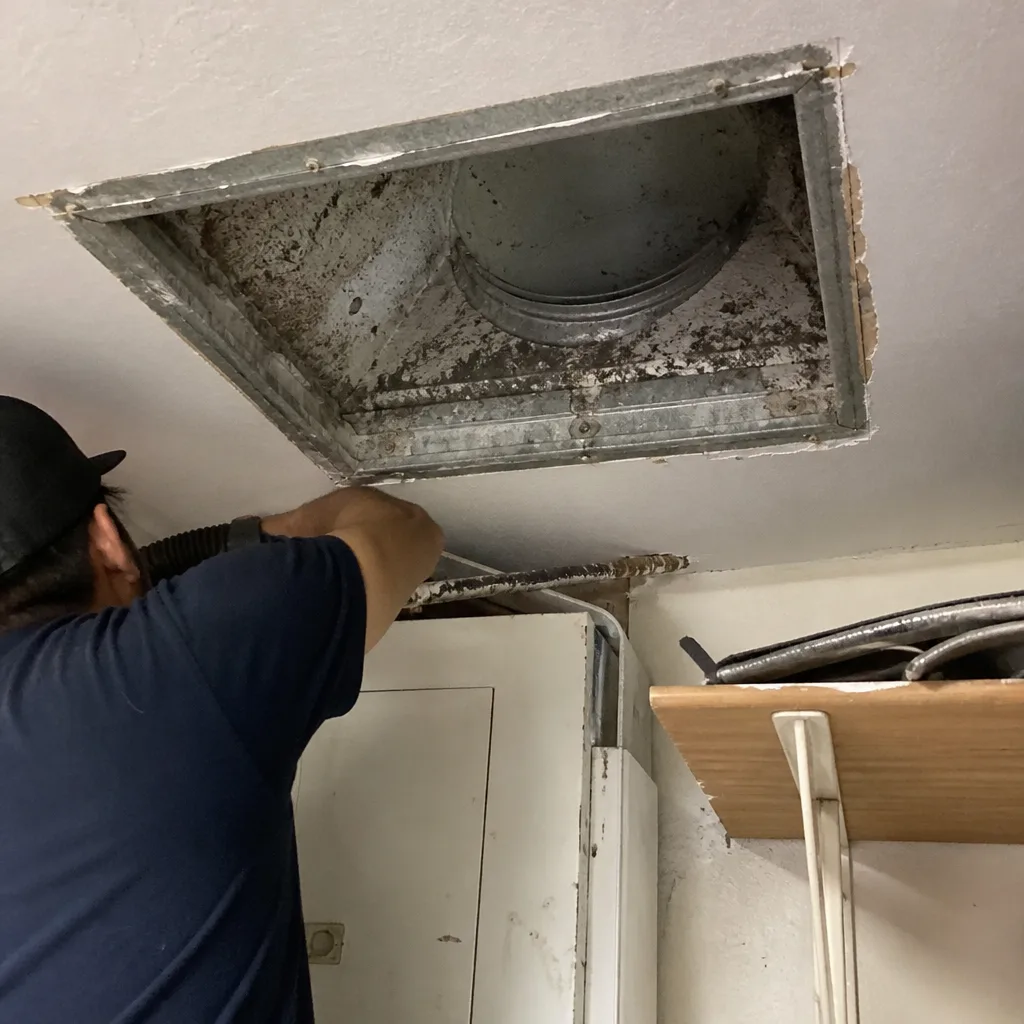
- Before-and-after photos from inside the ducts: A reputable contractor sends a camera through the system before and after. If they can’t show you after-photos, ask why.
- Visible improvement at previously dirty registers: The boot and register areas you could see were dirty before should be visibly different after.
- A decrease in dust dislodged during a post-cleaning system run: Run the system after they leave and hold a white cloth at a register for a few minutes. Some residual dust is normal immediately after, but heavy debris means the job wasn’t finished.
If you suspect an incomplete cleaning, here’s the push-back sequence:
- Ask for the before-and-after documentation. If they can’t produce it, they didn’t do it. Say: “I need to see the camera footage from inside the branch lines, not just the main trunk.”
- Point to the specific register or room that was your original complaint. “The guest room off the hall was the reason I called. What did you find in that run, and what does it look like now?”
- Request negative pressure verification. “Can you show me the system under negative pressure, or confirm the extraction equipment was running on the return side during the entire cleaning?”
- Get specific about branch runs. The main trunk line is easy to reach. The 6-inch branch runs to individual rooms are the labor-intensive part, and they’re where corners get cut. Ask: “Which branch lines did you access, and how?”
A contractor who did the work can answer these questions without hesitation. One who can’t is telling you something important about how they operate.
What You Can Safely Do Yourself vs. What Needs Professional Equipment
Some duct system maintenance is homeowner-appropriate. Some is not. The line is drawn by access, equipment, and safety. Here’s the honest breakdown.
Reasonable for homeowners:
- Replacing the HVAC filter on schedule (every 30-90 days depending on filter type, pets, and occupancy).
- Vacuuming register covers and the visible boot area with a shop vacuum.
- Wiping down accessible vent covers with a damp cloth.
- Checking for closed or blocked registers and correcting them.
- Looking for visible gaps at accessible duct connections and flagging them for a professional rather than attempting DIY tape repairs that fail within a year.
Not reasonable for homeowners:
- Cleaning the full duct system. Consumer vacuums can’t reach more than a few feet into a duct run, and attempting to brush duct interiors without negative pressure collection simply moves contaminants around or pushes them into the house.
- Accessing and cleaning the evaporator coil. The coil is delicate, often in a tight location, and cleaning products applied incorrectly can damage fins or create corrosion.
- Repairing disconnected or crushed duct runs. This requires access to attic or crawlspace areas that often have limited headroom, sharp trusses, and electrical hazards.
- Addressing mold growth. If you can see microbial growth on insulation inside a duct, that insulation typically needs replacement, not surface treatment.
This is the distinction that matters: consumer equipment can maintain the visible parts of the system. Professional equipment, like the Rotobrush and Nikro systems used by Air Duct Cleaning in Union City providers, reaches the unseen parts: the branch runs, the return drops, the plenum. The tools define the job. That’s why phrases like “professional-grade equipment” aren’t marketing fluff in this industry. They’re the difference between cleaning what you can see and cleaning what you breathe.
When the Problem Isn’t the Ducts at All: HVAC System Interactions
Ducts don’t operate in isolation. They’re the distribution network for a mechanical system, and problems in the equipment manifest as symptoms that seem like duct problems. Before you schedule a cleaning, here’s how to separate equipment issues from duct issues.
The evaporator coil is the most common source of misdiagnosis. When the AC runs, the coil condenses moisture from the air. That moisture, combined with dust that bypasses the filter, creates a wet, organic film on the coil surface. In Union City’s mild climate, where AC systems may run intermittently for months rather than daily, that film has time to develop between cycles. The result: a musty smell that only appears when the AC runs. The ducts may be perfectly clean. The problem is at the coil, and the fix is coil cleaning, not duct cleaning.
Similarly, a blower motor that’s failing can reduce airflow so significantly that every room feels weak. Homeowners sometimes interpret this as “clogged ducts” when the ducts are fine and the blower is dying. The diagnostic cue is whether airflow changed gradually over months (equipment failure) or whether one specific room is weak while others are fine (duct problem).
And then there’s the filter. A heavily loaded filter restricts airflow, which causes the blower to work harder, which in some systems can pull more air through return-side gaps, which pulls in more contaminants, which makes the ducts dirtier faster. It’s a cascade. The fix starts with the filter.
For homes where whole-system air quality is the goal, the equipment matters after the ducts are clean. Brands like Aprilaire and Honeywell make filtration and humidity control systems that integrate with the HVAC system, and that’s a conversation worth having after the duct system is verified clean and sealed. Duct cleaning is the foundation. Dryer Vent Cleaning in Union City is the safety layer on top, addressing a separate ventilation system that carries its own fire and efficiency risks.
Common Mistakes to Avoid
- Calling for cleaning when you actually need repair. If one room is cold and the others are fine, your ducts don’t need cleaning. You have a disconnected or crushed run. Cleaning won’t change the airflow, and you’ll wonder why you spent the money.
- Hiring based on a per-vent price without an inspection. The per-vent pricing model incentivizes speed and punishes thoroughness. A professional gives a whole-system price after seeing the system, not a phone quote before ever looking at the ducts.
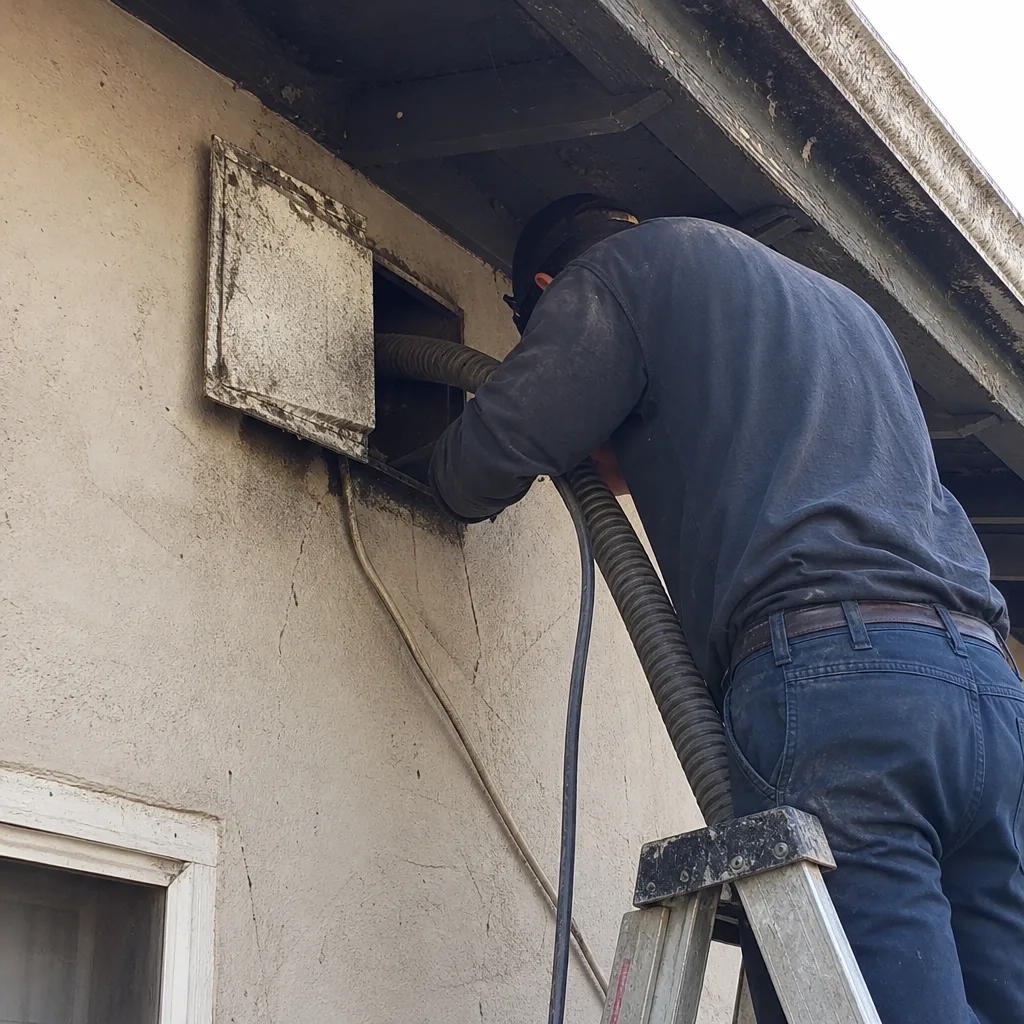
- Skipping dryer vent service when it’s genuinely the higher-risk system. Dryer vents cause thousands of residential fires every year in the United States. Duct cleaning improves air quality; dryer vent cleaning addresses a fire hazard. Both matter, and they require different equipment.
- Assuming every company has the same equipment. They don’t. A portable consumer vacuum is not a Rotobrush system. A truck-mounted extraction unit is not a Nikro negative air machine. The equipment gap is real and it affects the result.
- Ignoring the return side. Supply ducts push air into rooms. Return ducts pull air from the house back to the equipment. Both get dirty, but the return side often gets ignored because the registers are fewer and less visible. An incomplete return cleaning means the system stays dirty.
- Expecting cleaning to fix a humidity problem. If your crawlspace is damp and your house smells musty, cleaning the ducts does nothing about the crawlspace. The moisture source has to be addressed or the odor persists, regardless of how clean the ducts are.
When to Call a Professional
Call a professional when your symptom is in the duct system itself: visible dust blowing from supplies, recurring dust loading after filter changes, odors that track with HVAC fan operation, or airflow problems affecting specific rooms. Also call when you’ve recently completed renovation work. Construction dust in ducts is abrasive, and it shortens the life of blower components if left in circulation. And call if you’ve never had the system inspected in a home you’ve owned for more than five years. You don’t know what’s in there until someone looks. Duct Cleaning Union City offers free estimates in Union City. Call (877) 824-3121 to schedule an inspection before you commit to any service.
Frequently Asked Questions
Check the return grill and the inside of a supply register with a flashlight. If you see visible dust accumulation, debris, or dark staining on the duct walls, the system has reached a point where cleaning is warranted. Also consider cleaning after renovations, after pest issues, or if household allergy symptoms consistently improve when you’re away from home. In Union City, the dust load from dry summer conditions means most homes benefit from an inspection every three to five years, even if cleaning isn’t always needed that often.
Because the source was never in the ducts. Musty HVAC odors that return after cleaning almost always come from the evaporator coil, the drain pan, or condensate line. The coil gets wet when the AC runs, and organic material grows on it. That smell blows through clean ducts and smells like a duct problem. Have the coil and drain system inspected. This is a separate service from duct cleaning and requires different access and equipment.
No. Uneven temperatures are an airflow problem, not a cleanliness problem. If a room is consistently hot or cold, the cause is a duct system issue: a disconnected run, a crushed flex line, an uninsulated section losing heat or cool air to an attic, or a damper stuck in a bad position. Cleaning doesn’t change how air moves. You need a duct inspection focused on airflow and connection integrity, and possibly duct repair.
A thorough cleaning of a typical single-family home in Union City takes three to six hours, depending on the number of runs, system accessibility, and the condition of the ducts. Any company claiming to do it in under an hour is doing a partial job, typically the main trunk line only. Branch runs take time to access and clean properly. The labor is in the branch lines.
Ask for before-and-after photos from inside the system, check that the registers you could see were dirty before are visibly different after, and run the system while holding a white cloth at a supply register for a minute. Some fine dust immediately after is normal, but visible debris means the job wasn’t finished. Also verify the technician accessed the return side, not just the supplies. Both sides carry air.
No, and the confusion is common. Dryer vents are the metal or flexible duct that carries lint, heat, and moisture from your dryer to the outside. That system requires different equipment and different techniques than HVAC air ducts. Dryer vents accumulate highly flammable lint, and clogged dryer vents are a leading cause of residential fires. A proper dryer vent cleaning uses rotating brushes and high-volume airflow specifically designed for lint removal. It’s a separate service, and it matters for fire safety, not just air quality.
The Bottom Line
Duct cleaning is a real service with real value, but it only works when it’s applied to the right problem. The symptoms homeowners notice (dust, odor, uneven airflow) are clues, not conclusions. Reading them correctly before you call anyone means the difference between one properly-diagnosed service and three misapplied ones. In Union City, where mild weather masks HVAC inefficiencies and older housing stock brings with it older ductwork, the case for diagnosis-first service is especially strong. Get the system inspected by someone who can name the equipment they use, show you what they found, and fix what’s broken, not just clean what’s dirty.
Written by the team at Duct Cleaning Union City, serving Union City since 2015.
See the difference
 Before
 After
 Before
 After
 Before
 After