
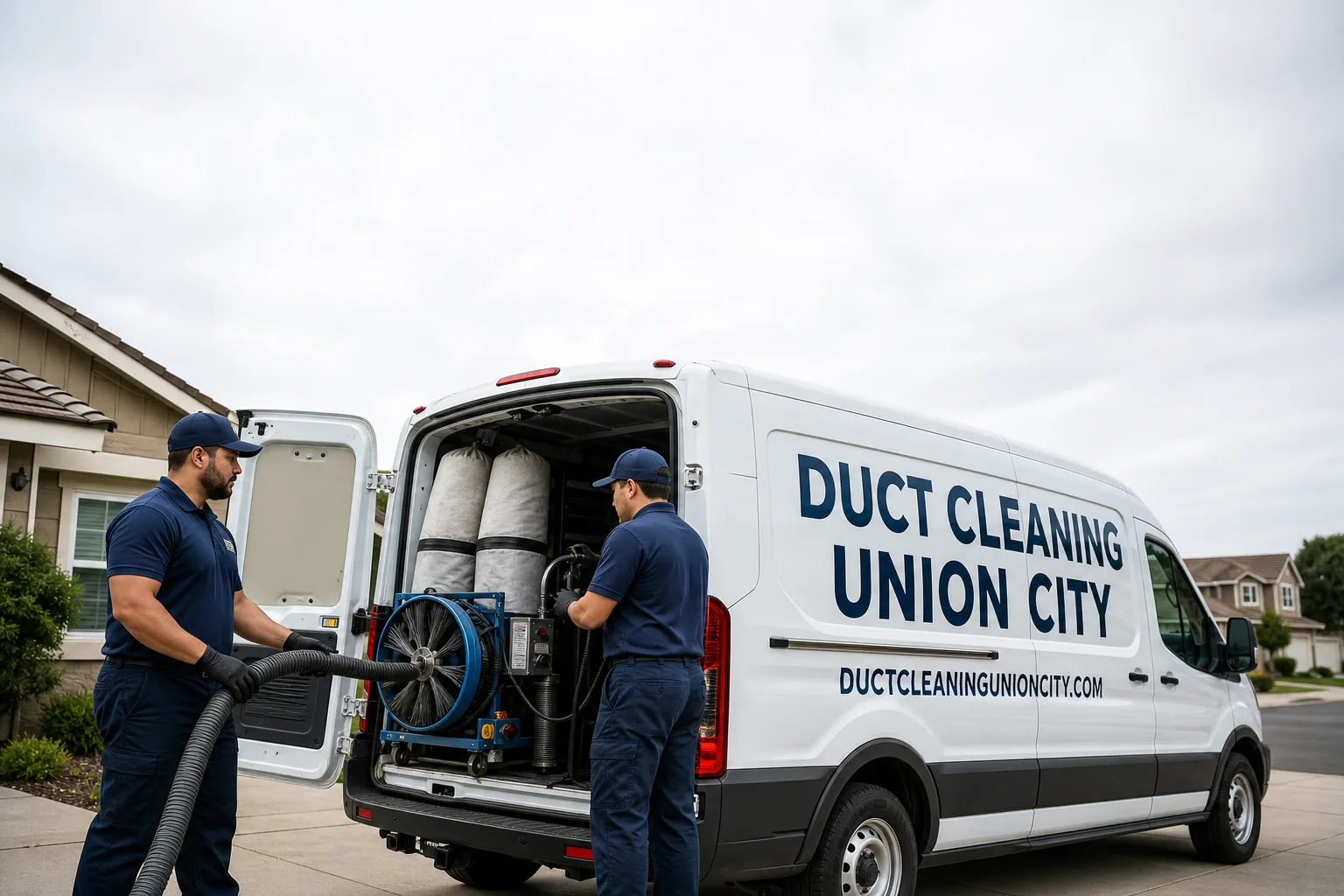
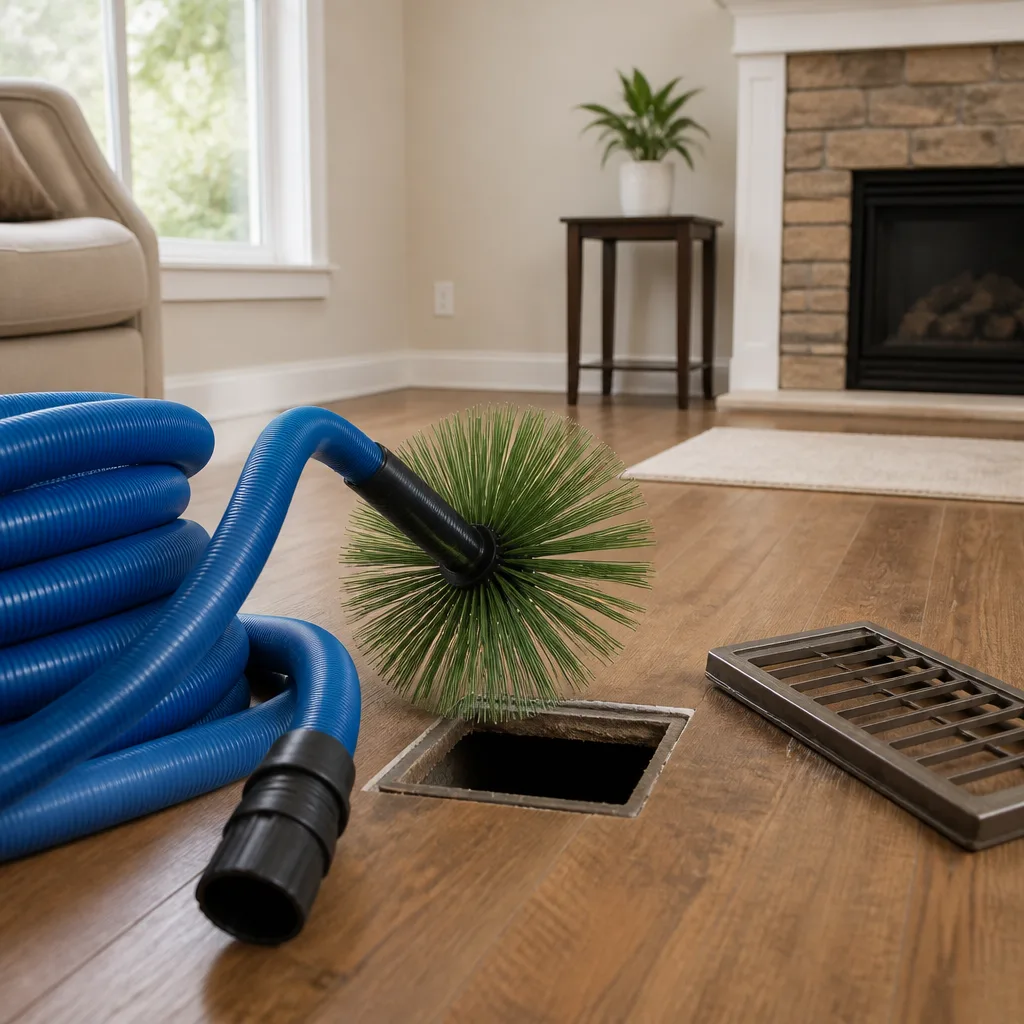
 Whole-home duct cleaning
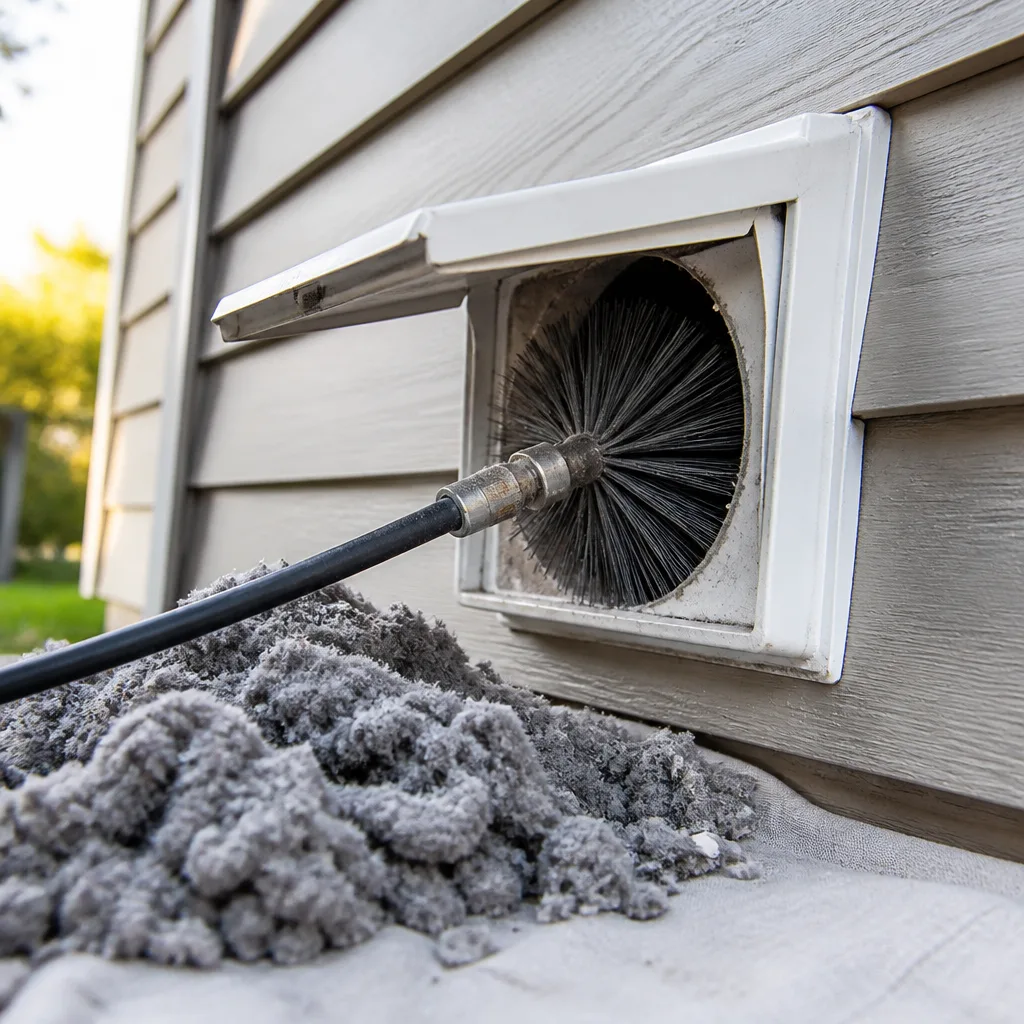 Dryer vent cleaning
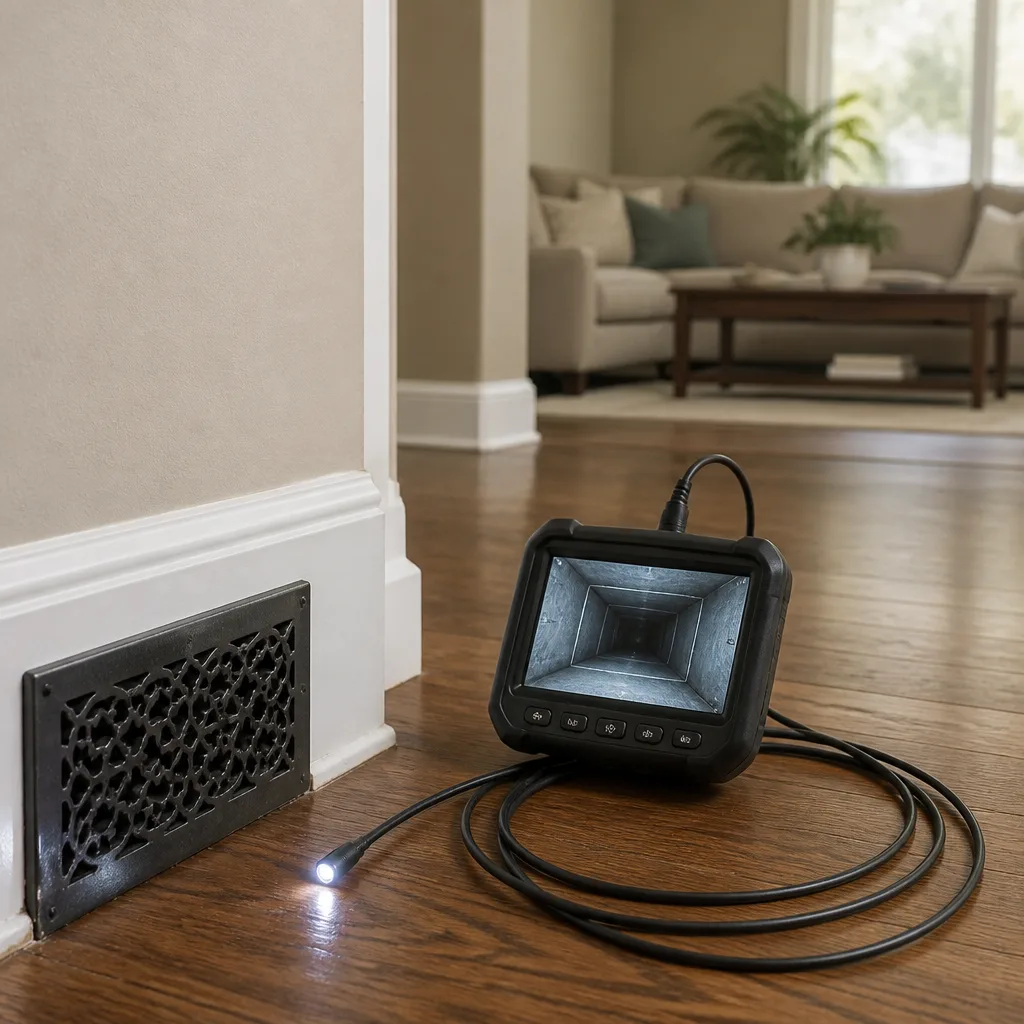 Camera inspection
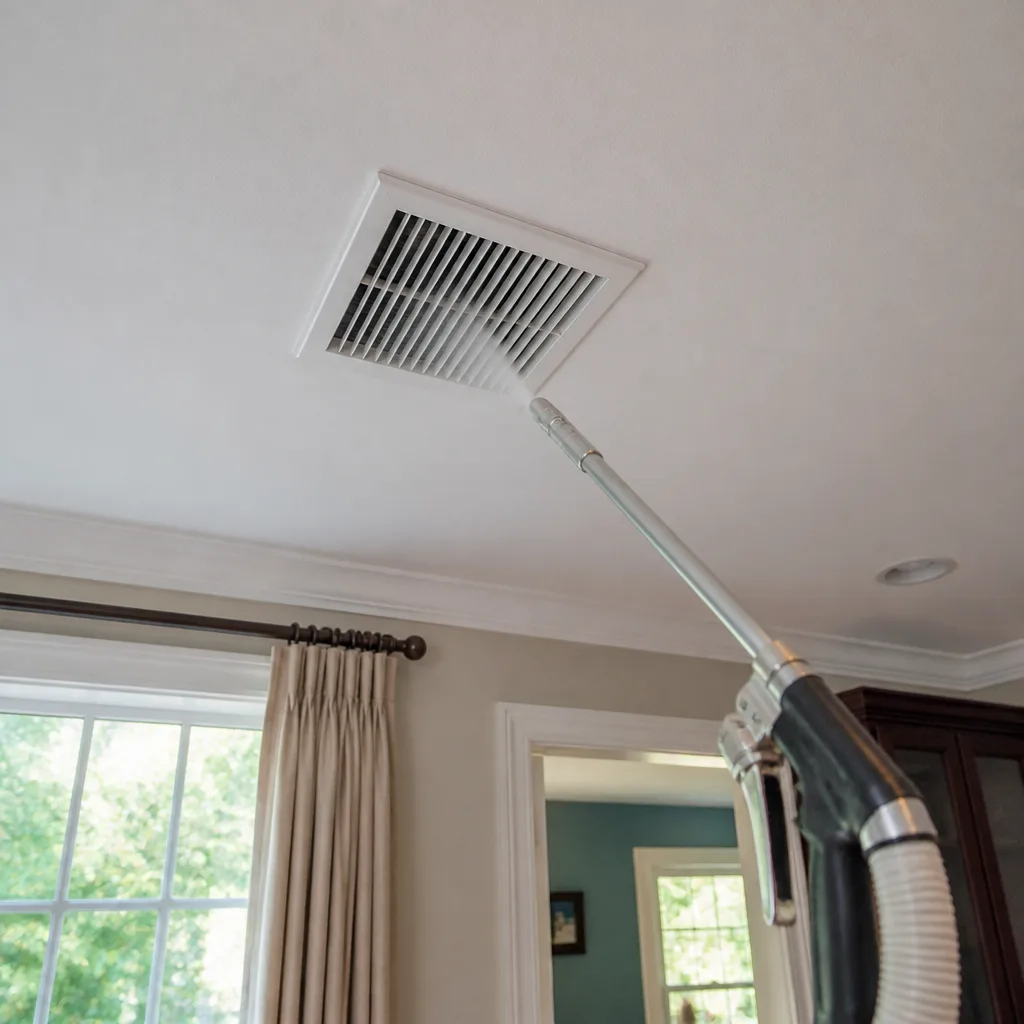 Sanitizing & deodorizing
Whole-system duct and dryer vent check with before-and-after photos - you see exactly what came out of your vents
That "$99 whole-house special" is a bait ad - the real number appears once they are in your hallway, or the "clean" is a shop-vac at the register. We photograph the inside of your ducts before and after instead.
Air Duct Cleaning in Stanford: What It Costs and What We Find
Air duct cleaning in Stanford, CA typically runs $450 – $900 for a full residential system, with commercial and university-affiliated buildings ranging from $1,200 – $3,500 depending on square footage and access requirements. Most jobs in Stanford are completed in 4 – 7 hours. The work involves source-removal cleaning using professional-grade Rotobrush and Nikro equipment, not consumer vacuums, and includes before-and-after video inspection so you can verify the results yourself.
Stanford is not a typical duct cleaning market. The ZIP code is 94305 and the building stock runs from century-old campus structures with asbestos-wrapped ducts to mid-century faculty housing with original galvanized runs. You need a crew that understands both. That’s why we built our Stanford service around the specific compliance and infrastructure issues this area presents. Call (877) 824-3121 for a free estimate on any duct cleaning or inspection in Stanford.
Key Takeaways for Stanford Duct Cleaning
- Full residential duct cleaning in Stanford: $450 – $900; light commercial and university space: $1,200 – $3,500
- We use Rotobrush and Nikro source-removal systems, not residential vacuums
- Stanford’s older buildings require asbestos awareness and CALOSHA-compliant handling protocols
- Video inspection before and after is standard on every job
- We fix what we find: disconnected runs, crushed ducts, and sealing work are handled on the same visit
Styles & brands we work with
- Whole-home duct cleaning
- Dryer vent cleaning
- Camera inspection
- Sanitizing & deodorizing
Why Duct Cleaning Union City Is the Air Duct Cleaning Company Stanford Calls
Nelson Abreu built this company around a simple idea: duct cleaning should be done with equipment built for the job. The Rotobrush and Nikro systems we run are what serious mechanical contractors use on commercial and institutional work. That matters in Stanford, because a good portion of the ductwork here isn’t in standard suburban homes. It’s in campus buildings, research facilities, and older faculty residences with systems that don’t forgive shortcuts.
Our reputation in Stanford comes from solving problems other cleaners miss. We’ve cleaned ducts in College Terrace homes where the original 1920s galvanized runs had never been properly serviced, and in newer high-performance buildings where the duct layout was nothing like a standard residential design. Stanford customers tend to ask harder questions: about containment, about filtration, about what happens if we find damaged ductwork. We answer with specifics. We also offer Air Duct Cleaning as one of three focused services, the other two being dryer vent cleaning and air duct repair. That narrow menu means we’re not a generalist trying to do everything.
One flat price per system is agreed before work starts. No per-vent pricing games. You’ll see before-and-after photos or video of your own ducts when we’re finished. If we find a problem during cleaning, we have the capability to repair it on the same visit. That matters in a place like Stanford, where coordinating a second contractor into a campus building or a tight residential schedule is never easy.
Ductwork Cleaning in Stanford
Ductwork cleaning in Stanford means removing accumulated dust, debris, and biological material from the full supply and return system using source-removal equipment. We’re not brushing the first few feet of a vent and calling it done. The Rotobrush system runs agitation and vacuum simultaneously through the entire duct run, while negative pressure containment keeps dislodged material from recirculating into your living or working space. In Stanford, this matters more than in most places, because the building stock includes everything from 1920s College Terrace homes to modern university labs.
A typical single-family home in Stanford runs $450 – $750 for full ductwork cleaning. Faculty housing and larger residences with multiple HVAC zones run $650 – $900. Commercial and institutional buildings start at $1,200 and go up based on duct length, access points, and any required compliance documentation.
Full System Cleaning
We clean the supply side, the return side, the main trunk lines, and every branch run we can access. In Stanford homes, we often find return ducts that have been pulling unfiltered air for years, which loads the system with fine particulate. That particulate then gets redistributed every time the blower runs.
Video Inspection
Every Stanford ductwork cleaning includes camera inspection before and after. You see what’s in your ducts before we start and what they look like when we finish. For property managers and facilities staff on campus, this documentation is often required for their records. It also means there’s no question about whether the work was actually done.
Air Duct Inspection in Stanford
Air duct inspection in Stanford is the service we recommend for anyone buying an older home, anyone dealing with unexplained airflow problems, or any facilities manager who needs documentation of duct condition. We run a camera through the supply and return lines and document everything: buildup, disconnections, crushed runs, pest activity, and any material concerns that may require special handling. In Stanford specifically, inspection sometimes turns up asbestos-wrapped ductwork in pre-1980 construction. That’s a finding you want to know about before anyone disturbs it.
A standalone air duct inspection in Stanford runs $150 – $350 for residential, with commercial inspections quoted by building size and access complexity. If you proceed with cleaning after the inspection, we credit the inspection fee toward the job.
What Inspection Covers
We look at duct material, condition of joints and seals, insulation type, visible contamination, and airflow obstructions. In Stanford’s older housing stock, we’re specifically looking for original galvanized runs that may have corroded seams, and for any signs that duct sections have separated over decades of thermal cycling.
When Stanford Homeowners Request It
Most residential inspection requests in Stanford come from three situations: a home purchase where the buyer wants to know what they’re inheriting, a renovation where drywall dust and debris may have entered the system, or allergy symptoms that improve when the occupant leaves the house. We give you a written report with images and recommendations.
Trusted Brands We Service in Stanford
We work with the equipment and components Stanford customers already have. That includes systems integrated with Honeywell filtration and Aprilaire whole-home air quality products, both common in the higher-end faculty housing and newer university construction we service in 94305. When we find a component that needs replacement, we can usually source it quickly and install it as part of the original job. If your Stanford duct system includes an Aprilaire media filter or Honeywell electronic air cleaner, we’ll clean and service it as part of the full system work, not as an add-on line item. Our equipment is Rotobrush and Nikro, the same brands used by commercial mechanical contractors. This isn’t a franchise outfit with a truck-mounted vacuum and a coupon.
Common Air Duct Cleaning Problems We See in Stanford Homes
- Original galvanized ductwork in pre-1950 homes. College Terrace and the professors’ row area have many homes from the 1920s and 1930s with galvanized steel ducts that have accumulated decades of fine dust. The metal itself is often still sound, but the buildup restricts airflow and the seams have leaks.
- Disconnected or crushed supply runs. In mid-century faculty housing, we regularly find supply runs in attics that have separated at the joints or been crushed by storage. The result is a bedroom that never heats or cools properly, and a system that’s pulling attic air into the ductwork.
- Asbestos-wrapped ducts in older campus structures. This is unique to the Stanford market. University buildings built before the 1980s often have asbestos wrap on duct insulation. Any disturbance of that material requires certified handling and CALOSHA-compliant protocols. We identify it during inspection and coordinate with licensed abatement before any cleaning proceeds.
- Wildfire smoke residue. Stanford’s long dry season and proximity to wildfire activity means fine particulate infiltrates duct systems even when the house is closed up. After smoke events, we see a measurable increase in the fine dust loading inside supply ducts, which then recirculates every time the system runs.
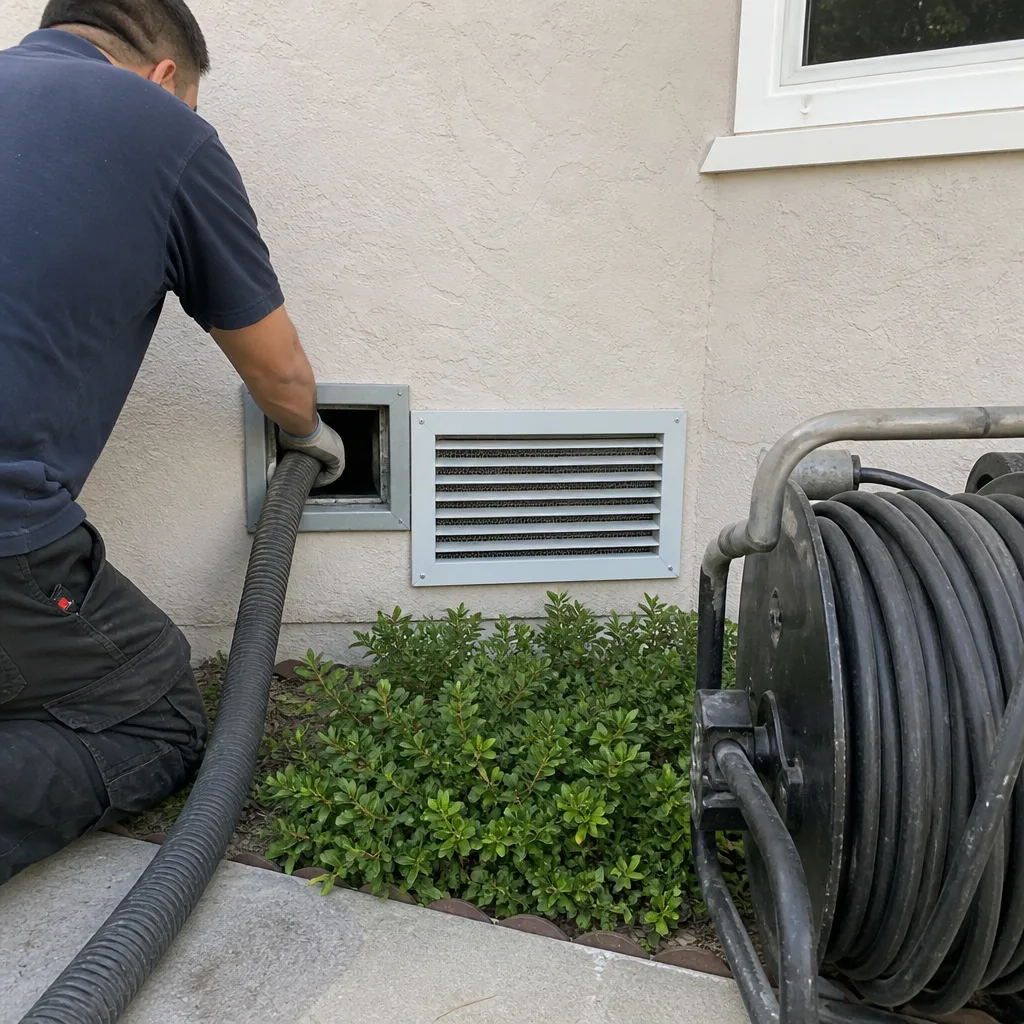
See the difference
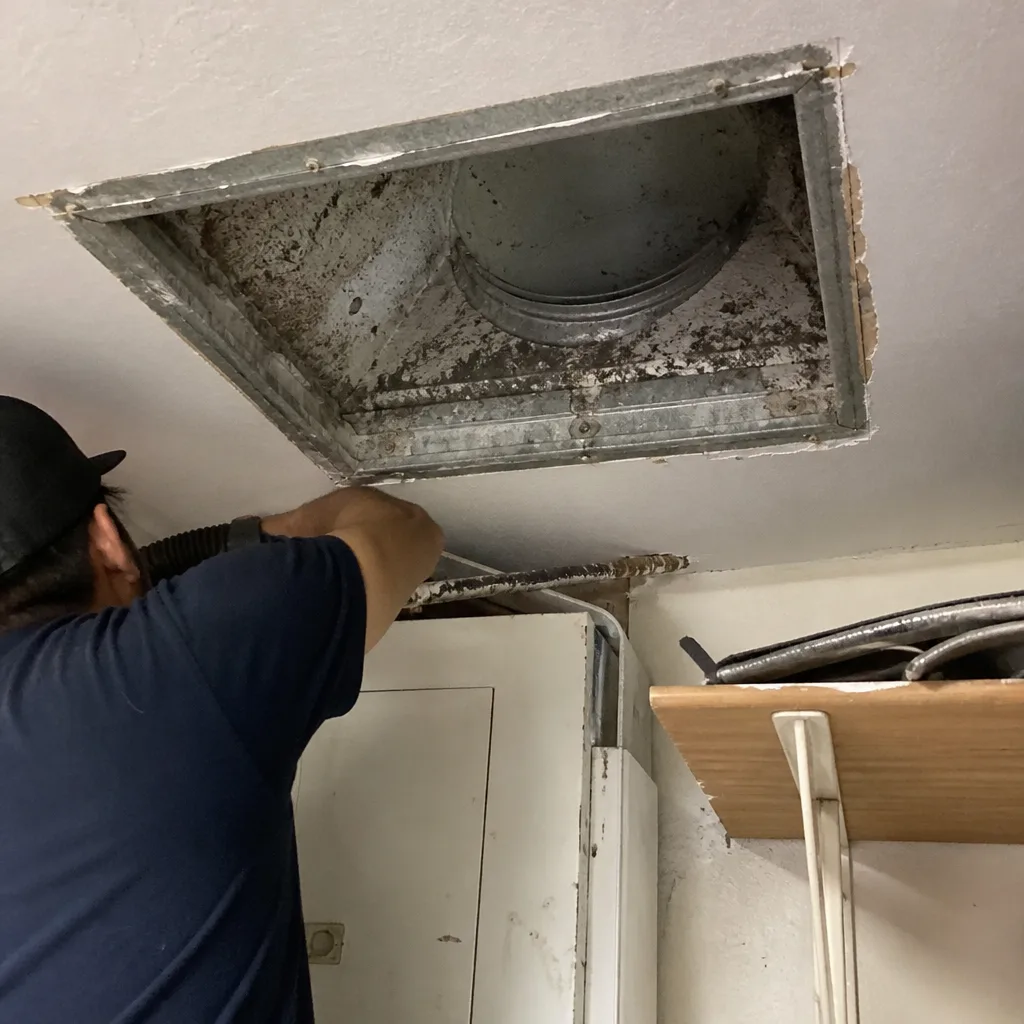
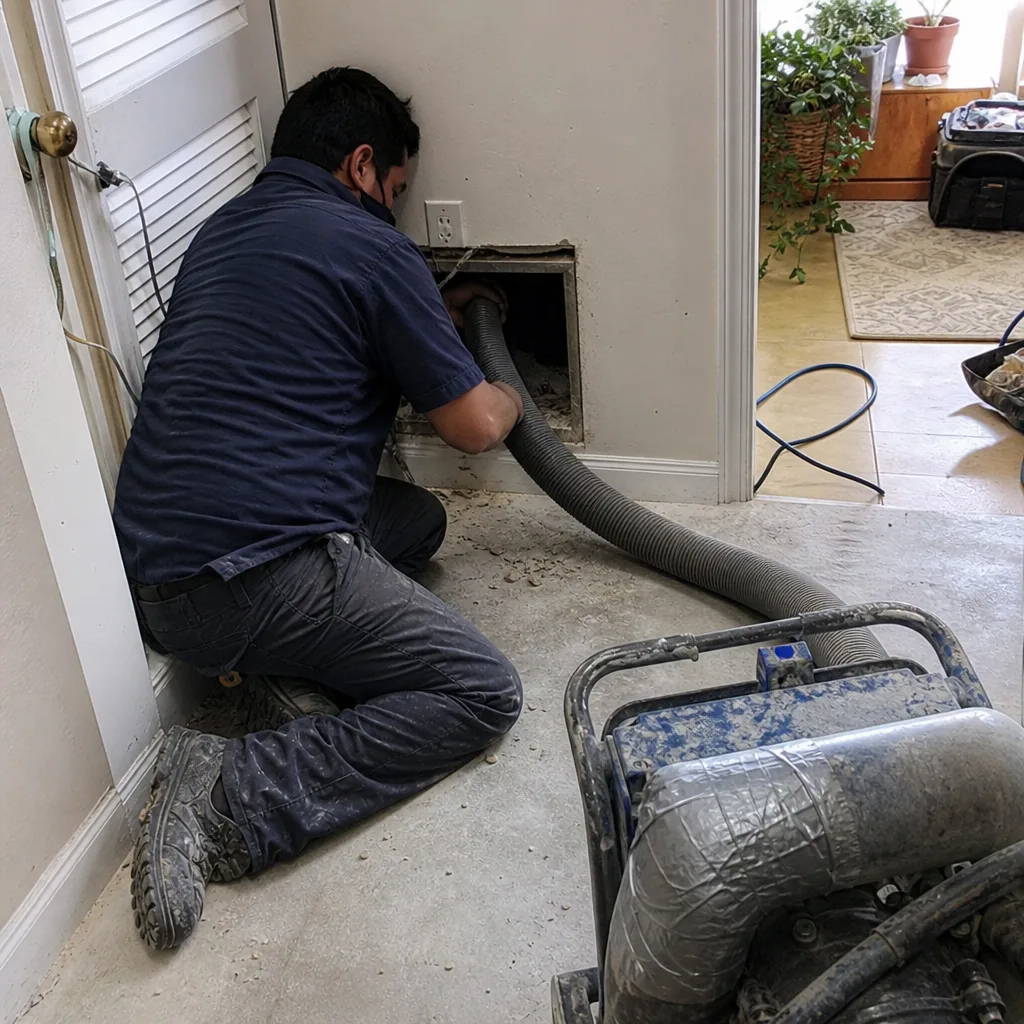 Before
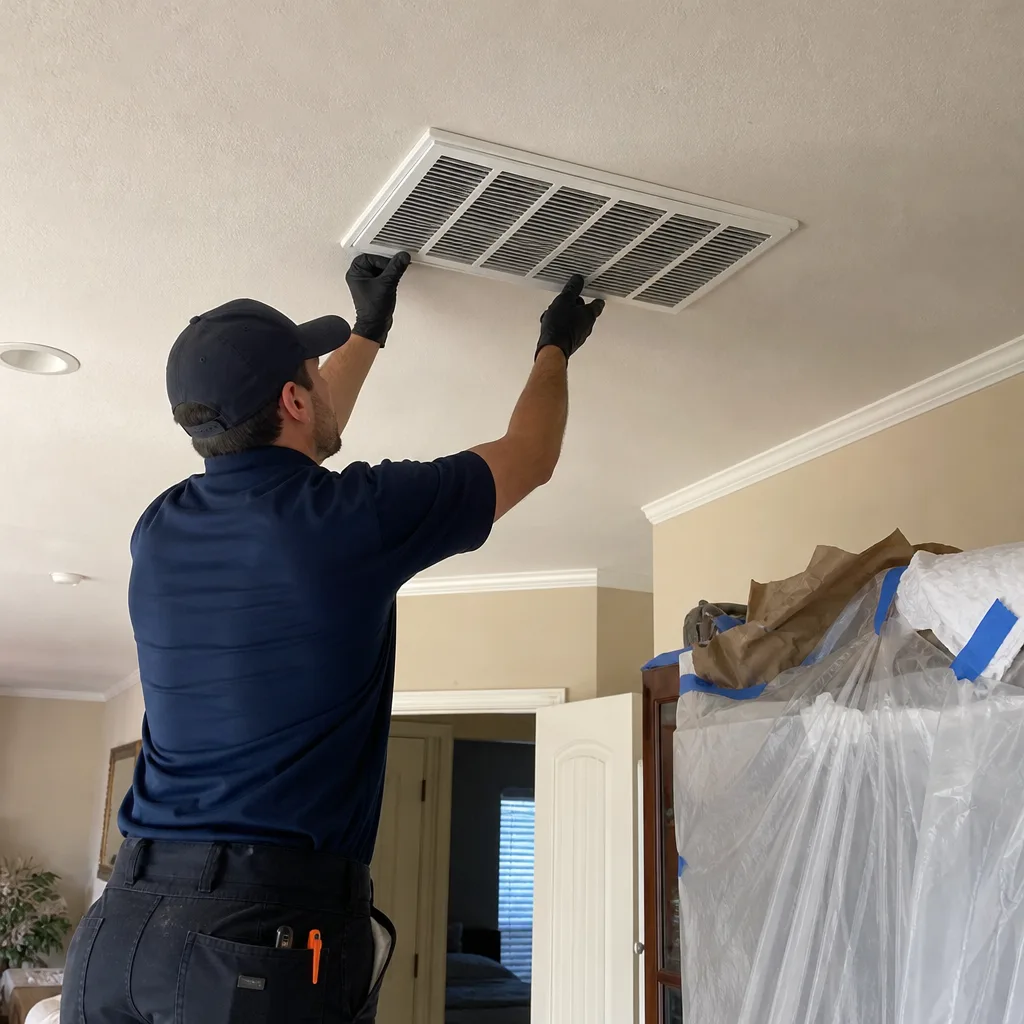 After
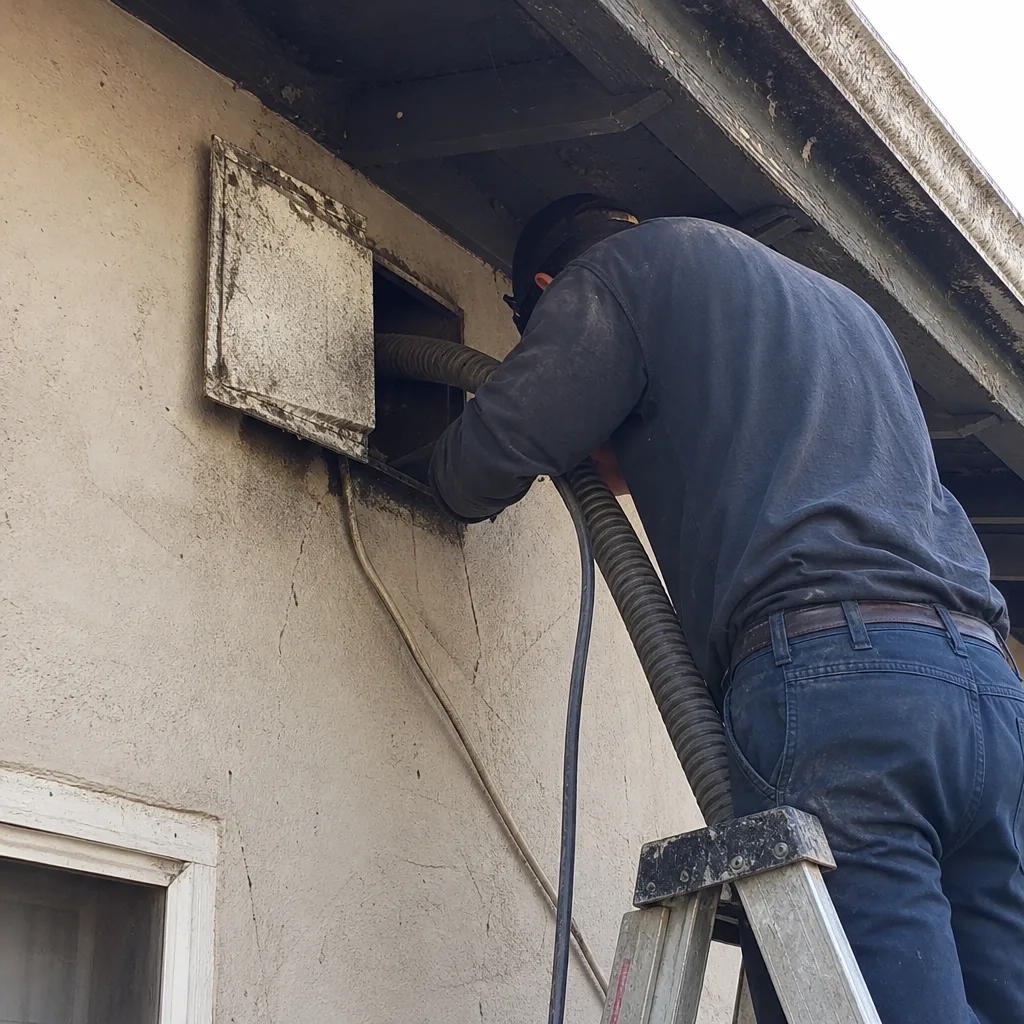 Before
 After
 Before
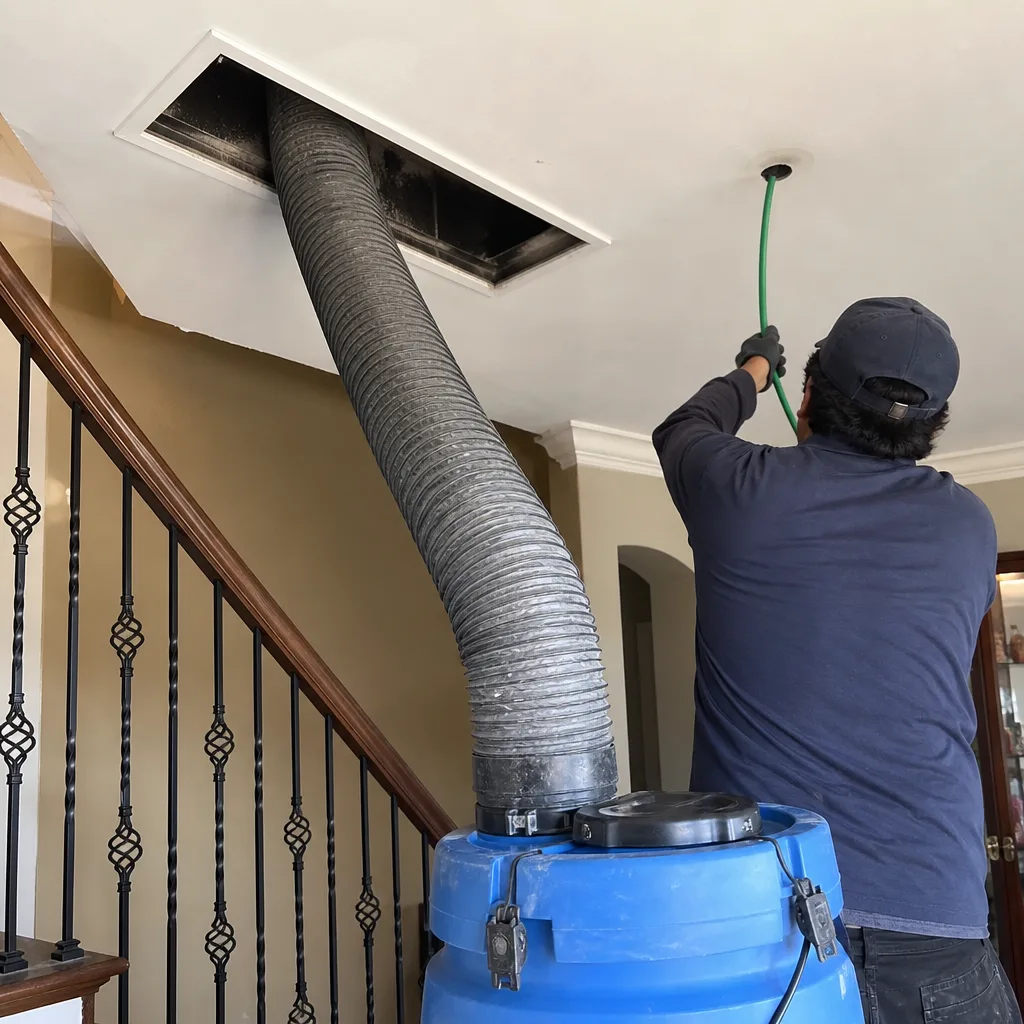 After
What We Found in a College Terrace Home
In College Terrace, our crew cleaned original galvanized ductwork in a 1920s home and found a disconnected supply run in the attic. The duct had separated at a joint, which meant the system was pulling unconditioned attic air into the intake and blowing it into the back bedrooms. We reconnected the run, sealed the joint with mastic, and then used the Rotobrush system to remove decades of buildup from the entire supply side. Airflow to those back bedrooms improved immediately, and the homeowner noticed the difference within a day. That’s the kind of problem a surface-level cleaning never finds. We find it because we inspect as part of the process and we know Stanford’s housing stock well enough to look for it.
Pricing for Air Duct Cleaning in Stanford, CA
Here’s what you should expect to pay in Stanford. Single-family homes with one HVAC system run $450 – $750. Larger homes with multiple zones or long duct runs run $650 – $900. Commercial, institutional, or campus-connected spaces start at $1,200 and are quoted after a site walk because access and compliance requirements vary widely from building to building. If your system has never been cleaned and the home is over 30 years old, expect to be at the higher end. The price we quote is the price you pay: one flat figure per system, agreed before we start. No per-vent pricing, no surprise add-ons when the van pulls up. Call (877) 824-3121 for an exact quote. Estimates are free.
How Stanford’s Campus Buildings Change the Job
Stanford’s air duct cleaning market is dominated by Stanford University’s campus and the surrounding institutional and residential buildings in ZIP 94305, where duct systems are often part of large-scale HVAC infrastructure serving labs, classrooms, and historic structures, not typical single-family homes. Technicians working here must navigate university facilities protocols, buildings ranging from early 1900s construction to modern LEED-certified designs, and strict indoor air quality standards tied to research environments. On campus, that means signed work authorizations, scheduled shutdown windows, and documentation requirements that never come up in a standard residential job. We’ve built our process around these demands rather than treating them as complications.
Asbestos and CALOSHA Compliance
Here’s what makes Stanford genuinely different: technicians working in campus buildings often encounter ductwork in buildings that must meet CALOSHA and university-specific safety protocols, and many older campus buildings have asbestos-wrapped ducts requiring certified handling. You won’t find that in typical residential neighborhoods. We identify it during inspection and do not disturb it. If cleaning requires working near asbestos-wrapped ducts, we coordinate with a licensed abatement contractor before any equipment enters the space. This is a compliance layer that residential-only duct cleaners simply don’t have. For facilities staff, that’s the difference between a clean job and a regulatory liability. For homeowners in older Stanford residences, the same awareness protects you.
Negative Pressure in Research Environments
Neglecting negative pressure containment in lab-adjacent duct systems is a real failure mode we see in Stanford. A standard cleaning that doesn’t contain the dislodged particulate can release dust into spaces with strict IAQ standards, or worse, into sensitive research environments. We run the Nikro negative air system on every job, residential or institutional, because containment isn’t optional when you’re working in buildings where air quality is tracked and documented.
We Also Serve Cities Near Stanford
Our Stanford crews regularly work across the broader Mid-Peninsula. If you’re in Stanford, Atherton, North Fair Oaks, East Palo Alto, or Menlo Park, we cover your area with the same equipment and the same approach. Duct cleaning in this corridor means older homes, newer construction, and everything in between. Call (877) 824-3121 and we’ll let you know when we can be there.
Serving Stanford, CA – Our Local Coverage Area
We’re based in the Stanford area and know this community well. Use the map below to see our service coverage – if you’re nearby, we can almost certainly help.
FAQs About Air Duct Cleaning in Stanford
We inspect first and identify any asbestos-wrapped ducts before cleaning starts. If asbestos is present, we do not disturb it. We coordinate with a licensed abatement contractor and follow CALOSHA and university-specific protocols. For campus buildings, we’ll work within your facilities’ compliance requirements and provide documentation of what was found and how it was handled. Call (877) 824-3121 if you suspect asbestos in your Stanford duct system and we’ll walk you through the inspection process.
College Terrace homes from the 1920s and 1930s typically have original galvanized ductwork with corroded seams and significant internal buildup. We also find disconnected supply runs in attics, which explains why some bedrooms never get adequate airflow. The fix is usually reconnecting and sealing the run with mastic, followed by full source-removal cleaning. If you’re in College Terrace and heat or cooling is uneven room to room, call (877) 824-3121 for an inspection.
Yes. We run the Nikro negative air system on every job, including lab and research spaces. The system keeps dislodged particulate contained and prevents it from recirculating into occupied areas. For Stanford lab buildings with strict IAQ standards, we also provide documentation of the containment method used and the before-and-after inspection results.
Wildfire smoke introduces fine particulate into duct systems even when windows and doors stay closed. That particulate settles in the ductwork and recirculates every time the HVAC system runs. Cleaning after smoke events removes it at the source. Stanford’s dry summers mean dust levels are already elevated, and a smoke event makes the loading worse. If you notice increased allergy symptoms or visible dust on registers after fire season, call (877) 824-3121 to schedule a cleaning.
Yes. Dryer vent cleaning is a standalone service we offer, not an afterthought bolted onto a duct cleaning package. Lint-clogged dryer vents are a leading cause of residential fires, and Stanford’s older homes often have long vertical vent runs that accumulate lint faster than shorter runs. We clean the full run from the dryer to the exterior termination and verify airflow before we leave. Call (877) 824-3121 to schedule it separately or alongside duct cleaning.
Written by Nelson Abreu, Owner at Duct Cleaning Union City, serving Stanford since the company’s founding.