
Last updated November 2, 2026
 Whole-home duct cleaning
 Dryer vent cleaning
 Camera inspection
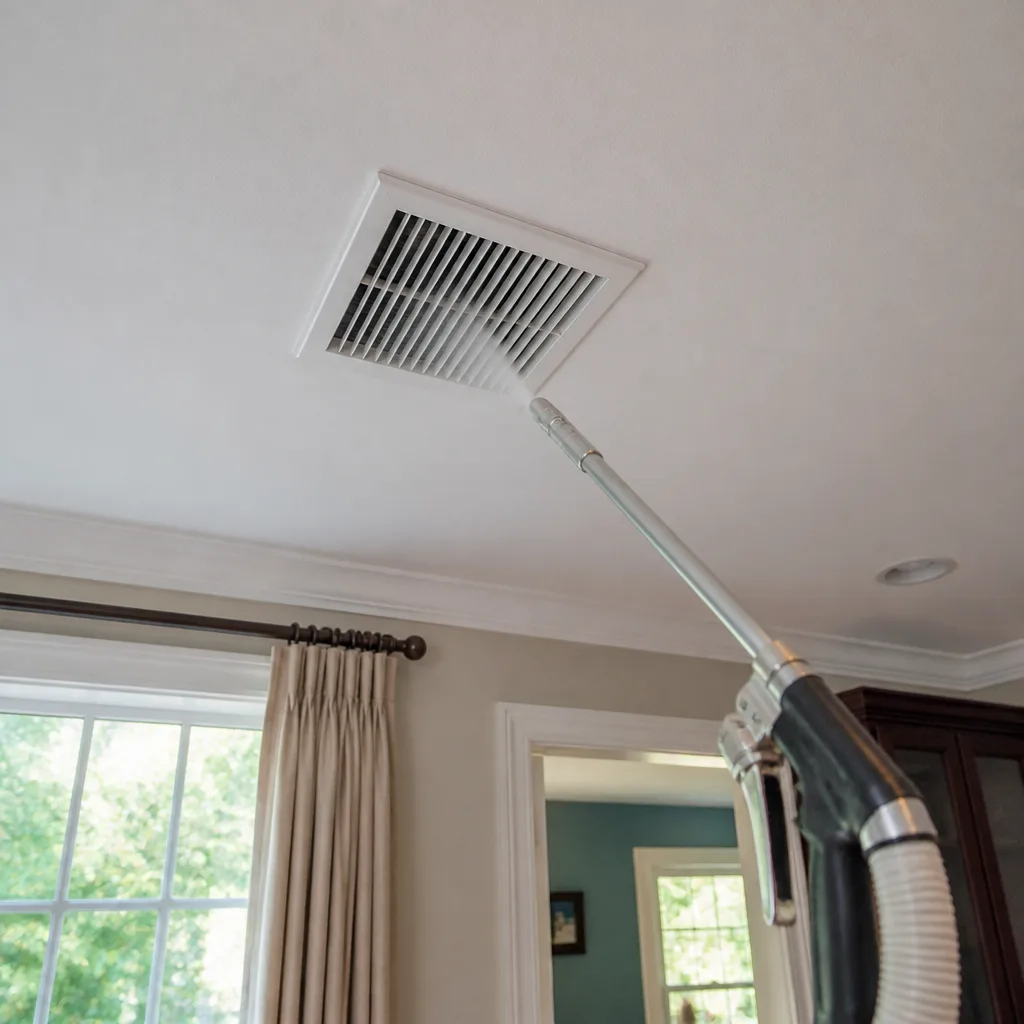 Sanitizing & deodorizing
Whole-system duct and dryer vent check with before-and-after photos - you see exactly what came out of your vents
That "$99 whole-house special" is a bait ad - the real number appears once they are in your hallway, or the "clean" is a shop-vac at the register. We photograph the inside of your ducts before and after instead.
The Complete Air Duct Cleaning Guide for Union City Homeowners
Union City sits at the intersection of three distinct air quality pressure zones – the Port of Oakland diesel corridor to the northwest, seasonal wildfire smoke drifting from the East Bay hills, and marine moisture pushing through the Dumbarton corridor. Yet most duct cleaning guides read as if geography doesn’t matter. The result: Union City homeowners get generic advice that ignores how their specific environment loads residential ductwork with particulate faster than inland East Bay cities. This guide treats Union City’s microclimate as the starting point. You’ll learn when duct cleaning is genuinely necessary, what equipment separates real cleaning from surface vacuuming, how to verify work was done, and why duct sealing after cleaning matters for every dollar you spend.
Quick Answer
Air duct cleaning in Union City typically involves negative-pressure extraction using professional equipment like Rotobrush or Nikro systems, and it’s most valuable when visible dust accumulates on registers, after renovations, or when occupants have persistent allergy symptoms. Expect a thorough whole-system cleaning to take 3-6 hours and cost between $450 and $1,000 depending on home size and system complexity. The work should include documentation – before-and-after photos at minimum, ideally airflow measurements – and duct sealing on any accessible gaps found during the process.
Styles & brands we work with
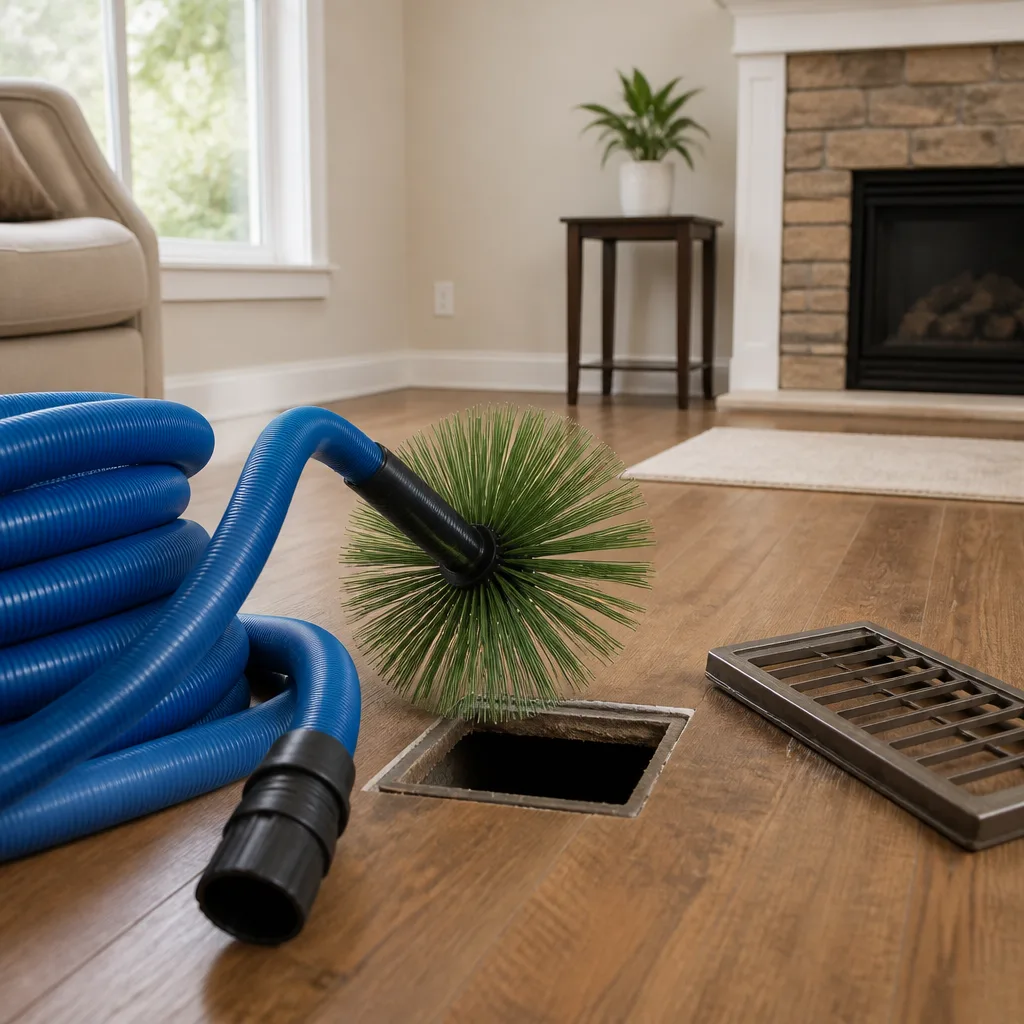
- Whole-home duct cleaning
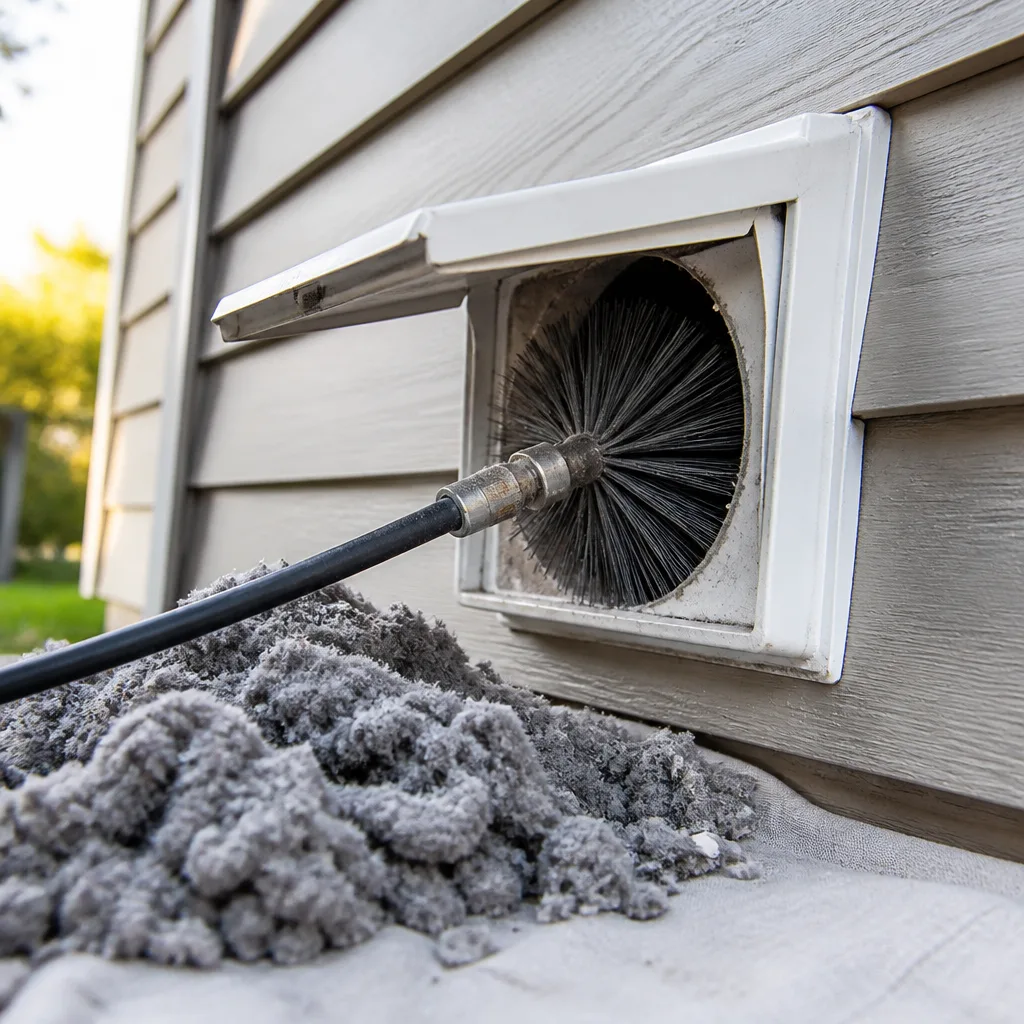
- Dryer vent cleaning
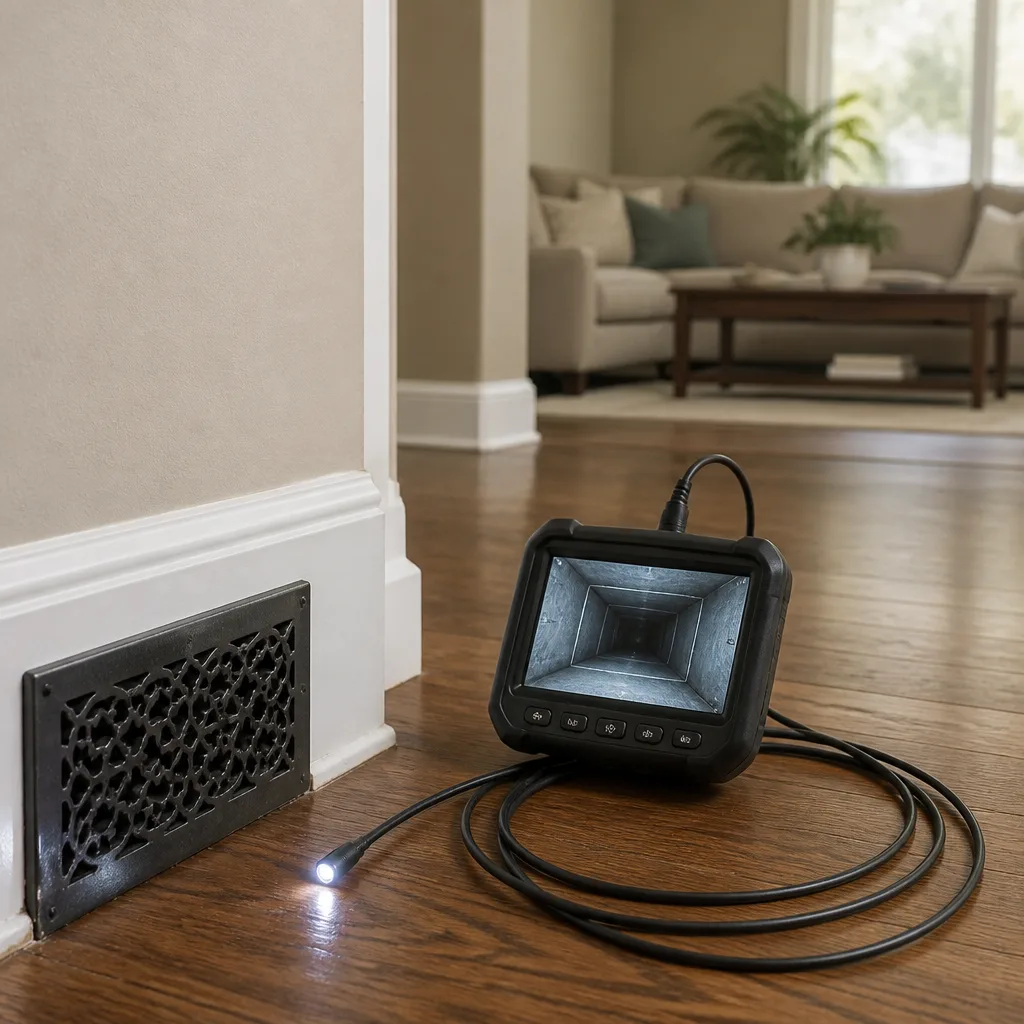
- Camera inspection
- Sanitizing & deodorizing
Table of Contents
- Why Union City’s Air Makes Duct Cleaning Different
- What Actually Gets Into Your Ducts in Union City
- Surface Vacuuming vs. True Negative-Pressure Extraction
- When Duct Cleaning Is Genuinely Necessary
- What a Proper Duct Cleaning Includes
- Documenting the Work: Photos, Airflow, and Baseline Numbers
- Duct Sealing After Cleaning: Why It’s Not Optional
- What It Costs in Union City
Why Union City’s Air Makes Duct Cleaning Different
Union City’s position at the eastern edge of the San Francisco Bay creates a particulate-loading pattern that inland cities like Fremont or Dublin simply don’t experience. Three factors converge here. First, marine layer humidity rolls through the Dumbarton corridor nearly year-round, keeping dust particles slightly damp and sticky – they adhere to duct walls rather than staying airborne and getting filtered out. Second, prevailing westerly winds carry fine particulates from the Port of Oakland and I-880 freight traffic directly toward residential neighborhoods. Third, when wildfire season hits the East Bay hills, smoke particles measuring under 2.5 microns penetrate standard furnace filters and settle throughout the duct system, where they linger long after outdoor air clears.
In our experience working with Union City homes, we’ve seen duct systems in 1,800-square-foot houses accumulate the same visible dust burden in three years that comparable homes in Tracy or Livermore take five or six years to develop. The marine-layer moisture acts as a binding agent. Add construction dust from decades of Bay mud infill development – Union City sits on former tidal flats – and you get a fine, alkaline particulate mix that’s abrasive to blower components and irritating to respiratory systems. This isn’t hypothetical. Pull a register cover in a Union City home five years after construction and you’ll typically find a gray-brown film that smears when touched, not the dry, powdery dust you’d see inland.
What does this mean practically? If you’re using the generic “clean your ducts every 3-5 years” advice written for national audiences, you’re likely under-servicing your system. Union City’s particulate load justifies more frequent inspection, even when cleaning intervals stay similar. The marine influence also means mold assessment matters more here than in drier parts of the East Bay – not because every system has mold, but because the humidity profile makes condensation events more likely in uninsulated duct runs, especially in crawlspaces and attics with poor ventilation. A competent air duct cleaning in Union City should include checking for moisture staining, not just dust removal.
What Actually Gets Into Your Ducts in Union City
Understanding what accumulates in your ducts changes how you evaluate cleaning services. In Union City, we regularly encounter four contaminant categories, each originating from identifiable local sources.
Construction and Bay Mud Dust: Union City’s residential development history includes significant infill construction on former marshland. Bay mud, once disturbed, produces a fine alkaline particulate that finds its way into homes during nearby construction and remains suspended longer than typical soil dust. Homes built or renovated in the last fifteen years – especially near the Station District or in newer developments east of I-880 – often show this signature dust in ductwork. It’s finer than standard household dust and can pass through low-MERV filters.
Transportation Particulates: I-880 runs along Union City’s western edge, carrying roughly 200,000 vehicles daily. Diesel particulate matter from freight traffic doesn’t stay on the freeway. Prevailing winds push these sub-micron particles into residential areas, where they enter homes through ventilation gaps, open windows, and the HVAC system’s fresh-air intake. Once inside ducts, diesel soot adheres to duct walls and acts as a vehicle for other contaminants, including VOCs that off-gas from building materials.
Wildfire Smoke Residue: East Bay wildfire seasons have grown longer and more intense. Smoke particles from fires in the Oakland Hills or further east regularly drive AQI readings above 150 in Union City. These particles are small enough to bypass standard 1-inch furnace filters, which typically capture particles down to 3-10 microns. Wildfire smoke particles fall between 0.4 and 0.7 microns. They enter the return duct system, coat the blower fan and evaporator coil, and re-circulate for months after outdoor air returns to normal.
Marine-Layer Biological Material: The same humidity that makes dust sticky also supports mold spore transport. While duct mold is less common in Union City than coastal Pacifica or Half Moon Bay, the humidity profile still supports it in uninsulated ducts, especially in older homes with crawlspace duct runs. Pollen from East Bay vegetation – eucalyptus, oak, and non-native ornamentals – also enters the system seasonally. Allergenic material in ducts doesn’t simply disappear; it re-enters living spaces every time the blower cycles.
Surface Vacuuming vs. True Negative-Pressure Extraction
Equipment matters more than almost anything else in duct cleaning, and the difference between professional-grade systems and consumer tools is the difference between removing contamination and just disturbing it. Here’s what to ask before booking any duct cleaning service in Union City.
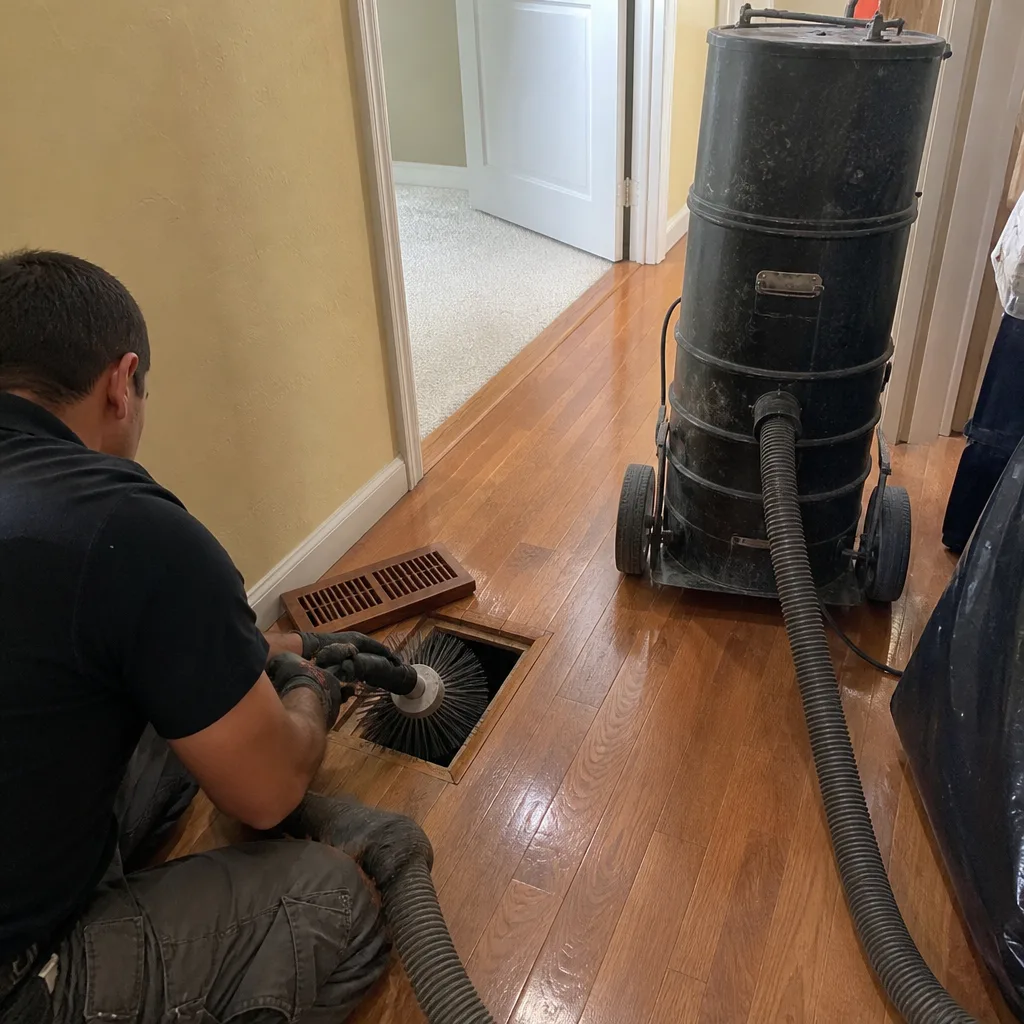
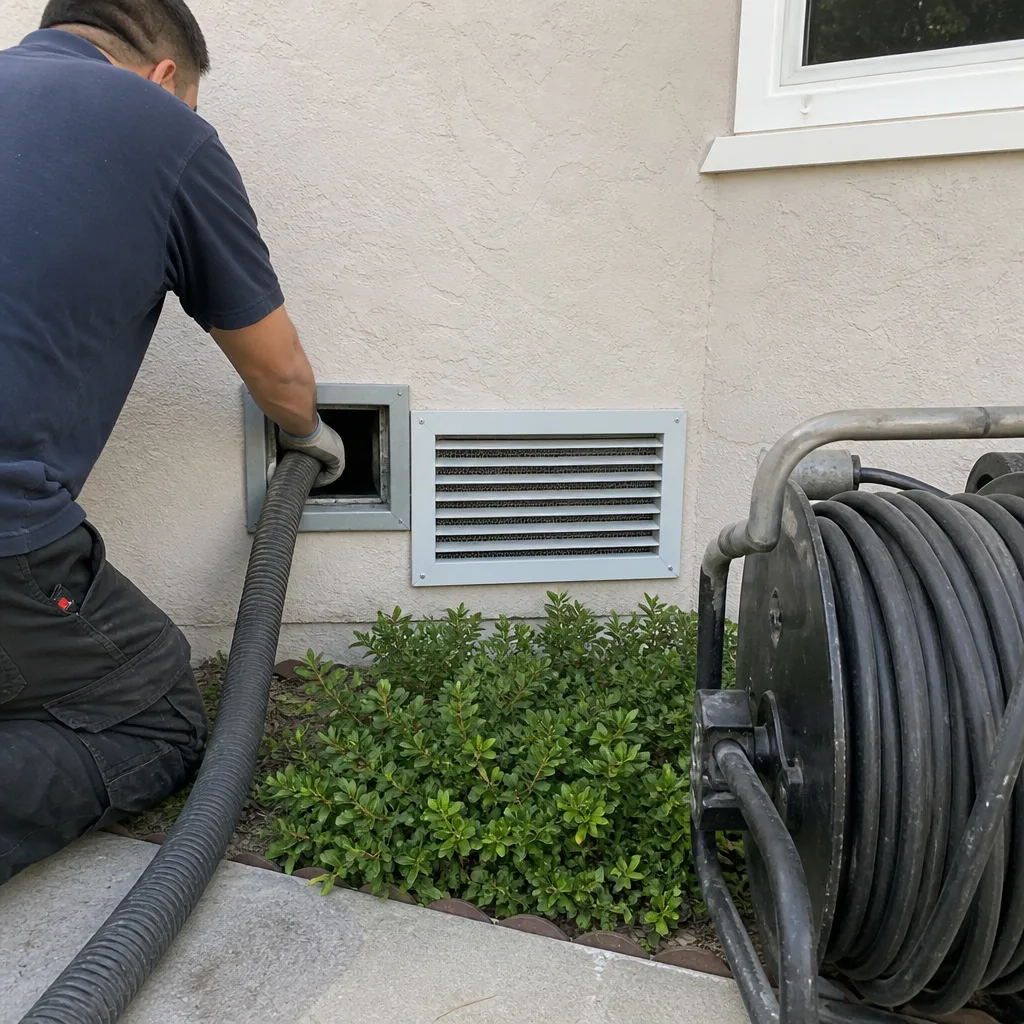
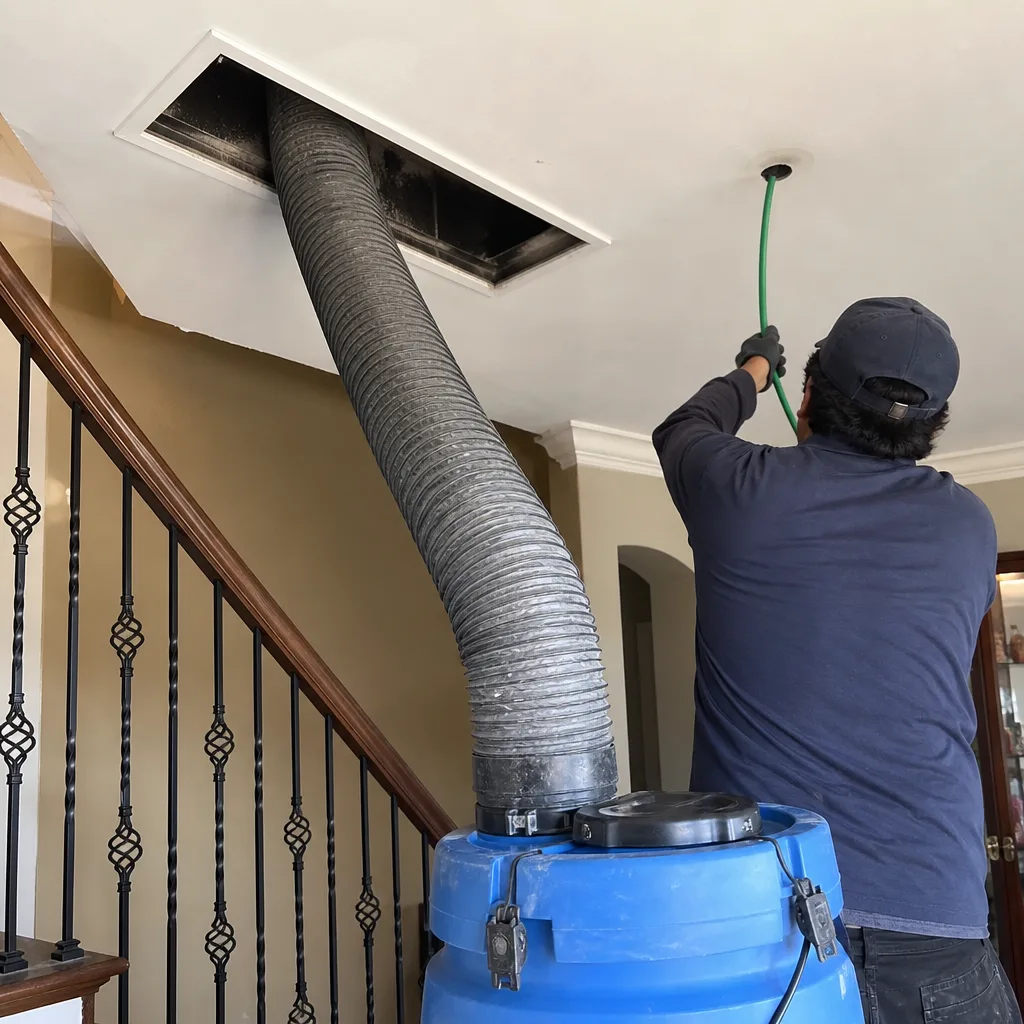
Negative pressure is the industry standard for a reason. A real duct cleaning system creates negative pressure inside the duct run while mechanical agitation devices physically dislodge debris from duct walls. The negative pressure – typically 2,000 CFM or more from a truck-mounted or high-powered portable unit – pulls loosened debris out of the system rather than blowing it backward into the living space. Rotobrush and Nikro systems both operate on this principle, using rotating brush heads or compressed-air agitation combined with negative air machines rated for residential service.
Consumer vacuums and many “duct cleaning specials” don’t achieve this. A Shop-Vac attached to a register opening can remove loose debris near the opening, but it cannot reach the full duct run, cannot overcome the static pressure of a branch system, and often blows fine particulates past its own filter back into the home. The result looks like cleaning – the register area appears improved – while the deeper system remains coated.
What to look for when evaluating equipment:
- Rotating brush or agitation head sized for your duct dimensions – a proper system uses matched tooling, not a generic hose adapter
- Negative air machine rated at 2,000+ CFM – this is the extraction power that moves debris all the way out, not just dislodges it
- HEPA or near-HEPA filtration on the collection side – prevents exhausted air from re-contaminating the home during cleaning
- Access through the plenum or trunk line – a professional creates proper access points rather than trying to work only through small register openings
We run Rotobrush and Nikro systems at Duct Cleaning Union City home service calls because purpose-built equipment holds up to the demands of residential service. These are the same brands used by commercial duct contractors, scaled for residential duct systems. The difference shows in what ends up in the collection canister versus what’s left behind on duct walls.
When Duct Cleaning Is Genuinely Necessary
Honest assessment matters more than scheduling frequency. Duct cleaning isn’t a maintenance ritual with a fixed interval. We tell Union City customers this directly: some homes benefit from cleaning every three years while others genuinely don’t need it for a decade. The trigger should be condition, not calendar.
Legitimate triggers for duct cleaning:
- Visible dust accumulation on registers or duct openings. Remove a register cover and inspect the duct interior with a flashlight. Visible dust coating, especially gray-brown film that smears when touched, indicates accumulation worth addressing.
- Post-renovation contamination. Union City’s ongoing construction – kitchen remodels, ADU additions, flooring replacement – generates fine dust that HVAC systems distribute throughout the house. Any renovation lasting more than a few days justifies duct inspection and often cleaning.
- Occupant respiratory symptoms that worsen at home. If family members experience consistent congestion, sneezing, or asthma symptoms that improve when away from the house, duct contamination is a plausible contributor worth ruling in or out.
- New home purchase. Previous owners’ duct condition is an unknown. Cleaning establishes a documented baseline and removes whatever the prior occupants left behind – pet dander, smoke residue, construction debris from earlier work.
- Visible mold growth or persistent musty odor from vents. This is a different situation than routine dust. Mold in ducts requires assessment for the moisture source – often a condensation issue in Union City’s marine climate – alongside cleaning.
When duct cleaning won’t solve the problem:
- Filter bypass gaps. If the filter slot allows air to pass around the filter rather than through it, all incoming air bypasses filtration. No cleaning fixes this; the filter housing needs repair or improvement.
- Chronically undersized filtration. A 1-inch fiberglass filter captures almost nothing below 10 microns. Upgrading to a MERV 8-11 filter (if the system’s static pressure allows) does more for ongoing air quality than periodic cleaning.
- Equipment problems. A blower motor covered in dust is a symptom of filtration failure, not a cleaning issue. If the evaporator coil is impacted, cleaning the ducts alone restores airflow partially at best.
- Air sealing issues. Duct leaks in a crawlspace or attic pull unfiltered outdoor air – with all of Union City’s Bay particulates – directly into the supply stream. Cleaning without sealing is a temporary improvement.
We perform air duct repair in Union City specifically because discovering these issues during a cleaning – and being able to address them immediately – prevents customers from paying for cleaning that only partially works. The repair capability closes the loop that stand-alone cleaning services leave open.
What a Proper Duct Cleaning Includes
A credible duct cleaning service follows a defined sequence. If a company quotes a flat price without asking about your system’s layout, accessibility, or condition, that’s a red flag. Here’s what the service should cover.
- System walkthrough. The technician inspects the furnace or air handler, identifies duct runs, checks for accessible access points, and notes any visible issues – moisture staining, disconnected runs, rodent activity, collapsed flex duct. This takes 15-30 minutes and should inform the cleaning approach and final price.
- Register and grille removal. All supply registers and return grilles come off. This provides access to duct openings and exposes the register boots – the short connectors between duct runs and wall openings – which are common accumulation points.
- Negative-pressure setup. The technician creates appropriate access, typically at the plenum or a trunk line, and connects the negative air machine. This establishes the extraction path that pulls debris out of the system during agitation.
- Mechanical agitation. Rotating brush heads or compressed-air tools travel through each supply and return run, dislodging adhered debris from duct walls. The agitation tooling should be sized to the duct dimensions – rigid 6-inch or 8-inch runs require matched brushing heads.
- Register boot and plenum cleaning. Hand tooling and pressure cleaning address the register boots, plenum, and transitions. These areas often hold heavier debris than the straight runs.
- Blower and coil inspection (and cleaning if needed). The blower assembly and evaporator coil sit downstream of the filter and upstream of the supply ducts. If these components are dust-coated, the cleaning is incomplete until they’re addressed.
- Documentation. Before-and-after photos, access point sealing confirmation, and airflow measurements where applicable. You receive a record of what was done and what the system looks like afterward.
The entire sequence typically runs 3-6 hours for a 1,500-2,500 square foot home. Faster than that raises questions about whether the agitation and extraction sequence was completed on every run, or whether the crew moved through too quickly to achieve meaningful contact with duct surfaces.
What happens when you call
- 1
A real person answersNo phone trees – you reach a local pro.
- 2
You get an upfront price rangeHonest numbers before anyone is dispatched.
- 3
A background-checked tech heads outLicensed & insured, dispatched right away.
- 4
You approve before work beginsNothing starts until you say go.
Documenting the Work: Photos, Airflow, and Baseline Numbers
Verification separates professional duct cleaning from untrustworthy operators, and this industry has enough bad players that documentation should be non-negotiable. In Union City, where the duct contamination profile is measurably different from other Bay Area cities, baseline numbers help you understand whether your home’s system is underperforming or simply due for cleaning.
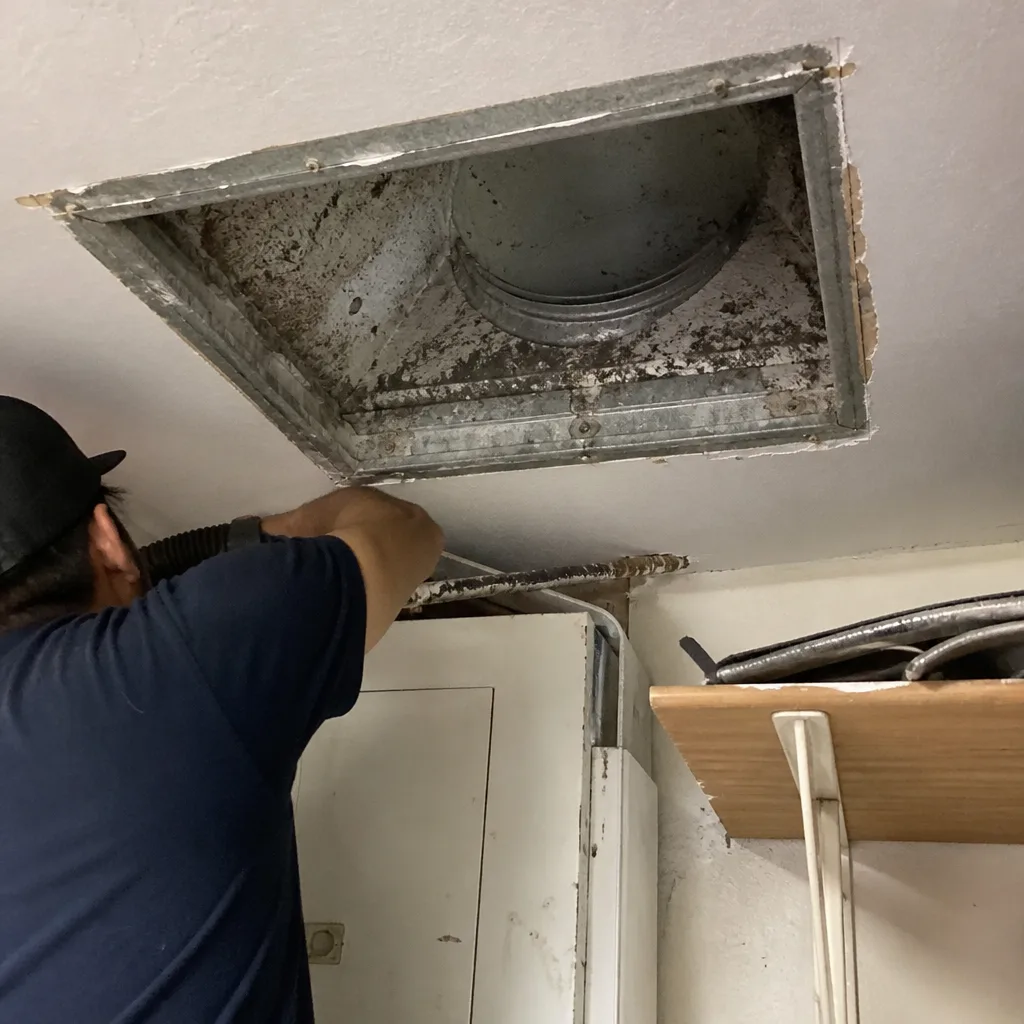
Before-and-after photos should be standard. Any legitimate duct cleaning service can photograph duct interiors during the process. The photos should show the same duct section before and after cleaning – not a dirty photo from a different duct than the clean photo. We photograph through the access points and, where possible, through register openings with an extended camera. You should see a visible difference: from gray-brown coated surfaces to bare galvanized metal.
Airflow measurements give you real data. A competent technician can measure static pressure and airflow at the return and representative supply registers before and after cleaning. The baseline numbers matter more than one reading: a system with 0.5 inches of water column static pressure before cleaning will improve measurably if the coil and blower were dust-impacted. Expect higher post-cleaning airflow at supply registers, typically 10-30% improvement when buildup was significant.
What to record before the service:
- Static pressure reading at the return plenum (if your technician offers this)
- Airflow at 2-3 representative supply registers
- Filter condition and type (MERV rating)
- Photos of any visible dust at register openings
What to verify after the service:
- Same register airflow measurements, compared to baseline
- Photos showing clean duct surfaces
- Confirmation that all access points were sealed
- Filter replacement (if part of the service)
A company that won’t document its work can’t prove its work. In our experience, the services that avoid documentation are the ones relying on customer trust instead of demonstrated results. Rotobrush and Nikro systems both support camera-equipped inspection, so there’s no equipment barrier to this standard.
See the difference
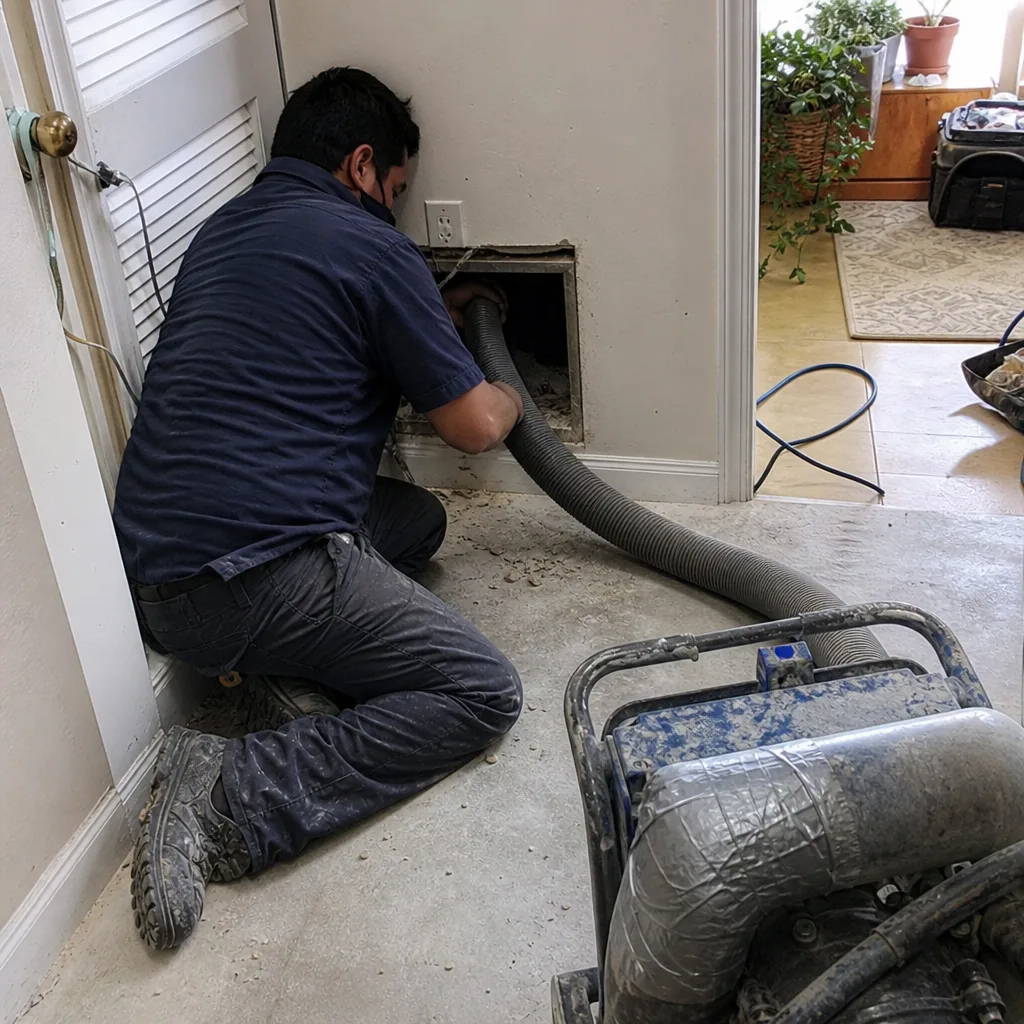 Before
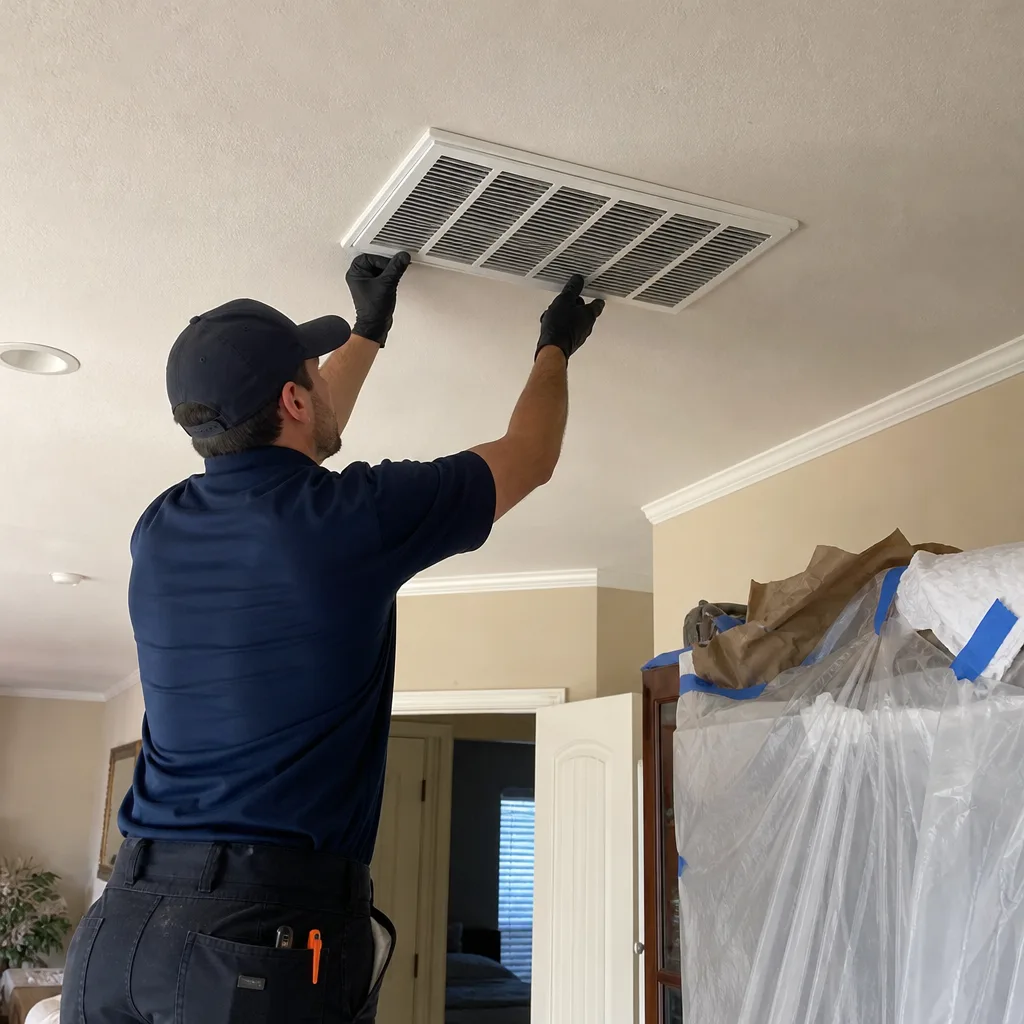 After
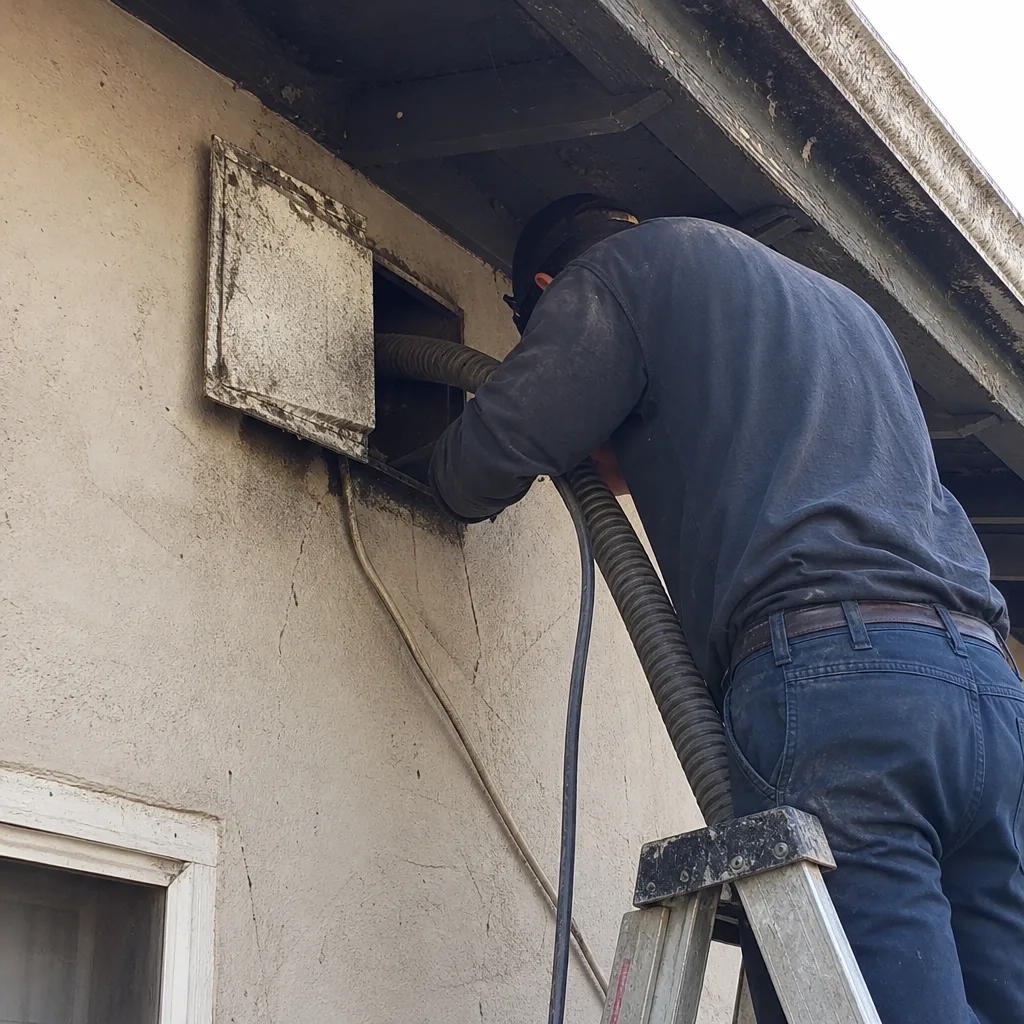 Before
 After
 Before
 After
Duct Sealing After Cleaning: Why It’s Not Optional
Cleaning a leaky duct system is a temporary improvement. Union City’s marine-layer air means leaky ducts pull moist, particulate-laden outdoor air into the supply stream, re-contaminating cleaned ducts faster than sealed systems. The Department of Energy estimates that residential duct systems leak 20-30% of conditioned air on average – in Union City, that leakage represents air that’s already been filtered and conditioned escaping into unconditioned spaces, plus unfiltered air joining the supply stream.
Post-cleaning duct sealing addresses the leaks discovered during the cleaning process. Accessible duct runs, especially in attics and crawlspaces, can be sealed with mastic or foil-faced tape at joints, transitions, and boot connections. This is not the same as whole-house duct sealing done from the interior with aerosol products, though both approaches can coexist. The immediate step after cleaning is addressing visible leaks.
Why sealing after cleaning matters:
- Prevents rapid re-contamination. A cleaned duct system with open leaks starts pulling dirty crawlspace or attic air from day one.
- Improves system efficiency. Sealed ducts deliver more of the air you paid to condition to the rooms it’s meant for.
- Reduces moisture introduction. Union City’s humidity makes leak-sealing more valuable than in drier climates – fewer leaks means less moist outdoor air entering the system.
- Makes the cleaning investment last. Cleaning without sealing is like washing a car and leaving the windows down. The work doesn’t hold.
Not every leak can be reached, and some duct systems require more extensive remediation than sealing tape can address. That’s where air duct repair becomes the right tool – replacing collapsed flex runs, reconnecting separated joints, or rebuilding damaged boots. A cleaning service that identifies these problems but can’t fix them leaves you coordinating a second contractor and paying for a second visit. When the same service handles cleaning and repair, the fix happens during the same visit.
What It Costs in Union City
Duct cleaning pricing varies widely because the definition of “cleaning” varies widely. In Union City, you’ll find quotes from $99 “specials” to $1,500+ full-system services. Here’s the honest breakdown of what drives the difference.
Whole-system pricing ranges for Union City homes:
- 1,200-1,800 sq ft, single system: $450-$750
- 1,800-2,500 sq ft, single system: $600-$950
- 2,500-3,500 sq ft or dual systems: $800-$1,200
- Add-on dryer vent cleaning: $100-$180 as a standalone or bundled service
- Duct repair during cleaning: $150-$500 depending on scope – quoted before work begins
The $99 coupon specials operate on a bait-and-switch model that’s common enough in this industry that we’ll state it directly: the low price covers “cleaning” a portion of the system – often just the main trunk line – and the technician then finds “problems” that raise the invoice significantly. By the time you’re into the service call, the real price approaches or exceeds a legitimate quote, minus the benefit of honest communication upfront.
What determines a fair price:
- Number of supply and return runs – more branches means more tooling time
- Accessibility – crawlspace ducts take longer than basement or attic ducts
- Condition – heavy buildup requires additional agitation passes
- Scope – cleaning-only versus cleaning plus repair versus cleaning plus dryer vent service
We quote a flat price per system before work begins. No per-vent pricing, no upsell pressure mid-service. If damage is discovered during air duct cleaning in Union City – a disconnected run, a crushed flex section – we show you the issue, quote the repair, and complete it only with your approval. The estimate is free. Call (877) 824-3121 for an exact quote on your home.
Common Mistakes to Avoid
- Hiring on price alone. Duct cleaning’s reputation problems trace directly to $99 specials that under-deliver. A legitimate service in Union City costs real money because the labor and equipment are real. Quotes below $300 for a whole system should raise immediate skepticism.
- Skipping the pre-service inspection. Any service that quotes over the phone without seeing your system is guessing. Access points, system condition, and duct layout all affect the work. A proper estimate includes a walkthrough.
- Accepting cleaning without documentation. If the service can’t show before-and-after photos, you can’t verify anything happened. Documentation should be standard, not an upsell.
- Ignoring the filter situation. Cleaning ducts while running a $2 fiberglass filter means re-contamination begins immediately. Address filtration as part of the overall air quality picture – a MERV 8-11 filter (when compatible with your system’s static pressure) extends the value of cleaning.
- Treating duct cleaning and dryer vent cleaning as the same service. They are distinct. Dryer vent cleaning in Union City addresses lint accumulation in the exhaust line – a fire hazard – while duct cleaning addresses the HVAC system’s airflow path. Both matter, but for different reasons.
- Neglecting duct sealing after cleaning. Clean ducts that leak pull dirty air immediately. Sealing is the step that makes cleaning last.
- Assuming all companies use the same equipment. Rotobrush and Nikro systems are purpose-built for this work. Consumer vacuums are not. Ask what equipment the company runs before booking.
When to Call a Professional
Call a duct cleaning professional when: visible dust coats your register openings or duct interiors; you’ve completed a renovation that generated dust; family members experience persistent respiratory symptoms that improve away from home; you’ve purchased a home and can’t verify previous duct maintenance; you notice musty odors from vents; or your system’s airflow has declined without explanation. Duct cleaning involves professional equipment and access techniques that carry unavoidable risk when attempted without proper tooling – duct interiors are sharp, spaces are confined, and improvised cleaning methods can damage flexible duct runs or dislodge connections. A trained technician with the right equipment handles these conditions safely. Duct Cleaning Union City offers free estimates in Union City – call (877) 824-3121.
Frequently Asked Questions
Whole-system air duct cleaning in Union City typically runs $450-$950 for homes between 1,200 and 2,500 square feet, with larger homes or dual systems reaching $1,200. Avoid quotes under $300 – they’re almost always bait-and-switch offers that inflate after the technician arrives. Call (877) 824-3121 for a free estimate with flat, per-system pricing.
Cheaper quotes generally mean reduced scope: fewer duct runs cleaned, no agitation or extraction equipment (just a vacuum at the registers), no coil or blower work, no documentation. The low price covers a partial service, then the technician “discovers” additional work that raises the final invoice. Legitimate services quote a flat per-system price that covers the full scope.
Require photographic documentation before you book. A legitimate service will capture before-and-after photos of the same duct sections, showing the condition change. Airflow measurements at supply registers before and after provide an additional verification layer – expect 10-30% improvement when buildup was significant.
Condition, not calendar, determines cleaning frequency. Union City’s marine humidity and freight-corridor particulates accelerate dust buildup compared to inland East Bay cities, so 3-5 year intervals are more defensible here than in drier climates. But if post-renovation contamination occurs or filter bypass gaps exist, cleaning may be needed sooner or won’t help until the underlying issue is fixed.
Duct cleaning’s value extends beyond allergy relief. Dust buildup reduces airflow, forces the blower to work harder, and shortens equipment life. In Union City, where particulates from I-880 and the Port of Oakland load residential systems faster than typical, cleaning restores airflow and removes abrasive material from the blower and coil. Allergy relief is a common benefit, but system performance is the broader one.
They’re separate services addressing separate systems, but bundling them makes practical sense – both involve moving air through your home, and both suffer from neglect. Dryer vent cleaning in Union City removes lint accumulation from the exhaust line, a leading residential fire cause. If you’re scheduling duct cleaning, adding dryer vent service during the same visit is efficient. Call (877) 824-3121 to discuss both services.
The Bottom Line
Union City’s air quality profile – marine moisture, freight-corridor particulates, and seasonal wildfire smoke – makes residential duct systems here accumulate contamination faster and differently than inland Bay Area homes. Professional duct cleaning, done with negative-pressure equipment like Rotobrush or Nikro systems, removes what household vacuums cannot. The work should be documented, priced per system rather than per vent, and followed by duct sealing where leaks exist. Cleaning addresses the contamination; sealing protects the investment; repair capability ensures that problems found during cleaning don’t require a second contractor. If your ducts show visible dust, you’ve renovated recently, or your system’s airflow has declined, start with a documented inspection. Call (877) 824-3121. Clean ducts. Healthier air. Done right.
Written by the team at Duct Cleaning Union City, serving Union City since 2015.